Daigo Fukuryumaru

Lucky Dragon Incident:

I have encountered The Lucky dragon’s story twice before reading the assigned readings and attending the museum today: once in Professor Selling’s Fantastic and Demonic literature course in context with Godzilla, and a second time in Professor Christmas’s Modernity and Identity: Japanese History course in context of American Occupation after WWII. I came in knowing the basic narrative to the grim event, but the museum was a source of enrichment and the detail gaps were filled.

  • The Lucky Dragon was only the first of many incidents in which nations (mainly the United States and Russia) tested out their nuclear weapons. Testing was conducted allover the world, mainly in desserts. People all over the world: Japanese, Native Americans and other societies suffered from the fallout of these testings.
  • Science is often equated with objectivity and facts, which inspires belief from the people; but this is a prime example in which the data maybe manipulated to fit one’s agenda.
  • With confronting political agendas, Japanese doctors and American doctors were drawing distinct conclusions from each other. The media covered the story, but the difference in findings caused distrust on part of the Japanese citizens toward doctors and government officials.
  • The uprisings that emerged due to this incidents were the beginning of the anti-nuclear movement that would then be revived in 2011 after Fukushima.

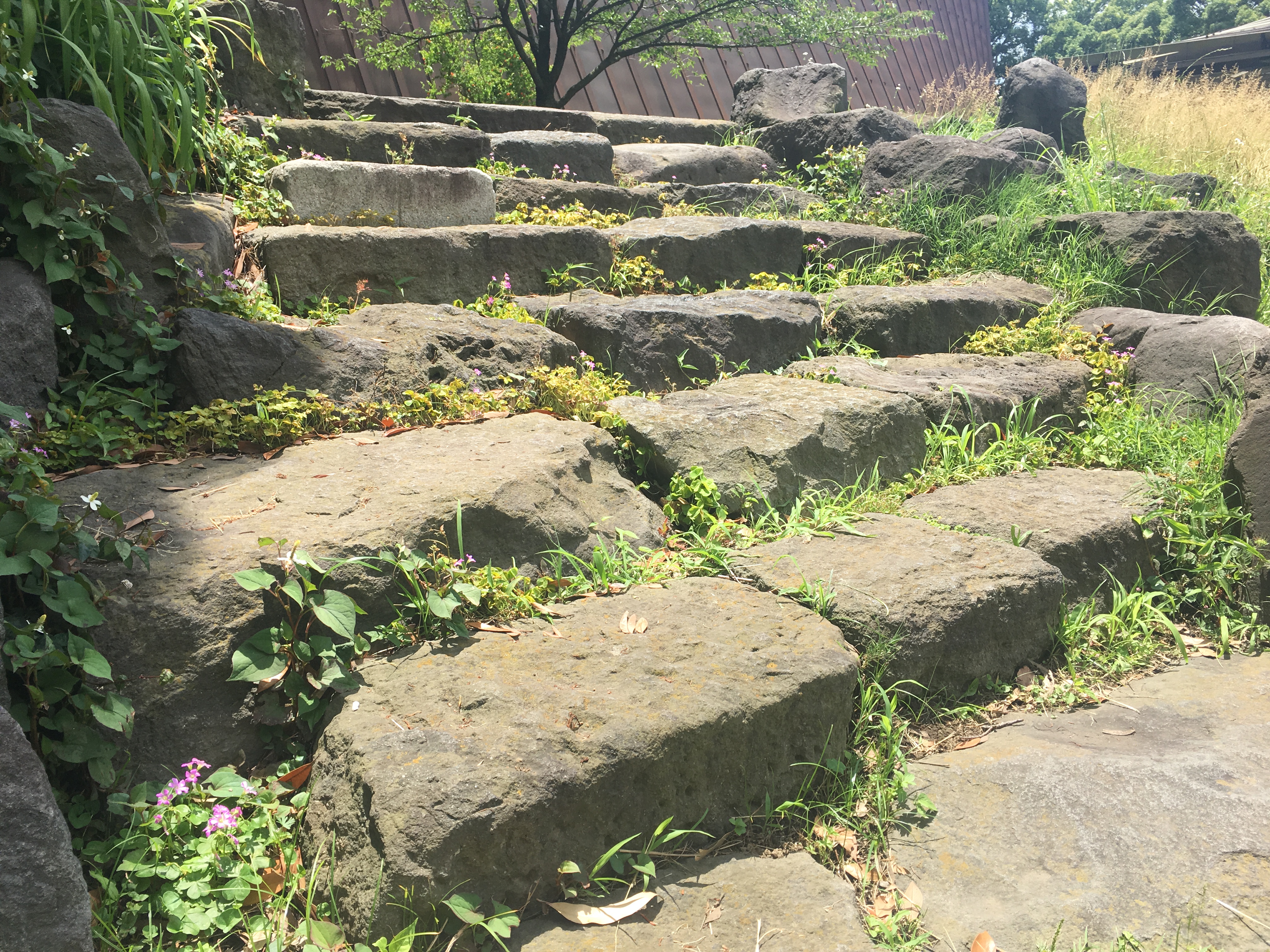
Side NOTE:   I was sort of surprised at the grounds on which the museum was housed, but I really liked these stone steps which we found outside the museum.

6/2 Daigofukuryūmaru Museum: Calling for Peace?

After the end of WWII and during the cold war, the US, Japan, and other countries were having a large number of A-bomb and H-bomb testings and seeking for a peaceful use of nuclear power. Daigofukuryumaru (第五福竜丸) was near an H-bomb testing near Bikini Island, and its staff member Kuboyama was the first Japanese victim of an H-bomb. The reading we did for this Lucky Dragon No.5 had a lot of discussion about different stakeholders, including politicians, doctors studying radiation diseases, fishermen/citizens, and the media. A complicated incident with many political implications, the Lucky Dragon was oversimplified as a symbol of calling for no use of nuclear and world peace at the Daigofukuryūmaru Museum.

The museum takes the perspective of citizens and selected many exhibits that called for compassion, the heartbreaking picture of Kuboyama’s funeral, for example. The picture captured Kuboyama’s children and family crying, especially the younger daughter. Children are a big part of the appeal: Kuboyama’s older daughter’s letter, encouraging letters sent to Kuboyama from all over the country, and moreover, the origami decorations sent by school children along with their wishes for peace/no nuclear bombing attached to the origami. The message is clear: think about our children. Because of the concern for family health and children of radiation contamination, women and housewives became leaders of the grassroots anti-nuclear movements after the incident of Lucky Dragon, while the government was trying to close the deal as soon as possible to get nuclear technology support from the US. The reading we did was very helpful for understanding the complexity of the incident and looking at the museum critically.

Radiation of the Not-so Lucky Dragon No. 5

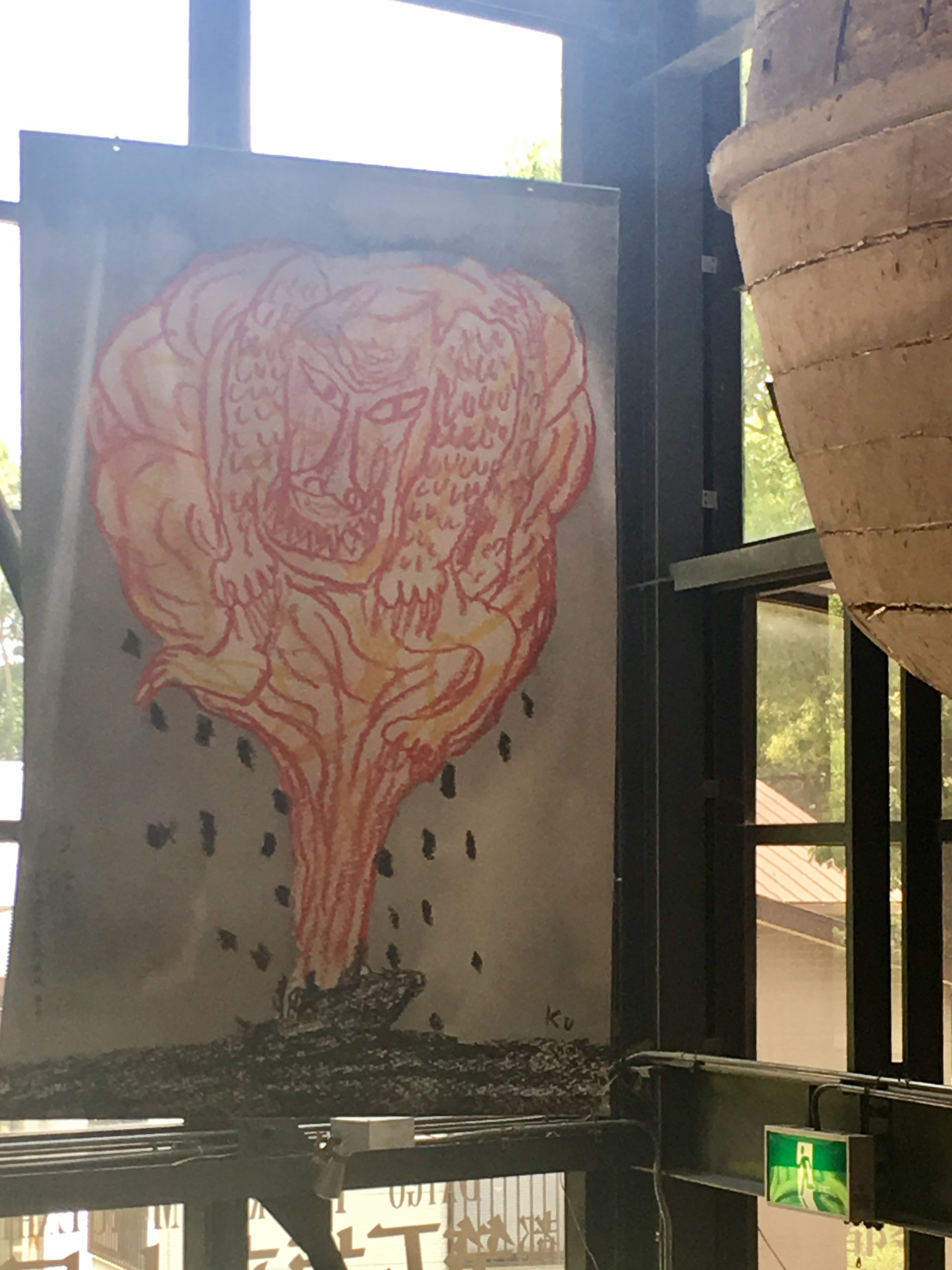
We had a bit of a shorter day today, but an interesting one nonetheless. We visited the Daigofukuryumori Exhibition Hall (a museum), showcasing the 第五福竜丸 (daigofukuryumori; Lucky Dragon No. 5) tuna trawler that was heavily irradiated during hydrogen bomb testing off of Bikini Atoll on March 1, 1954. The museum contained objects actually from the ship, including the ship itself and its engine, along with other related documentation such as letters written by family members of the crew. Additionally, the museum also provided information on nuclear weapons testing. Most of the descriptions and panels were in Japanese, though there were some cards in English. It wasn’t so much the grammar that gave me trouble (for instance, many of the panels used the passive form, either to convey suffering at the hands of nuclear testing or as a sort of “reporting” form…or perhaps both), but rather there was a lot of kanji I wasn’t too familiar with.

I thought it was really interesting going through the museum, small though it was, and seeing photos and actual objects from the time. The Lucky Dragon No. 5 wasn’t the only ship irradiated, nor was March 1, 1954 the only time atomic weapons were tested in that area; this is arguably the most well-documented or press-heavy incident. I was also intrigued by how ocean currents also impacted or spread radiation; there was a map I think showing sites of known radiation contamination and they followed the trajectories of currents almost perfectly.

We ended the day back at Waseda University with a discussion on both today’s and yesterday’s readings and visits. It was a good chance to reflect on what we’ve been learning and seeing the past several days, especially since we for once had an opportunity to do so as a group. Michael also brought up the idea of reflecting on the trip as a whole, midway, and what it means to us, which I also thought would be helpful and interesting.

Mistaking the Mori for the Ki

As promised, here’s a more or less exact transcription of my notes from my discussion (read as: barrage of questions) with Tanaka-san and also just general observation. In other words, mistaking the forest for the trees:

  1. Were animal species also brought to Meiji Shrine just as the trees were, or did these communities colonize and develop on their own?
    • Mostly native species; predominantly insects, birds, and arachnids.
    • Microorganisms at the foot of trees, but few mammals
    • Species surveyed every 50 years
  2. What kinds of microhabitats and microecosystems make up the larger forest ecosystem?
    • Forest
    • Open fields
    • Streams
    • Ponds
  3. Is the Meiji Shrine Forest community/ecosystem relatively isolated or does emigration and immigration occur? Are there any edge effects, considering the forest is something of an “island” in the middle of urban Tokyo?
    • Only mammals (and presumably birds) really travel in and out of the forest
    • Tannuki (raccoons) and masked palm civet can survive in urban setting
    • Genetic isolation? Genetic diversity?
  4. How did the firebombings of Tokyo during WWII impact the forest? Did it burn down at all?
    • Forest did not burn down at all, due to the high humidity and water content (whereas Meiji Shrine burned)
  5. What kind of trophic structure and complexity does the forest support? Are there many organisms occupying niches of the same trophic level or do you get upper trophic levels?
    • Falcons and snakes seem to occupy the upper trophic levels and consume pigeons, field mice, and wild ducks
    • Falcons considered an umbrella species
    • No large carnivorous mammals (raccoons, for instance, omnivorous)
    • Visited falcon nest (おおたかのす; ootaka no su)
  6. Given that the forest is relatively isolated and there is little migration between the forest and either urban or other ecosystems, do you think there could be evolution or speciation? Even on a local scale?
    • To Tanaka-san’s knowledge, there hasn’t been any speciation (note to self: probably because 100 years is quite short in evolutionary time), but he thinks that my intuition on that matter would be correct (i.e. relatively isolation and low external gene flow could lead to diversification and/or speciation with substantial time)
    • Perhaps localized genetic diversity/differentiation compared to nearby or similar Japan forest ecosystems?

Some general notes:

  • Gyoen Garden:
    • 150 species of iris; maintained original lines (no successful cross-pollination; picked up any fallen bulbs)
    • Iris = はなしょうぶ (hanashoubu)
  • Insects Taxa:
    • Coleoptera (beetles)
    • Water striders
    • Lepidoptera
    • Hymenoptera (specifically ants; bees and wasps?)
  • Pond ==> stagnant?
    • No fish, cloudy, still water
    • Water striders and water lilies ==> tolerant species?
    • Due to lotic water that isn’t interfered with by humans?
  • Birds:
    • Crows, pigeons, ducks, falcons…others?
  • Deciduous oak vs evergreen oak (かしkashi)
    • Quercus spp. (e.g. Quercus serrata)
  • Vegetation from Edo era (section of forest; “summer mansion forest”)
    • Dominant: こなら (konara) = Quercus serrata
  • Tanaka-san did overseas restoration work in Bali mangrove forests, damaged by fish harvest (aquaculture that cleared mangroves?)

To close, I think there’s a lot of background information and ecology that I’m going to look up and explore on my own. Honestly, this was a seriously cool trip and discussion that I wasn’t really expecting out of a visit to Meiji Shrine. That is to say, I wasn’t expecting this kind of ecological discussion.

Mistaking the Ki for the Mori

I’ll start off with a quick translation, courtesy of Selinger-sensei’s friend Noto-san. 木(Ki) as you might guess from the idiom means “tree” and 森 (mori) means “forest” and is composed of three “tree” radicals. But, according to Noto-san, in the context of Shinto Shrines (神道神社; Shinto Jinja) and 鎮守の杜 (chinju no mori; forest of shrine), mori uses this kanji: 杜, combining the familiar “tree” radical (木) with the “earth” or “ground” radical (土) and implying “sacred ground.” Very interesting!

~~~

We began the day with Shinto and Shinto Shrines 101, a discussion and lecture led by Noto-san. We learned about the basic principles of Shinto and how kami can be found everywhere. According to Motoori Norinaga (1730-1801), “whatever seemed strikingly impressive, possessed the quality of excellence and virtue, and inspired a feeling of awe was called kami.” Noto-san joked that Selinger-sensei’s skill in and dedication to language study for her might be worthy of being called kami. I’ll quickly run down the basic components of a Shinto Shrine:

  1. Torii Gate (note, serious wordplay incoming: written as 鳥居, torii, using the kanji for “bird” and “stay,” it was originally written as 通り入る, tooriiru, using the kanji for “way” and “enter”…wordplay is wonderful)
  2. Name of shrine on a stone pillar
  3. Lanterns (とうろう)
  4. Kagura Shinto Dance and Music Hall
  5. Temizu Water Purification Place
  6. Komainu Stone Guardian Dogs
  7. Treasure House
  8. Hall of Worship
  9. Main Hall (Goshintai, or container for kami, enshrined)
  10. Sacred Tree

After the discussion, we were in for a serious treat: we visited Meiji Jingu Shrine and witnessed a full Shinto ceremony service/ceremony. Although my feet may or may not have fallen asleep with major pins and needles, it was a really interesting experience. Many of the ritual actions are associated with purification and dispelling evil spirits, and there was even a Kagura dance as well. I, myself, am not particularly religious or spiritual, but even so it was definitely a cool, moving experience.

~~~

So, you may be wondering (or not) at this point: “why the idiom for the title?” What might “mistaking the forest for the trees” (note to self: ask Aridome-sensei and Selinger-sensei how that might be translated into Japanese) have to do with Meiji Jingu Shrine? The simple, uninformative answer is that I am an ecologist and Meiji Jingu Shrine is surrounded by a forest. Let me explain: although was most certainly centered around the shrine and Shinto, I think probably the most fascinating and wonderful part of this whole trip is that each individual component can be approached from multiple angles, owing to our own individual interests. So for instance, I was absolutely fascinated to learn and talk about Meiji Shrine’s forest as an ecosystem with Tanaka-san, one of the forest caretakers. And evidently, Tanaka-san picked up on that enthusiasm and facination; our forest tour was originally only supposed to be a half hour, but was extended to an hour and a half as I just kept asking question after question. みんなさんごめん!でも、すごくおもしろかった!(Minna-san gomen! Demo, sugoku omoshirokatta! Apologies everyone, but it was extremely interesting!)

The Meiji Shrine Forest is actually not a “natural” forest but rather a manmade one. That is, in 1920, scientists planted a specific composition of conifers, evergreen broadleaf, and deciduous broadleaf trees imported from all over Japan and even overseas, knowing and projecting how that specific composition would change through ecological succession into the forest that it is today, 100 years later (i.e. stage 3 of 4 in the plan). The forest has largely been left untouched this entire time, even withstanding the Tokyo firebombings in WWII. And, as the canopy became more dense, the forest changed the microclimate of that area from a dry and barren to humid and cool. Even if it was “artificially planted,” I would argue that the forest, left to its own devices all these years, is most certainly a natural ecosystem.  Going back to the idiom, though, ecologists, I think, pride themselves on viewing the big picture, while at the same time focusing on the interactions and connections between organisms and their environment. So I think we at times mistake the forest for the trees and get lost in the details, but at other times we mistake the trees for the forest and take a broader picture. Speaking of the broader picture, these certainly are not my full and complete thoughts and notes from my discussion (translation courtesy of Selinger-sensei) with Tanaka-san; so, this entry is “mistaking the trees for the forest” and capturing the big ideas from the day. As I’m sure any of my peers or the sensei’s can attest, I was furiously scribbling down notes and observing the forest and asking Tanaka-san questions, so I think it’d be a shame not to document it, if people would be interested in reading.
courses.bowdoin.edu / Japan and the Environment 2017 Proudly powered by WordPress