
(1) This class has delved into how identity greatly impacts people’s emotional lives, meaning that interventions to help people’s emotional lives should take an intersectional, identity-based approach. Psychotherapy, a widespread system for people to receive emotional support, is not exempt from structural racism and inequity. The vast majority of therapists are white (80% of psychologists, 63% of counselors, and 59% of social workers) and historically, the field of psychology has neglected to take an intersectional approach. A recent news article, How some therapists are helping patients heal by tackling structural racism, discussed how therapists are attempting to challenge structural racism in therapy and the field of psychology. The story of Eden Teng, a Cambodian American therapist, illustrates her efforts to do so.
Here, Tenges explains her approach for “decolonizing therapy.” Our class has discussed how societal norms around positivity and cheerfulness can be invalidating, unhelpful, and unrealistic when people are experiencing various struggles. In cases of trauma, grief, or oppression, “positivity” rhetoric falls short. It fails to actually help people who have real, valid experiences and reasons for negativity and sadness, such as experiencing discrimination. Teng suggests that therapists and clients understanding internalized oppression may help people improve their self-image more than forced positivity. Our class read about how racism being internalized and normalized can make it difficult for people to recognize it, so perhaps increasing awareness of it can be beneficial. Teng also incorporates discussions about family history, brings family members into sessions, and discloses her personal experience with intergenerational trauma to help clients feel more connected to her. Another major focus of “decolonizing therapy” involves removing barriers to access which people from marginalized groups often encounter. Overall, these efforts to incorporate understandings of identity into therapeutic practice is an important goal and Teng’s efforts are exemplary.
Read more at:https://www.npr.org/sections/health-shots/2022/11/25/1137754258/heres-how-some-therapists-are-tackling-structural-racism-in-their-practice
(2) Another recent news article, Austin yoga classes aim to address stress inequities in Black women, explores how thoughtfully catering embodied practice to people with marginalized identities may yield more emotional benefits. Our class has talked about how women and people of color generally need to do more emotional labor. This means Black women are doubly-burdened, and this yoga class’s intersectional approach specifically targets this difficult reality. The article connects to this by mentioning how experiencing racism and discrimination harm people’s health due to chronic stress, and then identifying Black women as a population in need of extra anti-stress support. The creator of the yoga class, Frederika Easley, explains that “typically a yoga practice is one of privilege– the classes cost a decent amount of money.” This showcases how class also comes into play regarding the access people have to various systems of physical and emotional support.
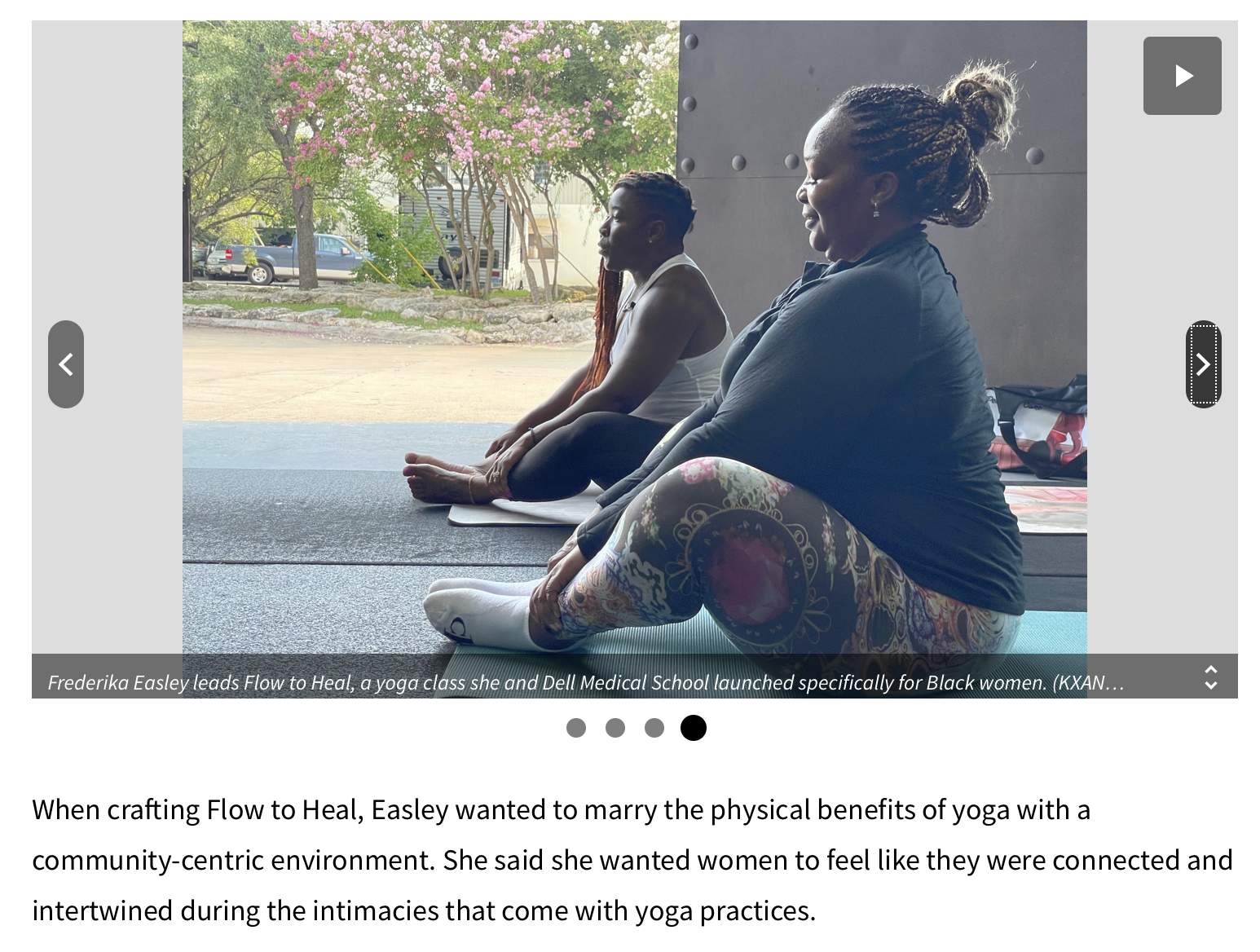
Our class has challenged the notion that emotions are personal, individual experiences. This article connects to this idea that emotions are a social process because Easley places great importance on her clients developing a sense of community, intimacy, and interconnection. The yoga class is not only a physically healing experience, it is a place of shared emotional support. Since emotions are not individual experiences, individual settings may not be the most conducive to healing.
Read more at: https://www.kxan.com/news/local/austin/austin-yoga-classes-aim-to-address-stress-inequities-in-black-women/
(3)
In this course, we discussed mental health and specifically depression. This article focuses on mental health issues that LGBTQ+ youth face. Additionally, finding programs and services that may help, such as therapy, is difficult. As we discussed in class, most traditional therapy models are tailored towards white middle-class cis-het people. Therapy and other forms of help are not tailored to the issues facing LGBTQ+ youth. The article says that coupled with years of oppression, this lack of sufficient programs and services has led to LGBTQ+ youth having much higher rates of depression, anxiety, and suicide. To address this problem, The National Center for Youth with Diverse Sexual Orientation, Gender Identity, & Expression (National SOGIE Center) was established in 2021. The National SOGIE Center promises adequate help that centers queer identity.

(4)
While many may claim that we live in a post-COVID United States due to the widespread usage of vaccines, COVID-19 has had a lasting impact in the form of grief. Countless Americans lost loved ones and have been burdened with grief and finding closure. In this course, we discussed the concept of closure and grief when reading Closure: The Rush to End Grief and What it Costs Us by Nancy Berns. Additionally, throughout this class, we have also considered how one’s identity impacts these emotions. In the case of COVID-19, Black Americans were almost 2 times more likely than white Americans to die of the virus. The article also discusses how Black Americans have been subject to more grief for all of American history: from slavery to scientific racism, to an almost three times higher maternal mortality rate. Following its introduction, this article leads into anecdotes from various POC Americans on their grief and experiences throughout COVID-19.
These stories can be read here: https://time.com/6185064/black-americans-grief-covid-19/