

In this image, we see a male bartender dressed in recreational clothing serving a drink to his visibly distressed customer. His stoic expression is indicative of the kind of emotional labor he is expected to perform while making drinks: within his role as a drink-maker and server, he is also required to serve as a listener and sympathy giver to his paying customer. The experience of a bartender is rooted in emotional labor, as they are not simply expected to make and serve drinks, but also to “surface” or “deep” act as a friend. The customer is paying for both the drink and the experience of a friend who can listen to their problems, or the commercialized emotional labor commonly required in this career. The bartender’s clothing, and how similar it is to his customer, indicates that he is aiming to be seen as a casual friend on the same social level as his customer. This is another way in which he surface acts to fit his role.
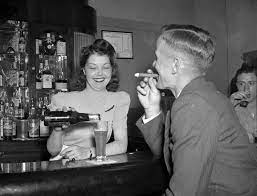
Though this image is about 50 years old, it captures the emotional labor female bartenders are expected to perform while working. Her posture, smile, red lipstick, and fashionable hair and outfit all act as a means to portray her sexuality; she is not only a bartender, but a female bartender who embraces her femininity to entice her male customer. She is not only in the business of making and serving drinks, but also as entertainment for her male customer base which is executed best when she can accentuate her feminine features. This is similar to the emotional labor that female flight attendents must do when interacting with male customers: she must be able to do her job, but in a way that is friendly and somewhat sexually intriguing.
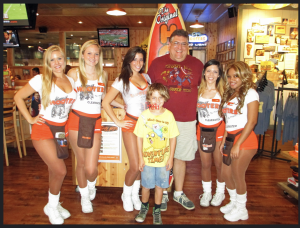
Hooters restaurant is a prime example of the sexualization of female waitresses and bartenders and thus, the emotional labor they must provide. Not only are they expected to perform all of the duties of a server such as taking and ringing in orders, serving the food, maintaining restaurant cleanliness, and performing cash register transactions, but also to entice their customers with their conventional sexual attractiveness. Customers at Hooters are not only paying for food, but also the experience of interacting with hypersexualized women who are being paid to entertain them. The father/son relationship in this photo is also an interesting one: by bringing his son to Hooters, he is teaching that women sell a service (food) in addition to their sexual intrigue. Thus, female Hooters servers must surface and/or deep act as hyperfeminine in order to adequately represent what Hooters advertises.