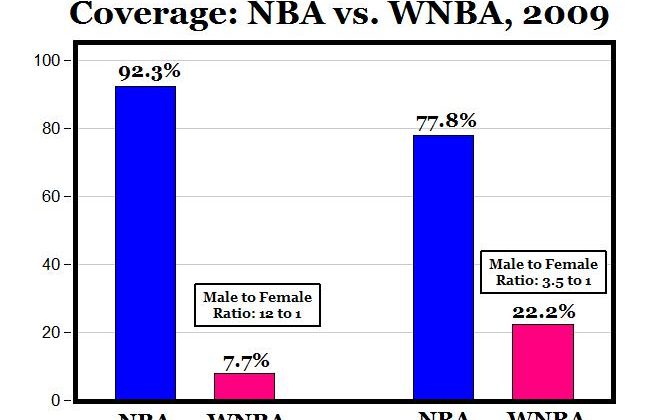
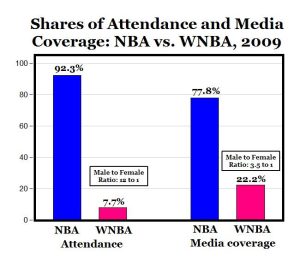
This is a controversial dichotomy to break down because as the article points out, wouldn’t it make sense that media coverage would cater to the amount of league enthusiasts in order to supply media access where there is more demand from fans? While from a basic economic standpoint this makes sense, the principle of the issue is where there needs to be a change. However, as the graph shows, the wNBA received media coverage not directly proportional to fan turn out. This demonstrates how the gender divide in televised sports is created by networks, rather than following trends with respect to data and real time numbers. If they have the ability to over-report Women’s pro-basketball through media, why not over report at an equal rate? This type of inequality is systemic due to inequitable treatment that perpetuates these major contrasts, and lead to major stratification in job salaries between men and women.
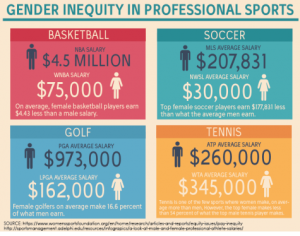
As exemplified through this image, the wage disparity for female vs male athletes indicates major structural problems creating pressures on females to preform greater emotional and body labor. Their incomes are more dependent on their success, because they are seen as inferior athletes as demonstrated by this lesser salary the leagues pay them in comparison to men.
CNBC recently released an article talking about the intersection of these disparities: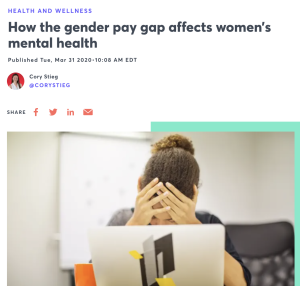
This article draws attention to how the gender wage gap has a profound impact on mental health and emotional management of females. Kim Churches from the American Association of University Women comments on this topic, “A lot of our self-esteem and self-confidence is derived from our work — after all, we spend a great deal of time and invest a lot of energy in the workplace,”