BT 4: Katie Paris

The first 8 of these I chose because they really reminded me of a moment being frozen in time, and I find that so interesting. You can imagine the time passing, but also freezing on that instant. The last two were a little different and I picked them because they did a great job juxtaposing the two moments in time, showing time passing in a single image, and I think thats such an interesting idea and a feat to accomplish.

Time

SPAIN. Sevilla. 1987. Dancer’s skirt, Feria in Sevilla.

About Time

Brown Sisters by Nicholas Nixon, 1975-Ongoing: In this series Nixon has photographed four sisters every year since 1975. We explicitly see how these women age and grow, and we also implicitly see how the photographer grows as an artist.

Dewy by Tracey Baran, 2000: This image shows an old glass filled with some liquid. The glass has clearly not been touched for a while so we see how everything has built up on and in it over time.

Downtown Detroit by Camilo Vergara, 1991: Vergara captures a changing Detroit, putting in stark contrast the old and the new parts of the city so through a still image we see how the city changes through time.

Copperhead Grid by Moyra Davey, 1990: Davey takes macro images of dilapidated pennies, showing us how these universal (to Americans) objects change and decay over time/

Sunburned GSP#888 (Strait of Juan De Fuca, new years day) by Chris McCaw , 2016: McCaw takes light sensitive negatives and leaves them in the sun for hours and the sun literally burns its way across the print. As time passes it imprints itself on the paper.

Sleep of the Beloved by Paul Schneggenburger, Circa 2013: In this series the photographer sets up a camera over a couple’s bed and takes a long exposure shot that lasts for hours, capturing a couples entire night’s sleep in a single image.

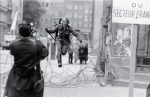
Reframing History by Susan Meiselas, 2004: Meiselas had taken photojournalistic images of the Nicaraguan civil war 25 years before her Reframing History series. In this series she reprints the images on billboards in the location she had taken them decades before.

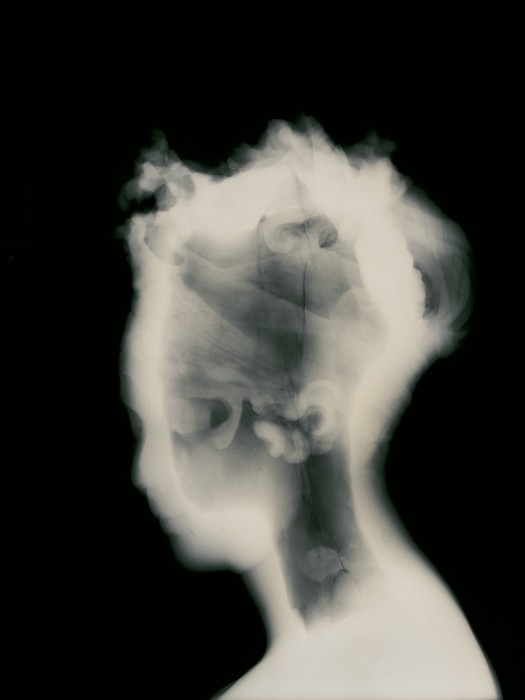
History’s Shadow by David Maisel, 2011: In this series Maisel takes x rays of museum artifacts, making images that look like transmissions from a distant past.

Sears Roebuck Darko Rough by Alison Rossiter, 2012: In this series Rossiter takes negatives that expired decades ago and develops them, seeing through this process both what was left behind on the negative and how time has altered the image.

From Deep South by Sally Mann, 1998: In this series Mann uses a photographic process from the 1800s to capture Southern Landscapes, making images imbued with beauty and the troubling history of where they are shot.

Rough Draft

RD too True


Image 1: Thomas Knuebuhler “untitled #4” 2003. The clear, simplistic, and breadth of the photograph seems very empty, yet suggests the narrative of the countless individuals working/living/etc. in the building.

Image 2: Alex Prager “Susie and Friends” 2008. Prager’s photographs are often inspired by films such as Pulp Fiction, which is clear in the vibrant, busy photograph here, which invites the viewer to imagine a multitude of stories surrounding the subjects of the photograph.

Image 3: Hannah Starkey “Untitled” 2003. I like the painting-like quality of this photograph, which seems to play with the truth of the image before us, wavering between photography and painting. This quality also makes it difficult to first discern what we’re even seeing.

Image 4: Yeondoo Jung “Location #1” 2005. The construction of a stage in this image makes the viewer question the reality of everything else, playing into the preconceptions of theater and the stage.

Image 5: Rune Guneriussen “Bustle of plausible alliances” 2013. Guneriussen’s work constructs odd, yet beautiful structures in nature, which don’t look as if they would exist in reality, but they do, blurring the line between expected truth and the photograph.

Image 6: Marilyn Minter “Gasp” 2004. I love the visceral, gritty quality of these images, which seem almost unreal with the colors and items in the photograph. The viewer attempts to figure out the “truth” of what is happening in the photograph.

Image 7: Todd Hido. I love the creepy, lonely feeling of the photograph. Even though the image is of a house, a familiar, often “safe” object, the portrayal in this work seems unsettling and off.

Image 8: Philip-Lorca Dicorcia “W” 2000. This image is so driven by the color palette, which makes the truth of the photograph stretch, the viewer questions whether these people are in the same room/same time/etc.

Image 9: Yinka Shonibare “Diary of a Victorian Dandy 14:00 Hours” 1998. Similar to the last image, the painting-like quality of this photograph seems to stretch the truth, especially within a historical context. The image is full of narrative, with various elements and stories playing out at once.

Image 10: JR “Rooftops” in Women are Heroes 2009. This image is combination of photography in the real world being photographed. The truth of the unreal looking women on the rooftops pushes the viewer to question the reality of the image.