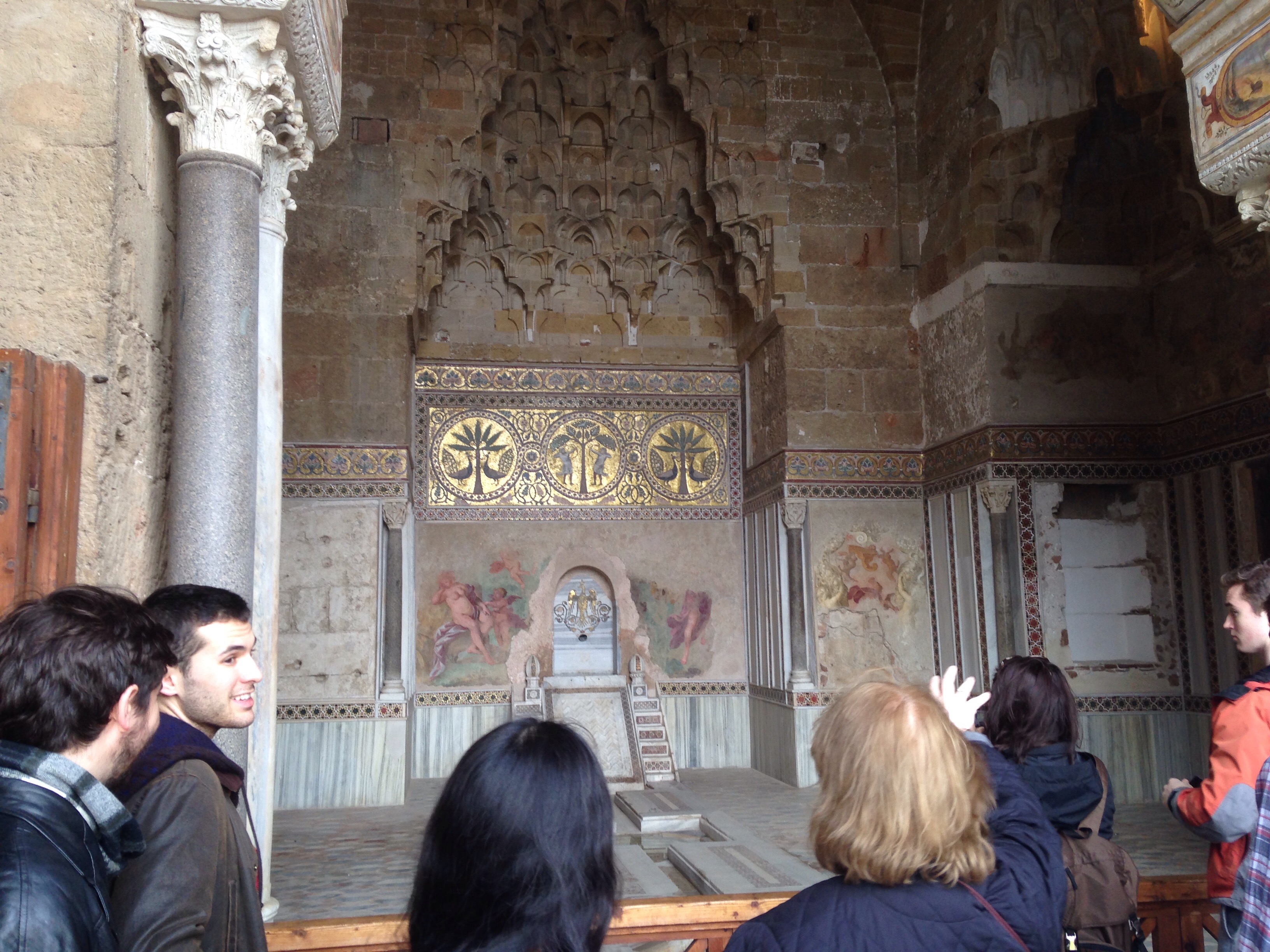
The Zisa castle is a beautiful example of Arab-Norman architecture in Palermo. Construction began in the 12th century by William I and was completed under his son William II. Arab craftsmen worked on the castle and the influence of Moorish architecture is evident, from the Arabic inscriptions and Islamic arches throughout the structure to the name itself – La Zisa is derived from the Arabic word al-Aziz, meaning “splendid.” Norman kings used the castle as a summer residence as, at the time, it lay just outside of the city limits of Palermo. Pictured here Professor Boyd describes the outdoor fountain, which flows down into the gardens of the castle.
For Shame! (Palermo)
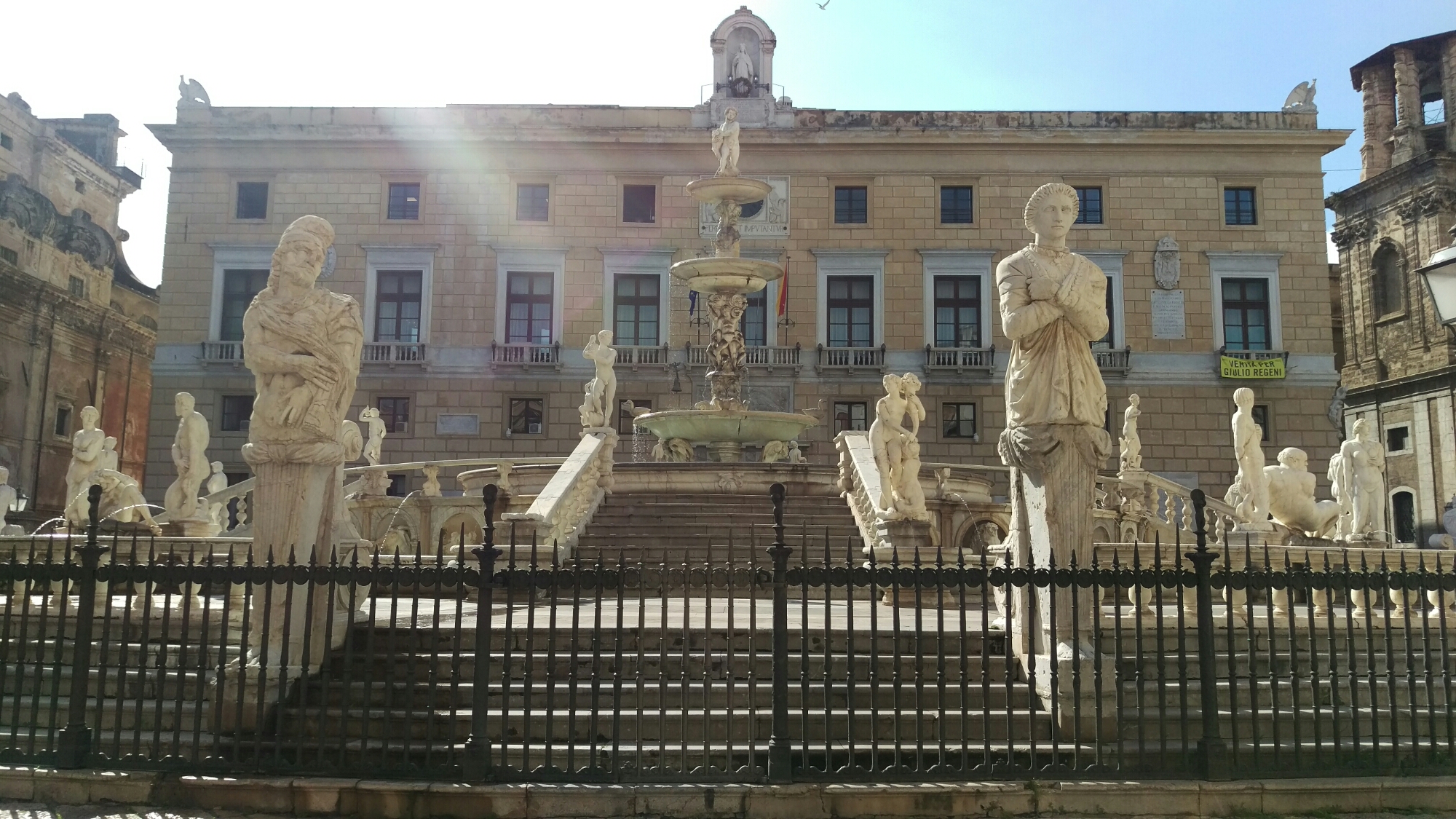
My favorite sight in Palermo was the Fountain of Shame. Its name comes from the nakedness of the statues, its location by a government building, which alludes to the corruption of the government, and the shameful neglect to another building next to it. Despite the supposed shame associated with the fountain, it is still gorgeous. I loved identifying the various statues of the gods through the intricate details representing symbols of the deities. We found Neptune, Ceres, Hercules, Bacchus, Apollo, and Diana for sure. Try to identify some gods yourself!
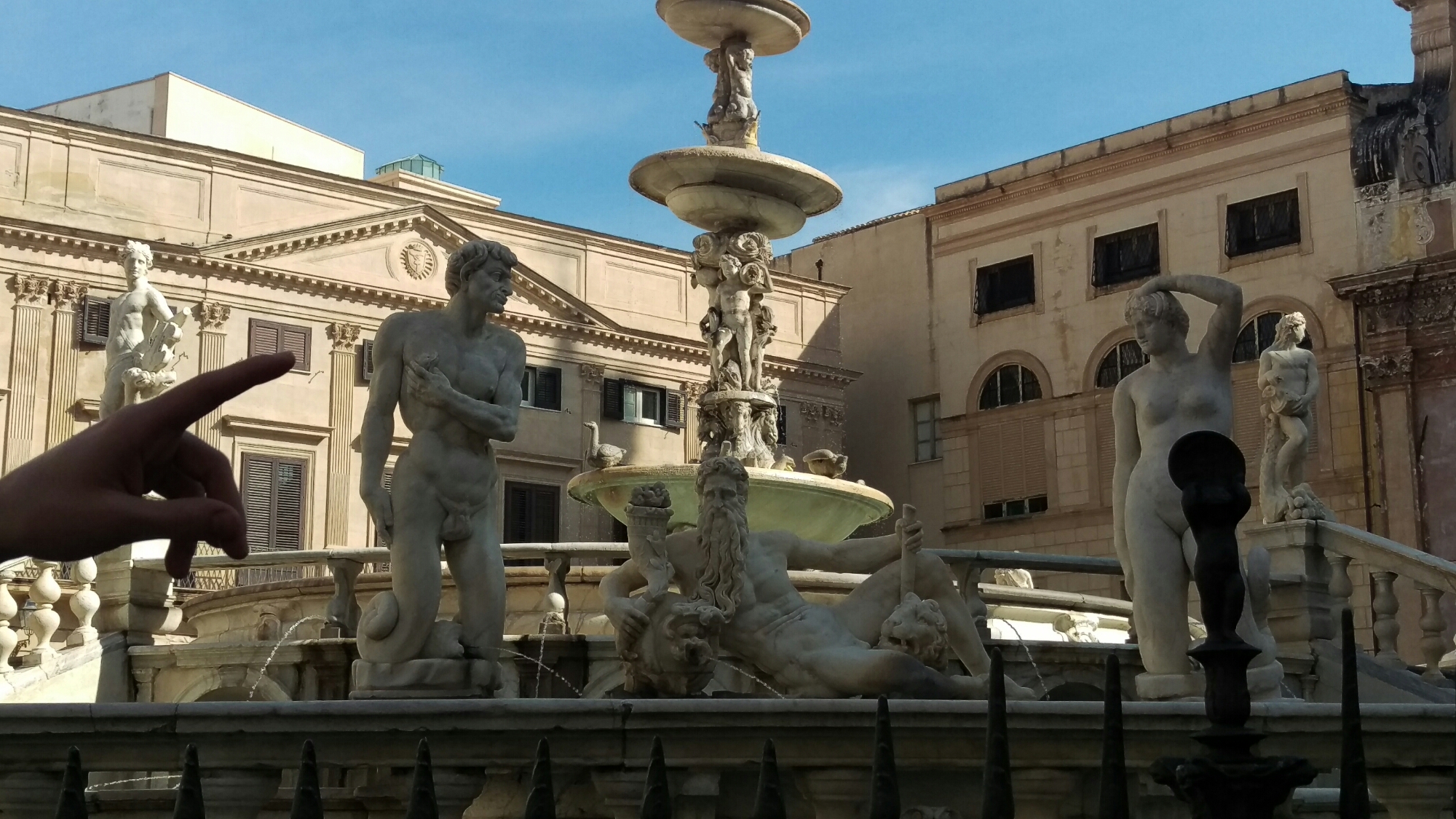
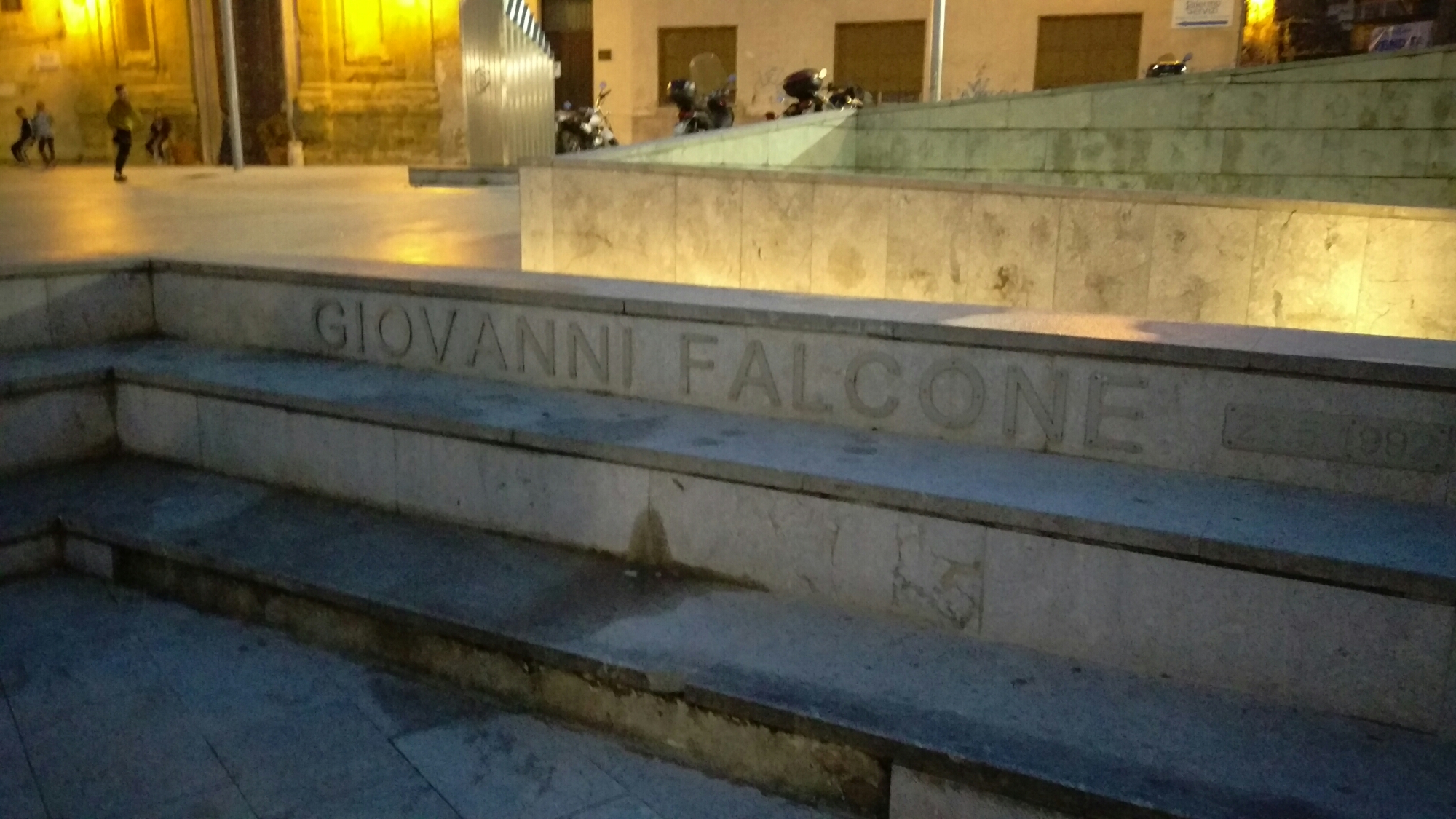
This idea of corruption and shame continued during our Addiopizzo tour that evening. We learned about the Mafia’s role in the city, including how they stole money intended for infrastructure, much to Northern Italy’s exasperation. Addiopizzo works to end another corrupt Mafia practice: the pizzo, a tax that establishes the Mafia’s authority over business owners. This organization thus works to educate people such as ourselves on the pizzo and other fights against the Mafia. The Piazza della Memoria was an appropriate stop, as it remembers those who have fought against the Mafia and been subsequently targeted.
The Most Important Mosaic (Selinunte)
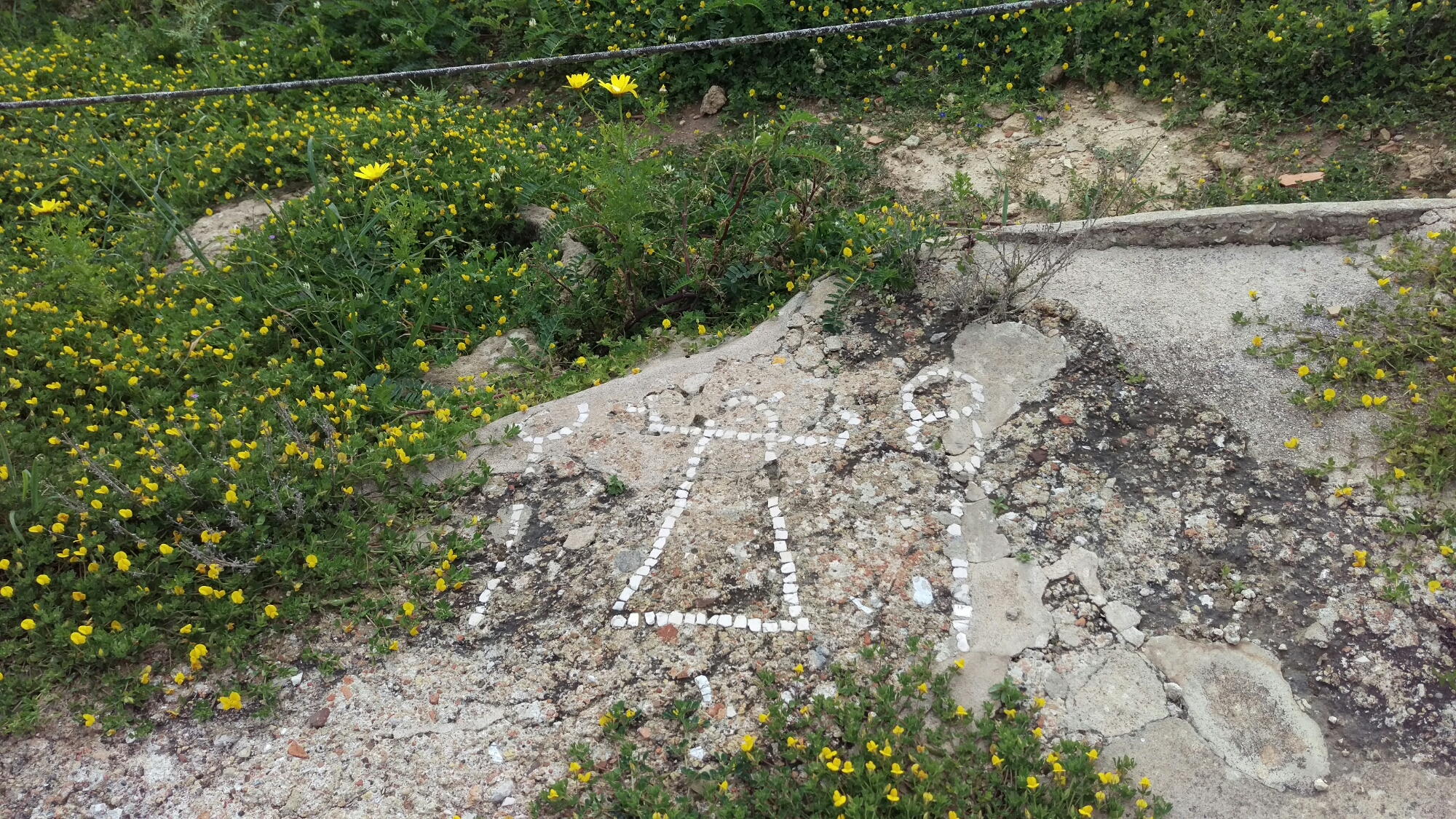
As Professor Boyd declared, this mosaic of the goddess Tanit was the most important mosaic of the trip. While it may only be a stick figure, she is purposefully depicted in this simple form in all places. Tanit is a goddess associated with fertility, prosperity, and trade, thus being an important figure of the Carthaginians. From the presence of this single mosaic, one can infer the presence of the Carthaginians in Selinunte, perhaps even a mix of Greeks and Carthaginians together.
A Trip Advisor Review (Ragusa)
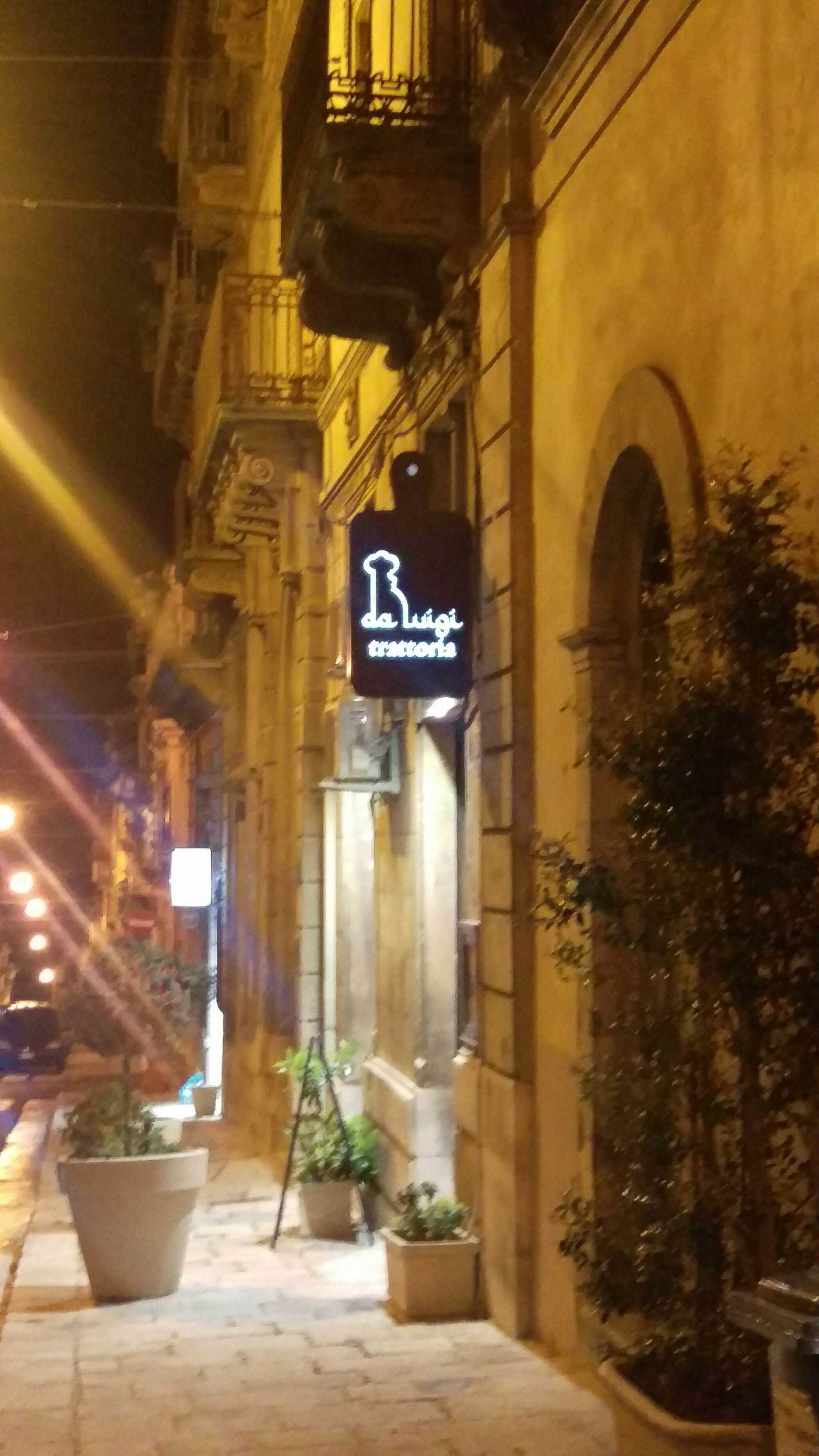
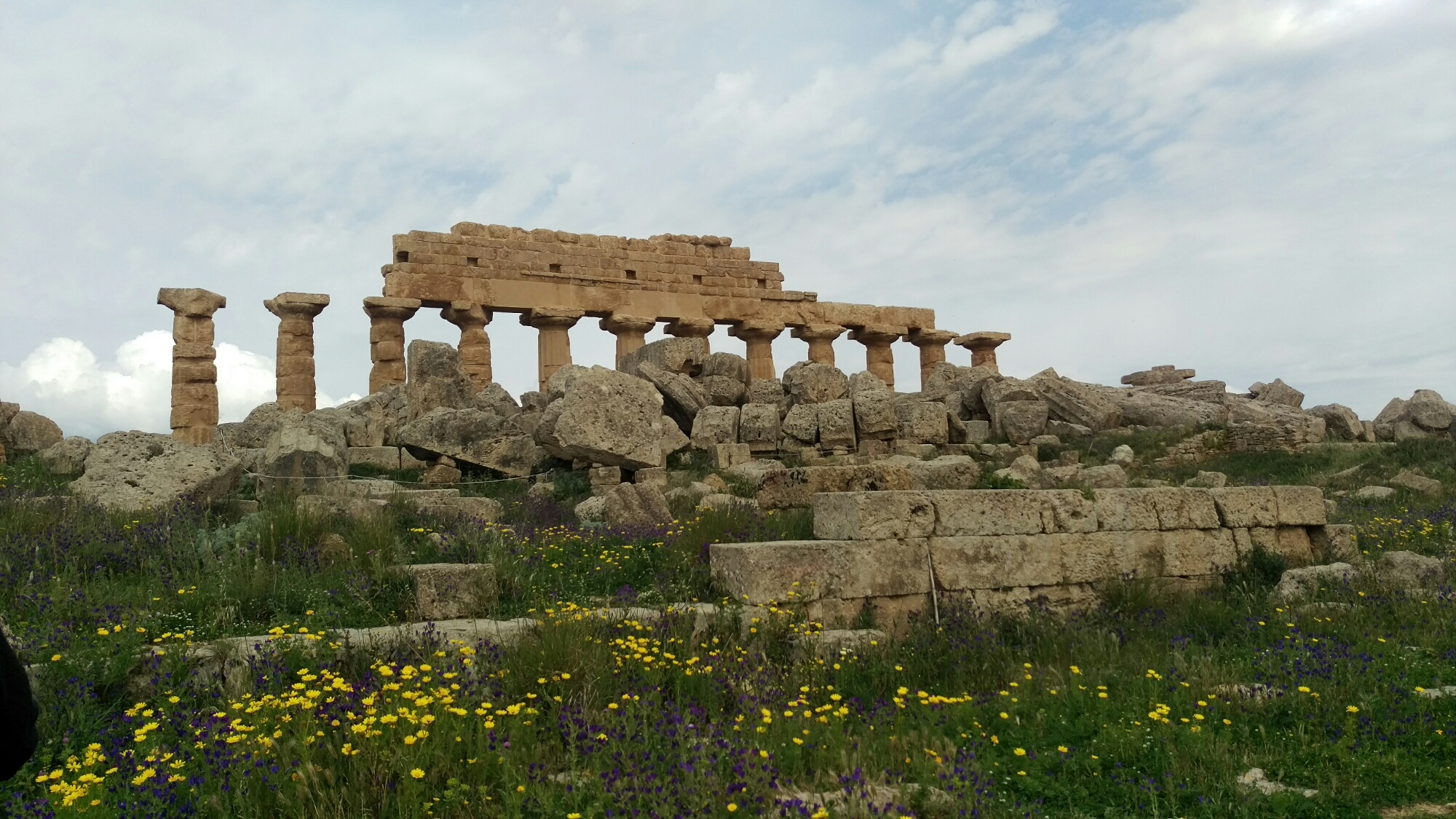
Discreetly tucked in a small street of Ragusa, Trattoria da Luigi has an unassuming appearance. Inside however, we found ridiculously good food and company. The food was remarkably good, even for Italy. The caprese salad’s tomatoes were the freshest of our trip, and my ravioli was heavenly. But what made Trattoria Luigi particularly special was the small family running the place. A team of mother and son served as our waitstaff and our chef was the father. Their friendly company made the meal a memorable one. The smaller pieces of our trip, like the shopping, games of Contact, and meals tend to be overshadowed by the larger sights. (Not that the temples we visited on the same day don’t deserve the attention. I mean look at this:
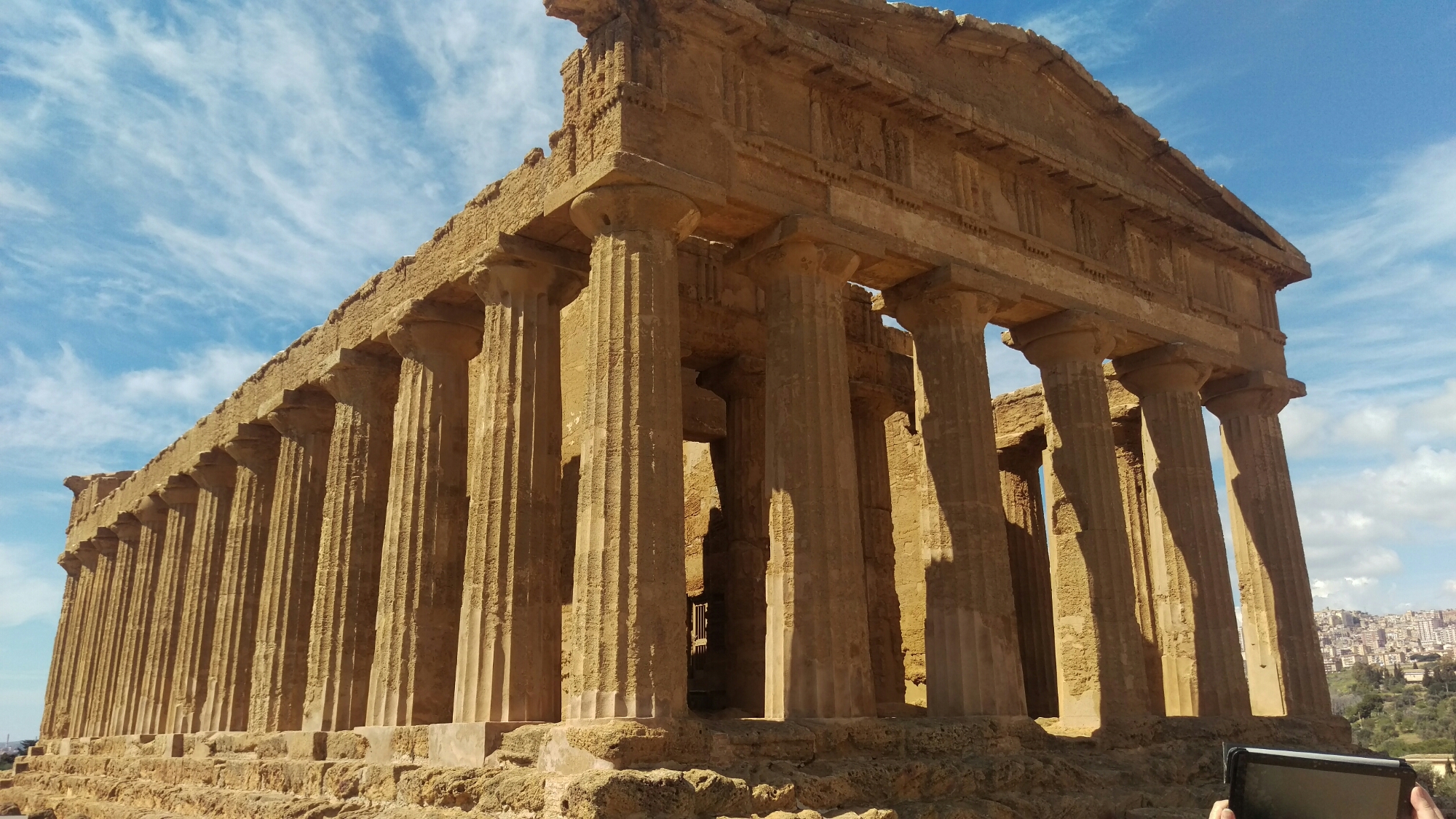
The Temple of Concord–shout out to Cicero for telling us the name–is stunning). These smaller moments were great times for bonding and enjoying delicious Sicilian food and I think they were just as important to our trip.
Half-Expecting a Nymph to Jump Out at Me (Siracusa)
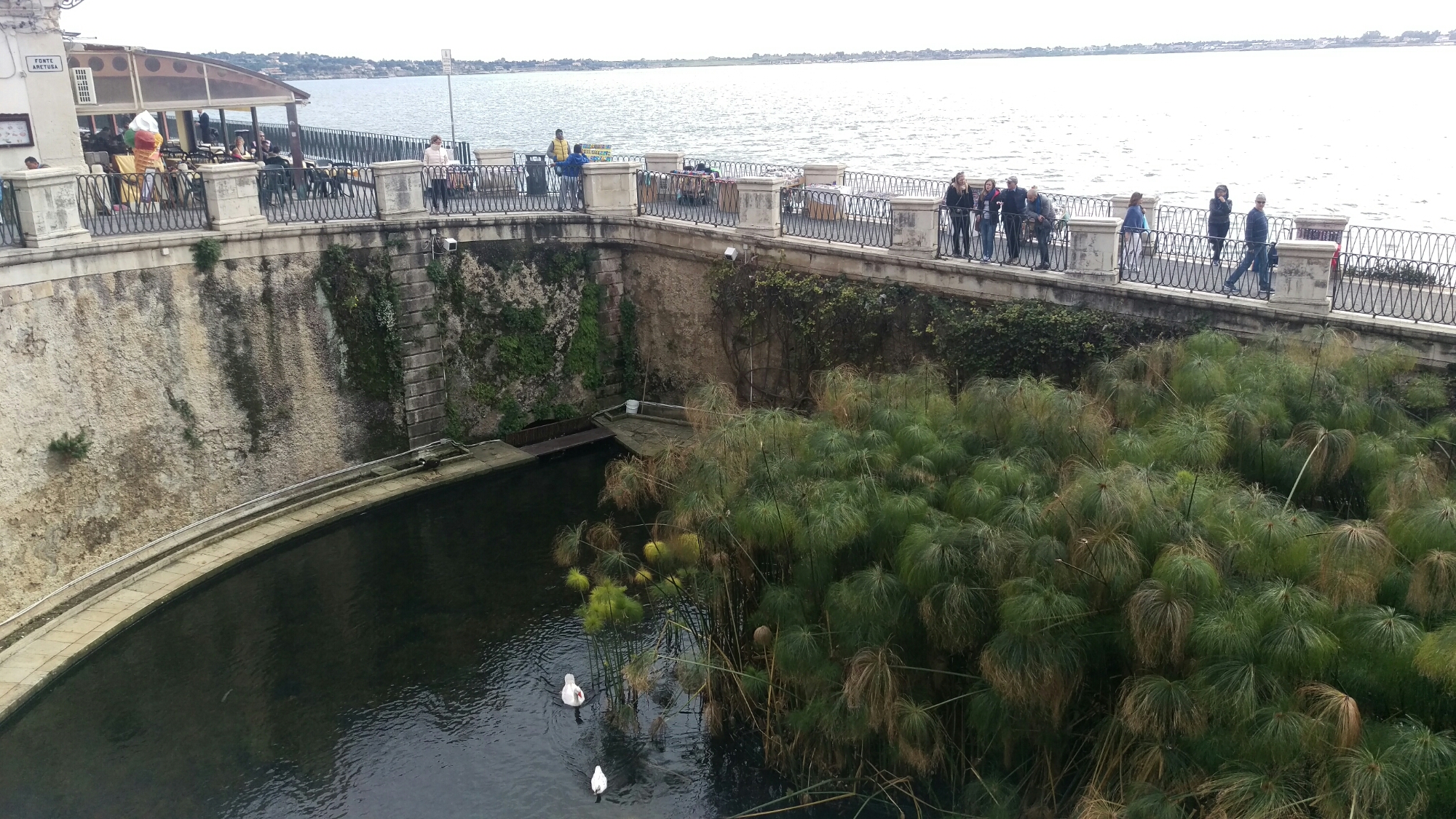
Just as it amazed me to stand near the ancient temples, the Spring of Arethusa equally moved me. It was at this body of freshwater that the nymph Arethusa supposedly arrived after fleeing the river god Alpheus. Arethusa explains her flight from Greece to Sicily to a grieving Ceres in Ovid’s Metamorphoses. In this way, Ovid subtly connects the old Greek stories to real Sicilian places. And that’s partially one goal of this trip—to connect the culture, history, and myths from Greece and Rome to Sicily in a concrete way.
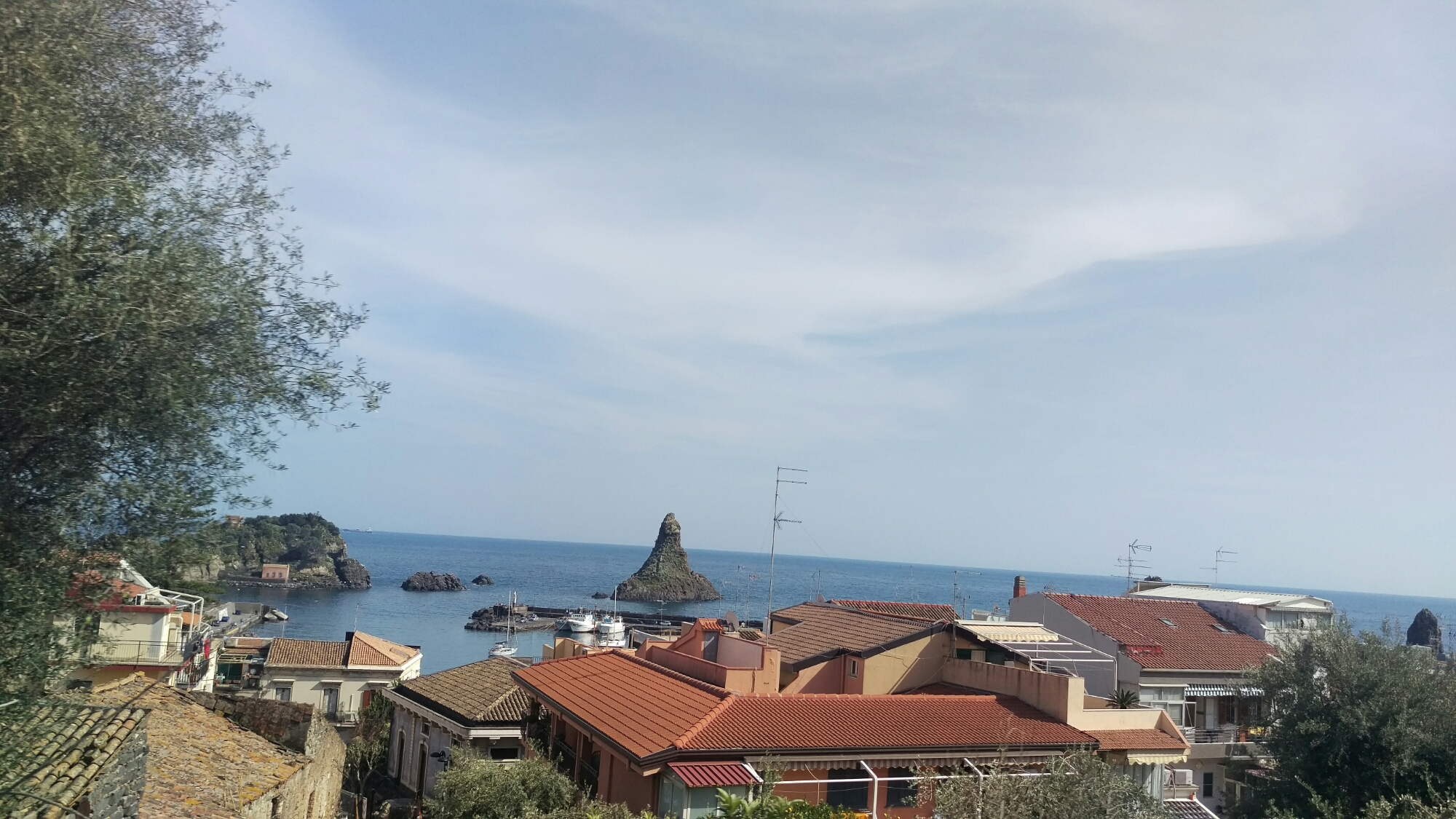
Technically, this wasn’t the same day, but when driving from Mount Etna to Catania, we passed by the rocks (read: the giant islands in the picture) supposedly thrown by the Cyclopes. I thought I would tag it on this post of real locations for ancient myths.
- « Previous Page
- 1
- …
- 6
- 7
- 8
- 9
- 10
- …
- 26
- Next Page »