La Spedizione Siciliana

Italian 3008 – Spring 2016 – Professors Barbara Weiden Boyd and Davida Gavioli

  • About
  • Authors
  • LoginPress
  • About
  • Authors
  • LoginPress

RagUSA!

March 29, 2016 By vwu

image

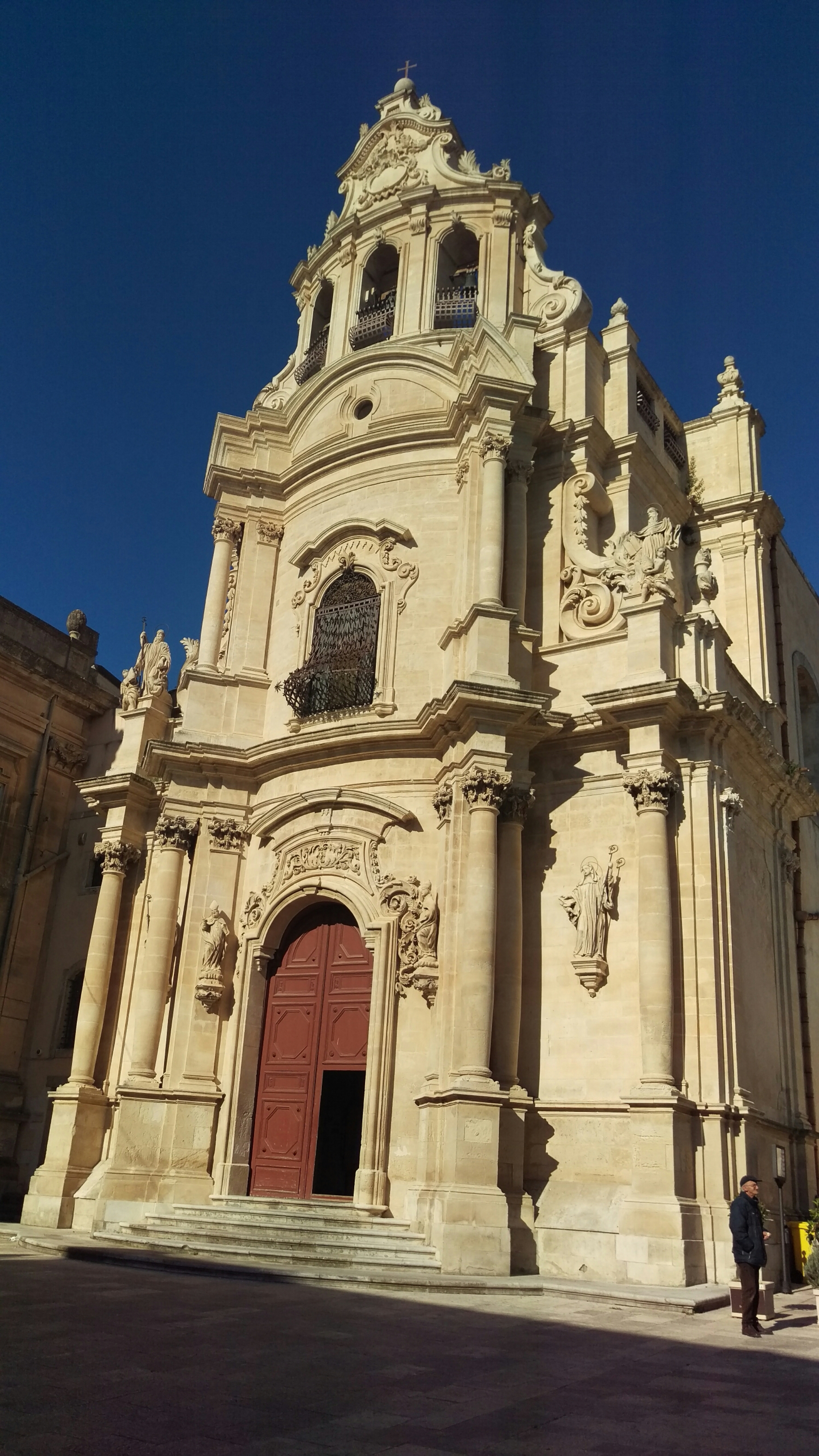
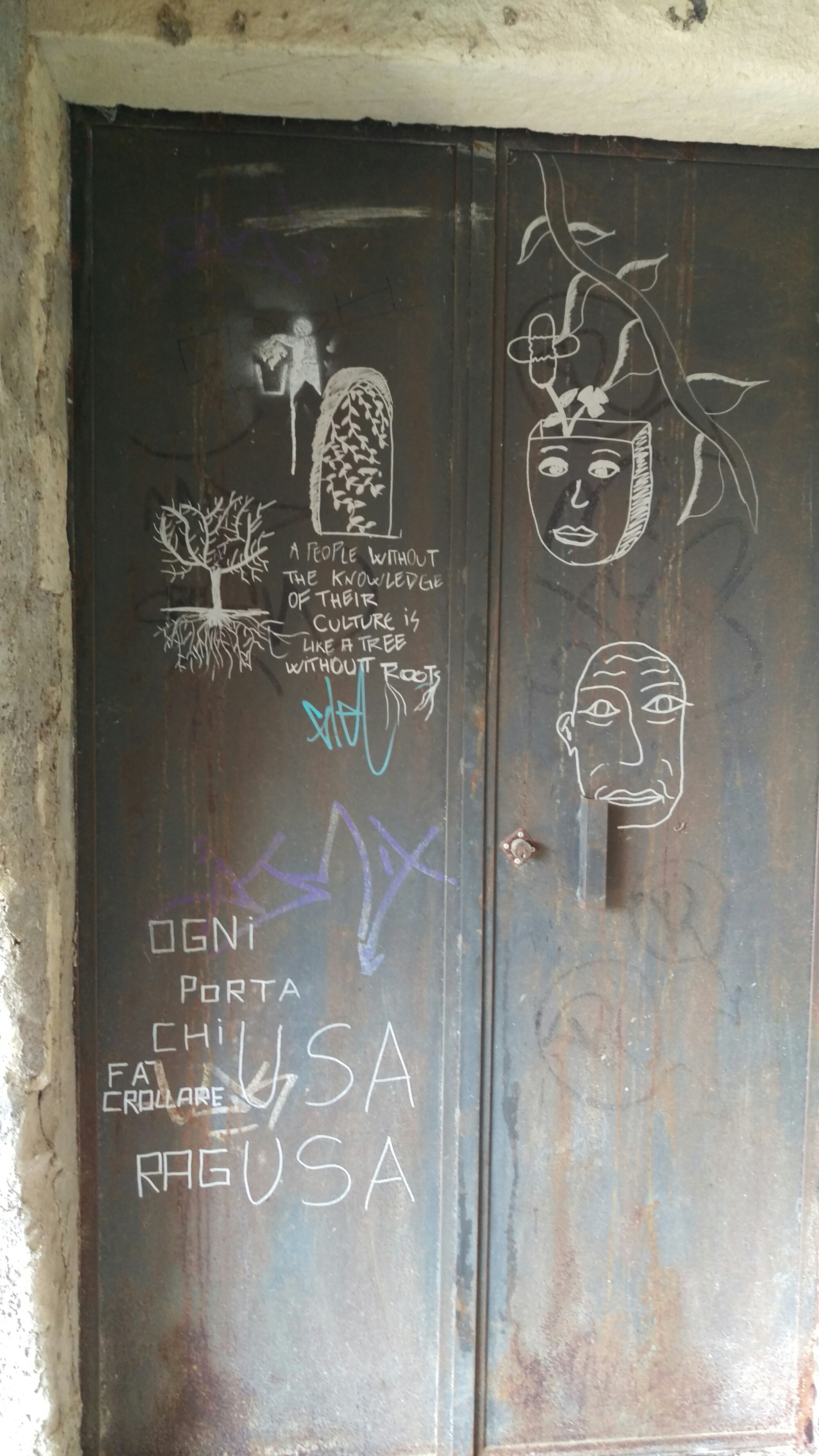
Our morning in Ragusa kicked off a day filled with beautiful, bright baroque architecture. The Duomo in Ragusa is at the top of a hill, boasting the dramatic architecture of its time. The Entasis or bulge of the columns, the fancy Corinthian capitals, and the curvature of the front all show an exaggerated flair of the time. These features, combined with its clever position and bright impact in the sun makes the Duomo a shining crown of the city. Later, while wandering the streets of Ragusa, we passed by this graffiti.
image

Even though we are not technically studying our own culture, it’s nice that we’re at least growing some roots in a place with such rich architecture, history, and people committed to its culture.
Filed Under: Sicily

Mosaics Galore (Monreale)

March 29, 2016 By vwu

image

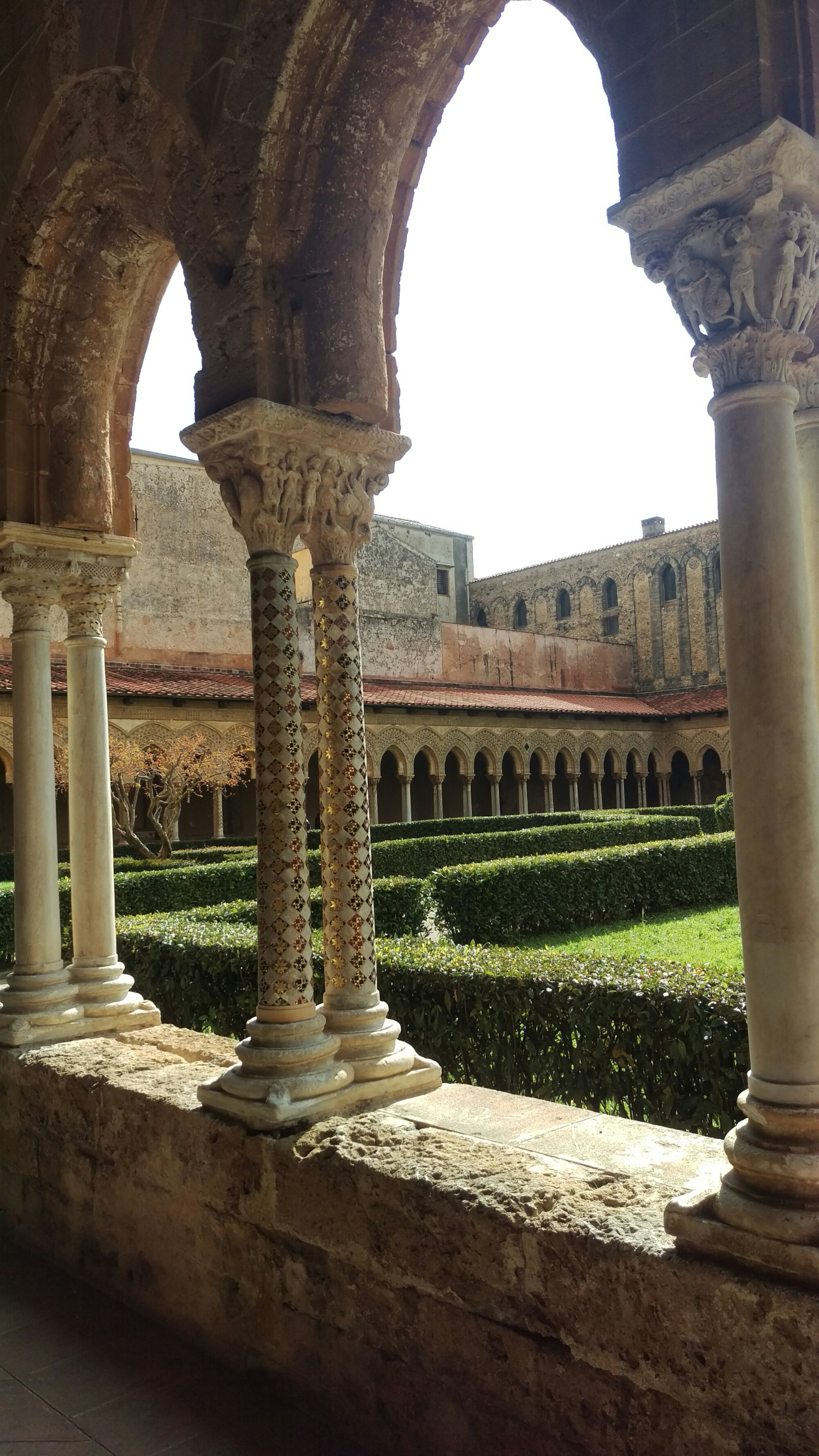
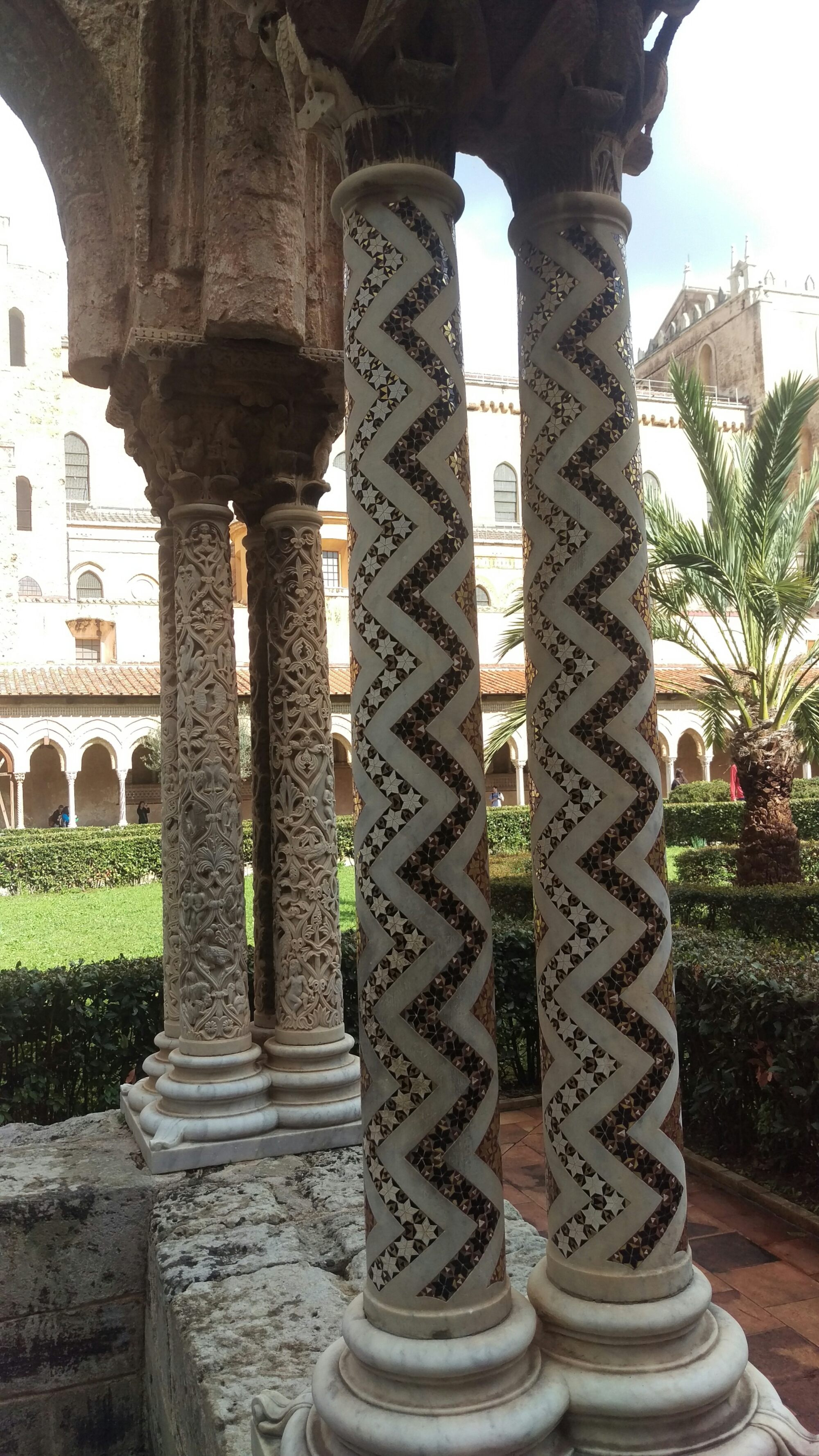
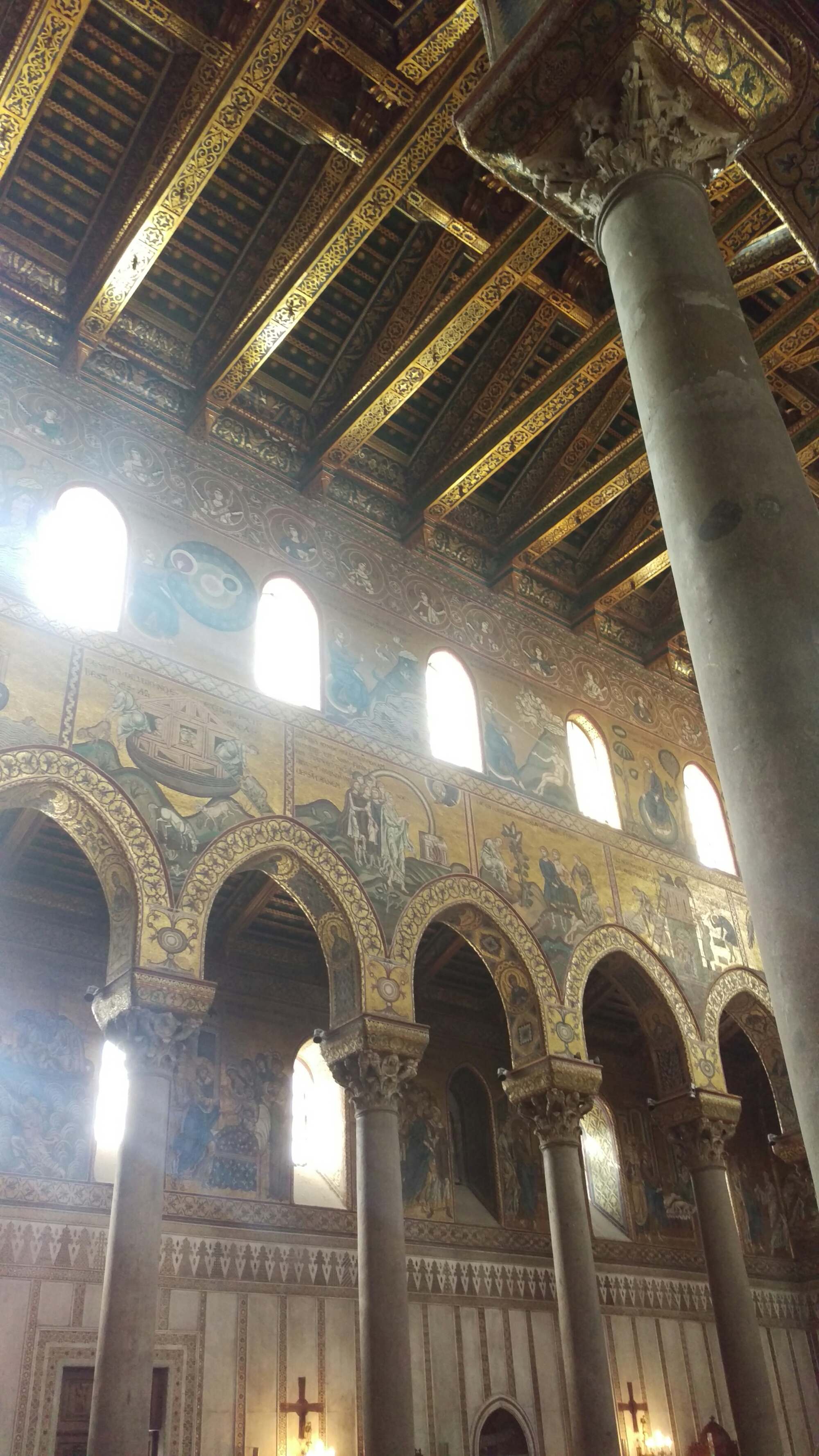
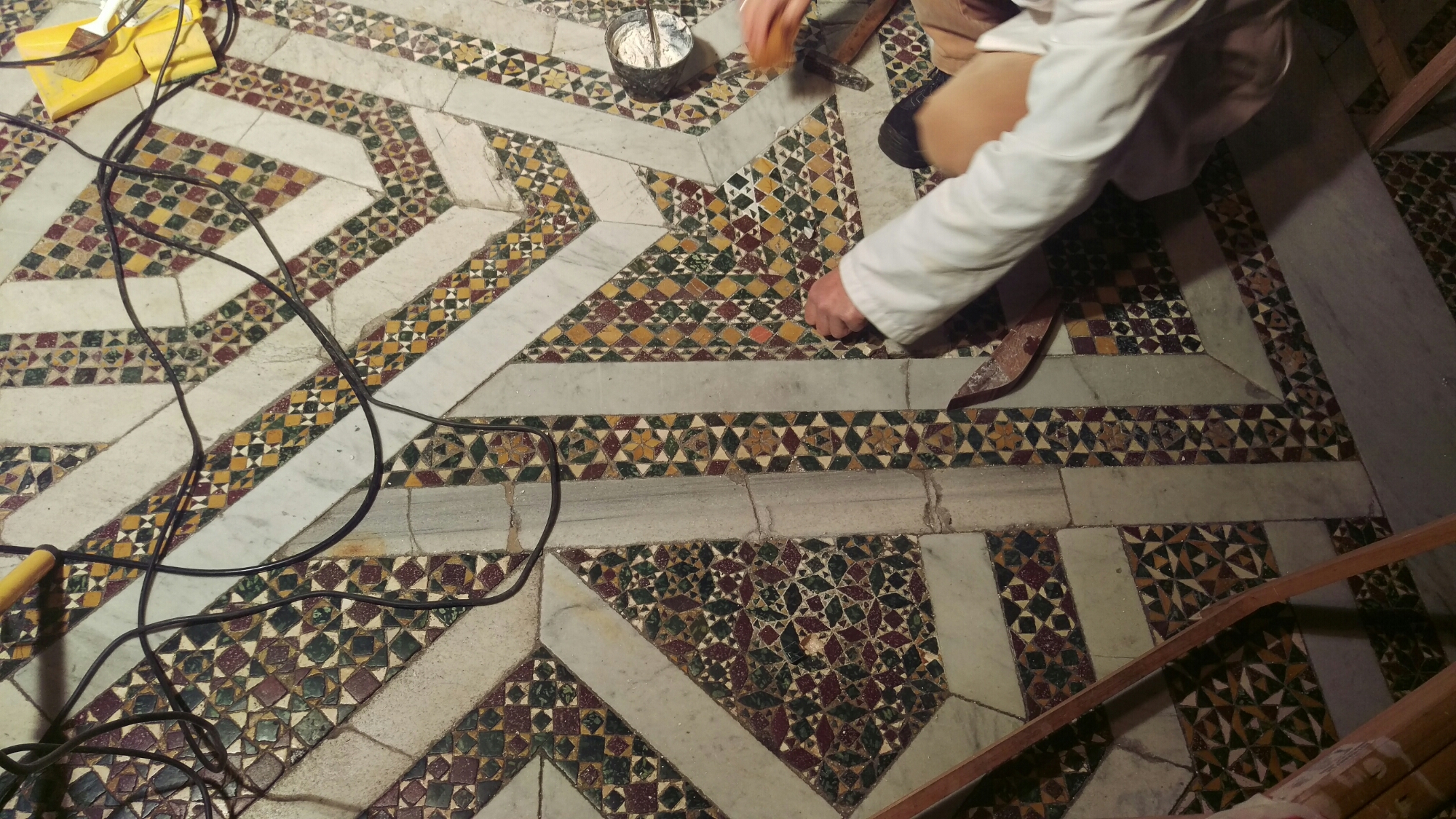
After climbing up 91 steps, we arrived at the Cathedral of Monreale. Although I thought I couldn’t be more impressed by mosaics after Cappella Palatina in Palermo, the Cathedral easily proved me wrong. With thousands upon thousands of square meters of mosaics glittering on the walls, the Cathedral is flawless in any direction you look. Like the Cappella Palatina, the Cathedral was a fusion of Islamic and Christian architectural features like the Christian figures and tree motif. We also had the luck to see the restoration process. The man worked slowly and precisely while choosing, placing, hammering, and cleaning the tesseras. The hammering in particular surprised me, as I thought the tesserae were too delicate for it.

image

Nearby, the Cloister doesn’t have the sheer grandiose of floor to ceiling mosaics of its neighboring church, but it was far more stunning to me. I could spend days in the Cloister in Monreale just examining each column’s capital, carvings, and mosaics.

image

image

Filed Under: Sicily

A Temple Worthy of Vulcan (or Perhaps Pluto?) (Catania)

March 29, 2016 By vwu

image

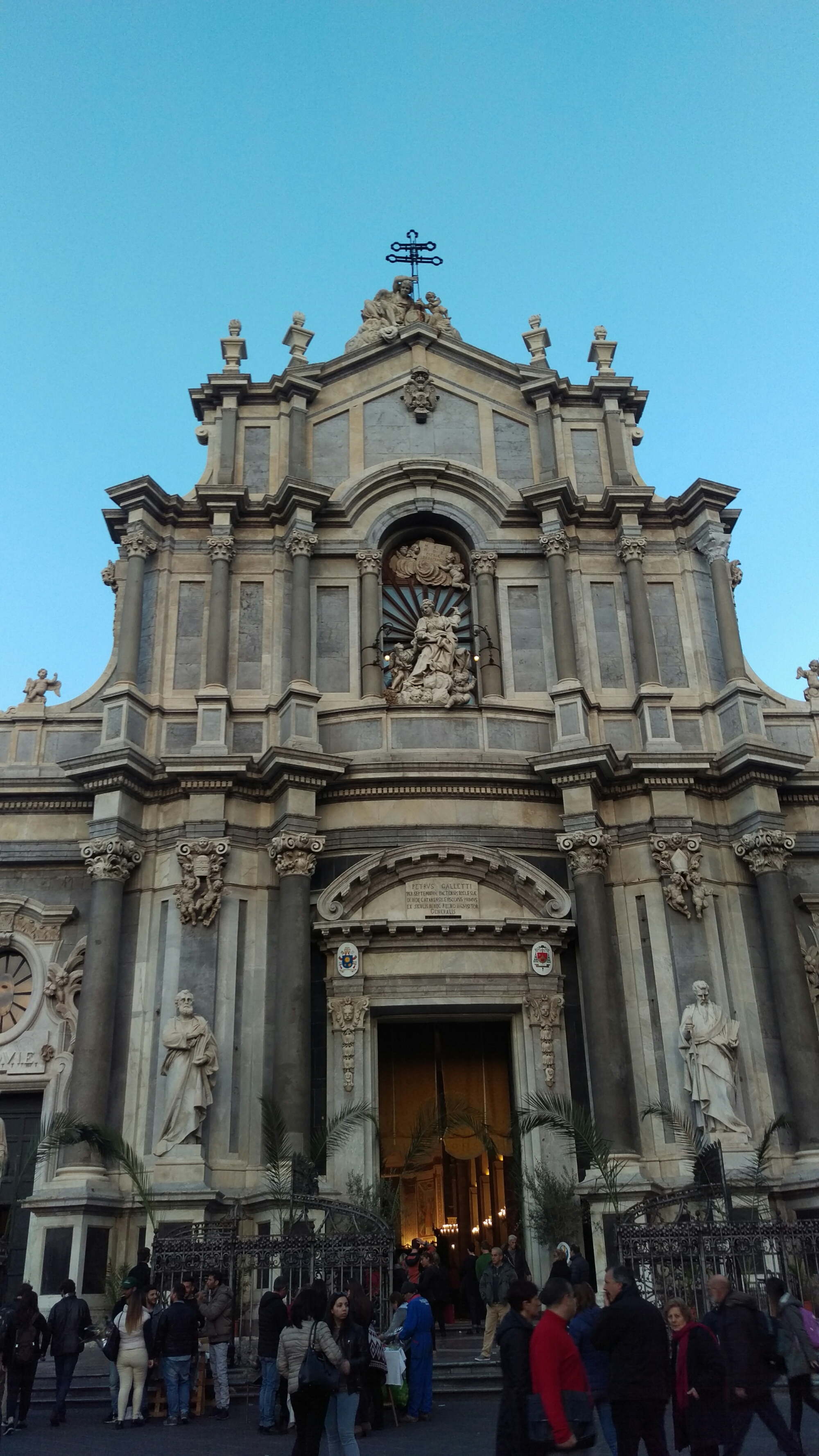
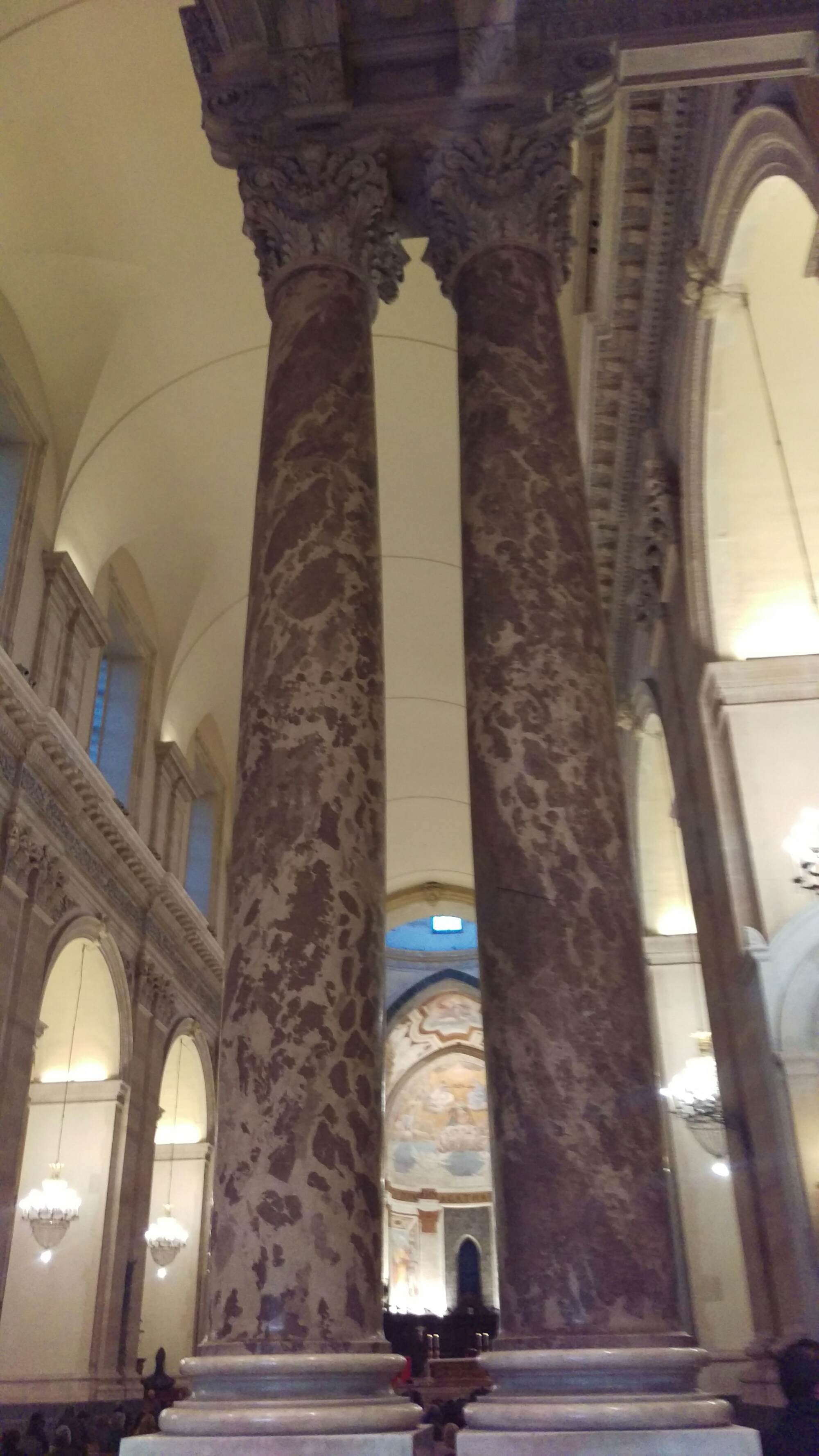
The Duomo di Catania stands out in stark contrast to the those of Ragusa, Modica, Noto, and Siracusa. Although the same devastating earthquake forced these cities to rebuild in the similar baroque architecture of the time, Catania was the only city that chose volcanic rock for the project. The grey rock was disjarring after seeing the blindingly white Duomos of the other cities, but the building still has the familiar elaborate Corinthian columns, haloed statues, and curved front. The unique choice of volcanic rock made the Duomo of Catania my favorite of otherwise similar churches.
image
Afterwards, a couple of us pondered whether an ancient temple made of this rock should be dedicated to Vulcan because of his association with volcanoes, or Pluto because of the aesthetic.

Filed Under: Sicily

Post #8: Syracusan ‘Sploring

March 29, 2016 By kvise

Hey again, friends, ready for the last post! Here we go:). This blog post will be discussing the Syracusan fort aka Euryalus Castle, where my group and I did some ‘sploring last fall, if you’ll pardon the alliteration.

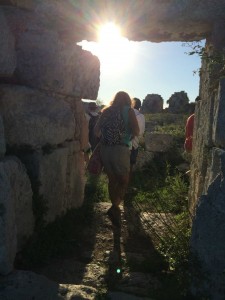
10172587_905296926172253_1067301918965390081_n One of my friends exploring one of Euryalus Castle’s many doorways.
The fortress is technically located in the town of Belvedere, but is really only a few miles away from Syracuse proper. It lies on the Epipoli ridge, and is composed of a series of walls, towers, and also underground tunnels, as well. It was built in the 400’s in the BC era by the Syracusans, specifically by Dionysius the Elder. He did so in order to renovate a part of the fortifications on the Epipoli that could withstand the attacks of the Carthaginians, which Syracuse and the surrounding area was facing at this point in time (Unesco 121). The entire structure is composed of white, porous stone and as a result stands out from the countryside. I would imagine it also would stand out at night under a full moon, although I have yet to see that. Although the structure wasn’t built in a day, it was built fairly quickly to ready the Syracusans for the Carthaginian onslaught, and required a fair bit of labor. To be specific, this structure required “60,000 troops and 6,000 pairs of oxen” to be “mobilized”. Quite a few laborers! Overall, it was a great structure to explore, although a word to the wise-if you like climbing on ancient things, make sure not to climb here. There are park ‘guards’, so to speak, and they’ll certainly come after you if they catch you climbing too high on the guard towers here (not that I would know).


Alright, I suppose this is my last post for awhile, so vale! Perhaps I’ll see you in Sicily :)


Works Cited:

UNESCO Heritage. “Syracuse and the Rocky Necropolis of Pantalica: World Heritage Nomination.” Syracuse. Web.

Tourism in Syracuse, Sicily – Euryalus Castle in Siracusa – Algilà Ortigia Charme Hotel.” Tourism in Syracuse, Sicily – Euryalus Castle in Siracusa – Algilà Ortigia Charme Hotel. Web. 29 Mar. 2016.

Filed Under: Sicily

Day Two: Thoughts on Palermo

March 28, 2016 By alamont

Palermo, the biggest city in Sicily, is not overly impressive upon first examination. I mean that as an insult. I was expecting a somewhat more modern city, or at least a more vibrant one. In some ways, the city seemed stuck in the 1960s. Or at least it’s progressing but is behind in part because of the effects from the significant bombing in World War II and the Mafia. Graffiti was all over the place, much of it political.

IMG_0487

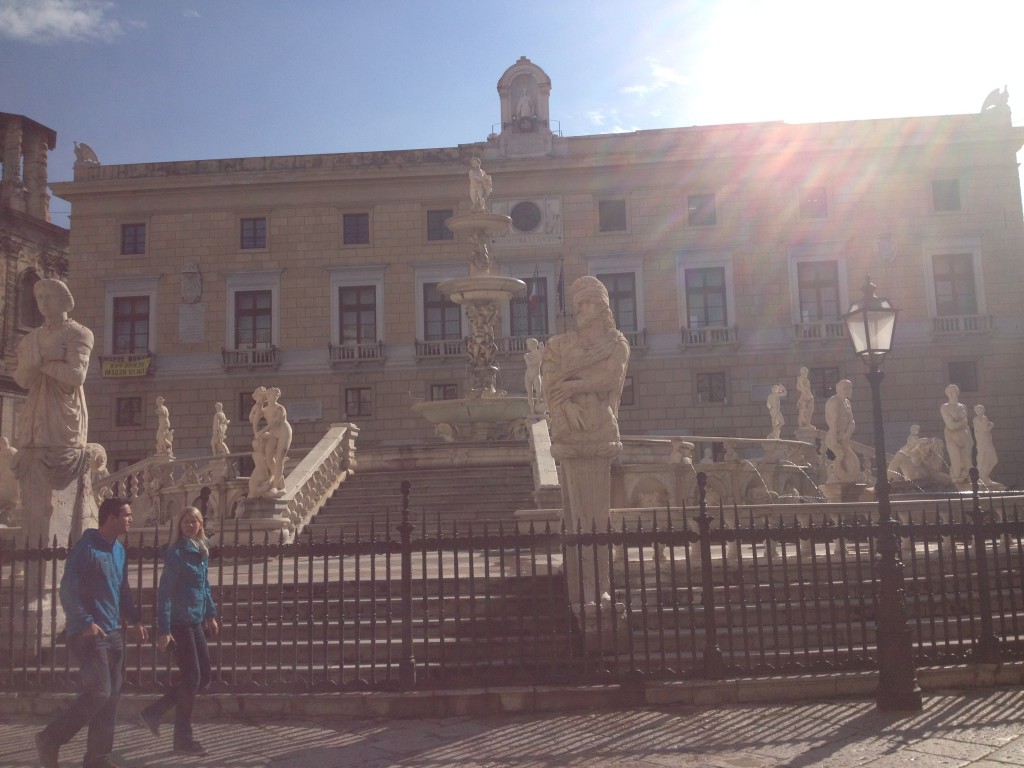
The above fountain is one of the nicest in the city, but the story behind it tells a more complicated story. The fountain was originally from a villa on the mainland of Italy, but after the owner died, the Palermo government bought the fountain and had it moved to the city. I would expect a city like Palermo to have commissioned fountains themselves, not bought the scraps of a villa. Maybe that’s a little harsh, but what I’m getting at is that Palermo to me lacked a central core. The main square of the city, based around the theater that is the third biggest in Europe, does not feel befitting to the largest city in Sicily. Perhaps most disappointing to me was walking through one of the old market streets and not even realizing that I was because there was so little activity going on.

Another thing that surprised me was the area near to the water. Palermo has a big active port, and then there is a long stretch of land right on the water. That land has a park on it, and so there are no buildings within a hundred yards of the water. Then, a busy road cuts parallel to the water meaning that getting from the buildings to the water is not an easy task. Therefore, unlike a lot of cities, Palermo does not have much of a waterfront district with restaurants and shops.

While this post has been mostly negative, there were plenty of things that I enjoyed in the city. Learning about the anti-Pizzo organization, trying some of the good street food, and taking in the cathedral were great.

Filed Under: Sicily

  • « Previous Page
  • 1
  • …
  • 7
  • 8
  • 9
  • 10
  • 11
  • …
  • 26
  • Next Page »

Authors

  • abradley
  • aglynn
  • agorman
  • alamont
  • bboyd
  • cdewet
  • dbanks
  • dgavioli
  • djohnso
  • dvargas
  • gmaslak
  • jglewis
  • jhartley
  • kgilmore
  • kvise
  • mcolbert
  • mkim
  • ssim
  • vwu
  • About
  • Authors
  • LoginPress

courses.bowdoin.edu