La spedizione siciliana 2.0

Italian 3008 – Spring 2018 – Professors Barbara Weiden Boyd and Davida Gavioli

  • About
  • WordPress Software for Your Smartphone

Segesta

March 20, 2018 By Louisa Moore

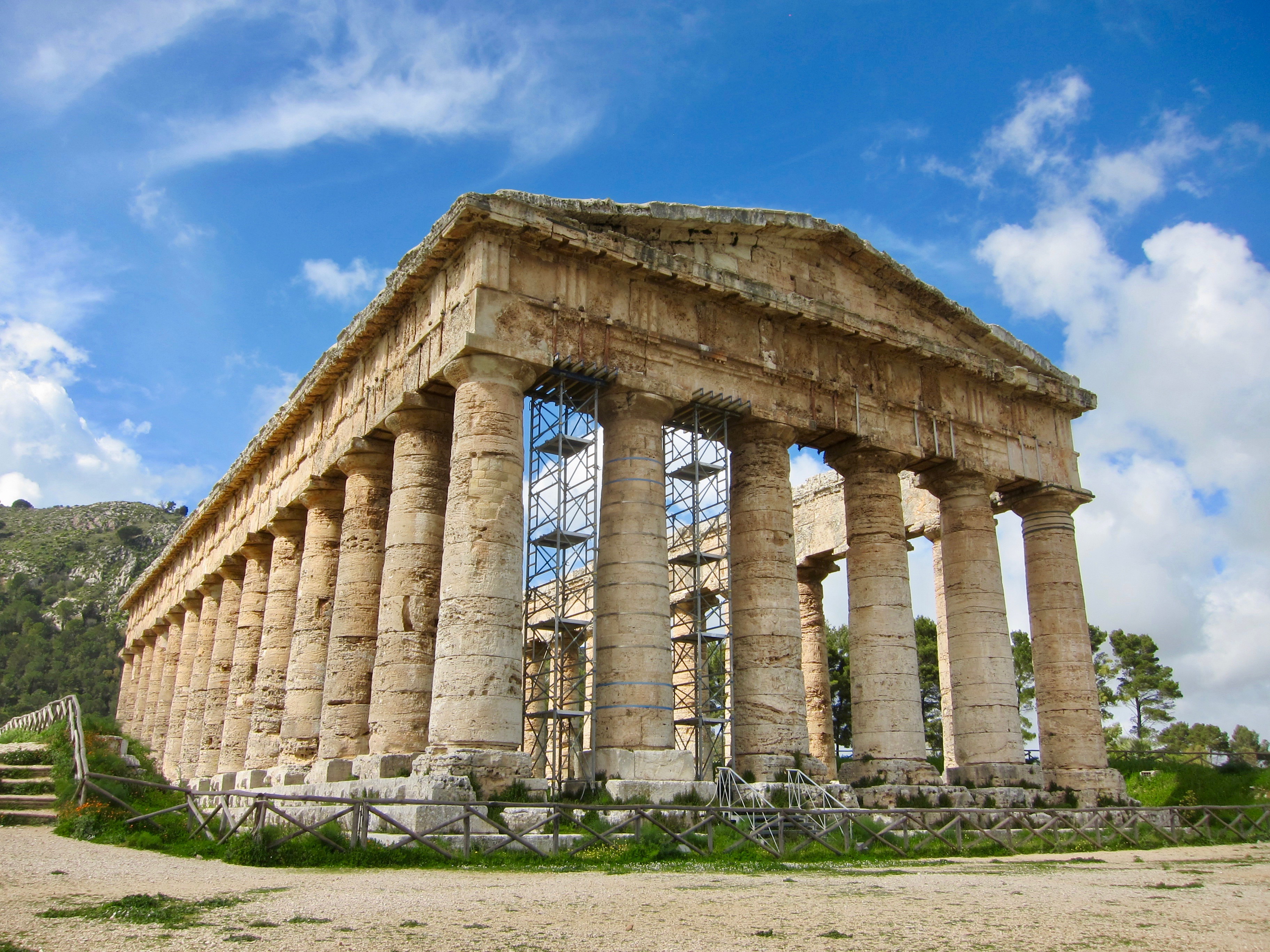
3/13/18: On Tuesday, we left Palermo and visited the ancient site of Segesta. Segesta was inhabited by the Elymians, a group of people whose background is very uncertain. We do know, however, that they were not Greek, and that they were allied with the Athenians and factored heavily in the Athenian expedition to Sicily. According to Thucydides, the Segestans needed help in their skirmishes against the people of Selinunte. They fooled the Athenians into thinking they actually had wealth, and the temple (pictured below) might be an example of that. This temple was begun in the 420s BCE, just years before the Athenians would have come to Segesta to see if they had enough money to support their expedition. It was unfinished, too, suggesting that the Segestans’ wealth wasn’t actually great.
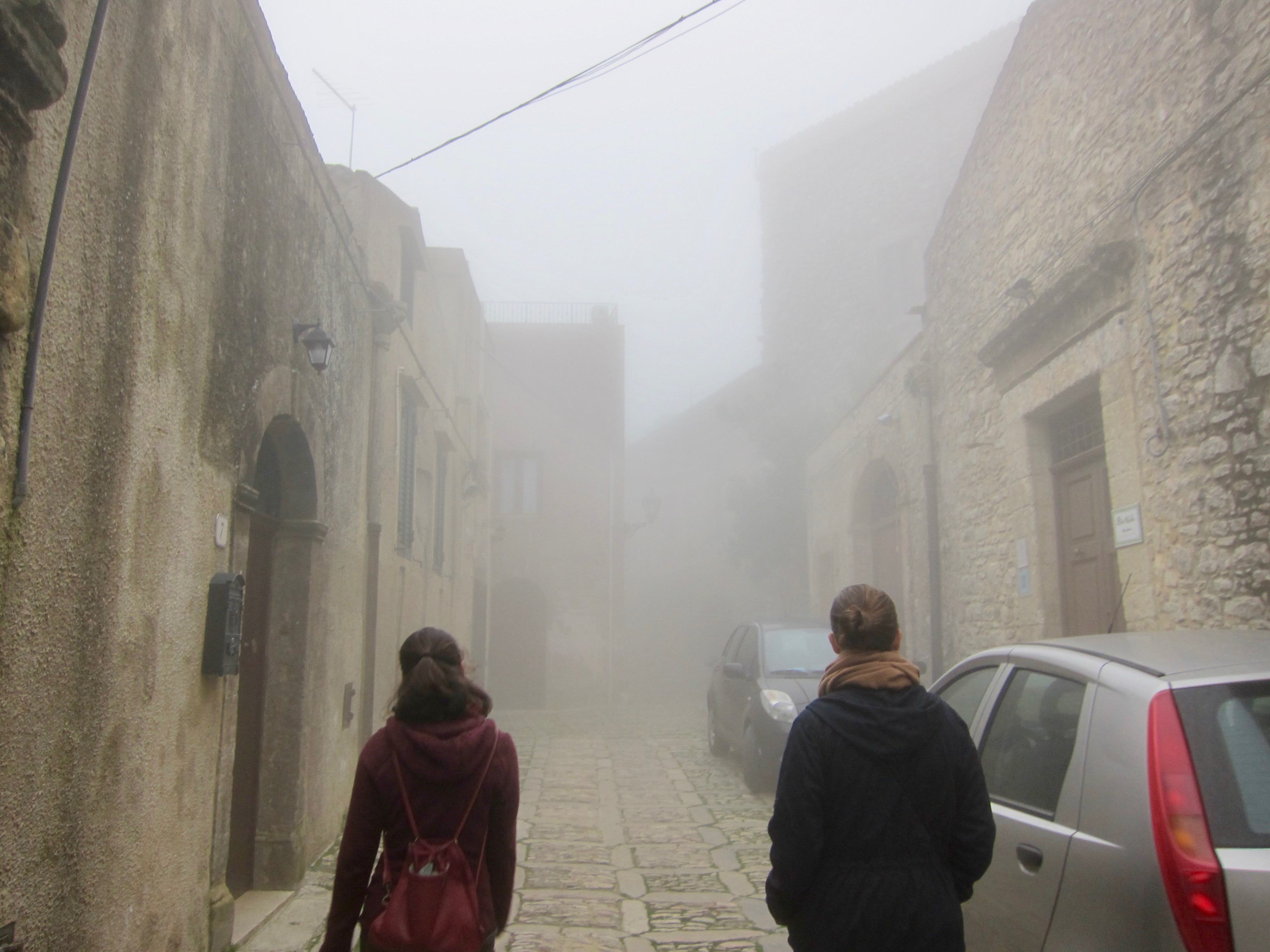
After Segesta, we ventured to Mt. Erice for the night. The drive up the cliff of the mountain was both beautiful and terrifying—it felt like we might flip over at every curve. Once we approached the small town at the top, however, we were covered in fog and couldn’t see a thing. It felt like exploring a ghost town.
Filed Under: Sicily

Cappella Palatina

March 20, 2018 By Louisa Moore

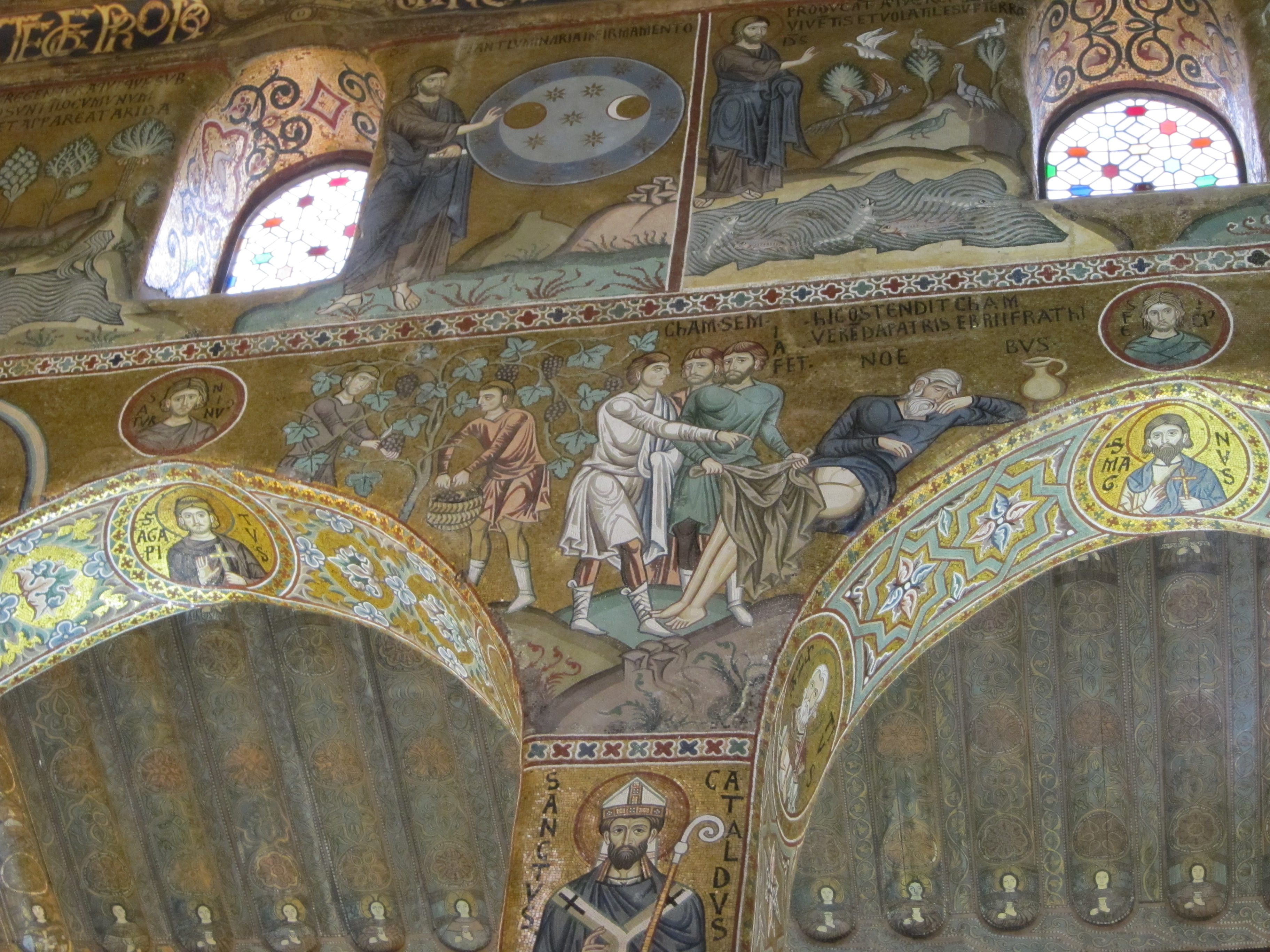
3/12/18: On our second full day in Palermo, we visited the Cappella Palatina, a church used by the Norman kings and their close family/friends. Because it served such an elite audience, the church was decorated from floor to ceiling with gilded mosaics and colored marble. The inside walls of the nave depicted the cycle of stories from the Old Testament, starting with the creation of the universe and ending with Jacob. Below is one section showing the tale of Noah’s drunkenness (also slightly above this scene, the creation of the heavens and animals). In addition to the many clear Christian elements, the church also displaces Islamic influence, such as the muqarnas decorating the wooden ceiling. Like Sicily, the Cappella Palatina is truly a mix of different cultures.

Filed Under: Sicily

Palazzo Steri

March 20, 2018 By Louisa Moore

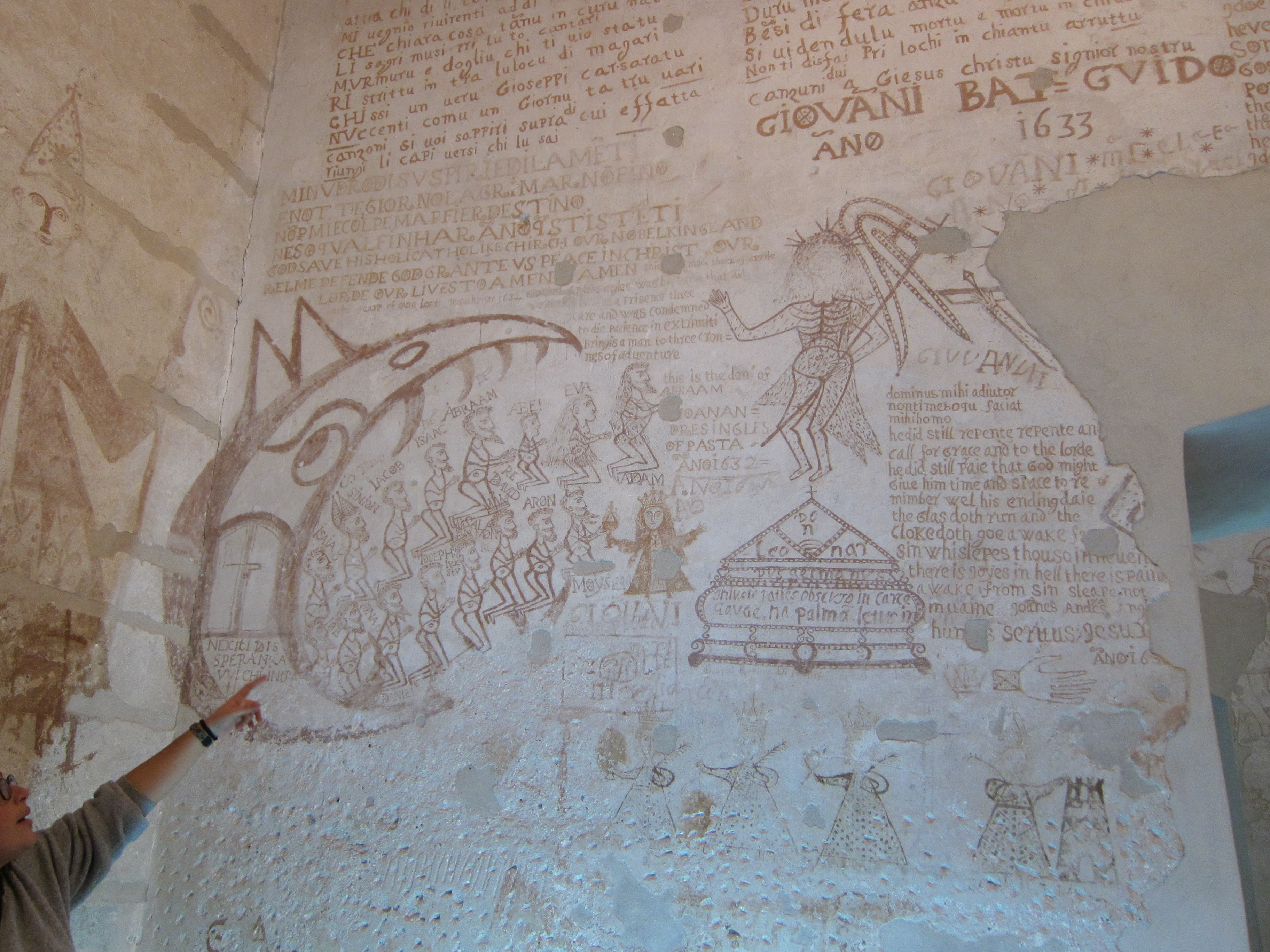
3/11/18: Today we visited Palazzo Steri, a castle that was turned into a prison during the Spanish Inquisition. A lot of architectural details and decoration still remain in the space today. Most notable of these are the jail cell wall paintings done by the prisoners themselves. Because they were not given paint, the prisoners had to be very creative—they scraped red pigment off the floor and mixed it with bodily fluids to create paint. The resulting paintings are very impressive. One wall featured a prayer in Latin, Italian, and English, as well as a monster eating various Biblical figures (shown below). Others included ships, maps of Sicily, and other religious imagery.

Filed Under: Sicily

  • « Previous Page
  • 1
  • 2

Authors

  • Rachael Allen (9)
  • Sarah Austin (8)
  • Emily Beaulieu (8)
  • Professor Barbara Boyd (1)
  • Cooper Hemphill (8)
  • John Medina (9)
  • Justin Miller (9)
  • Louisa Moore (8)
  • Eliza Nitzan (1)
  • Francesco Pappalardo (12)
  • Sofia Trogu (9)
  • Cesar Varela (9)
  • Dean Zucconi (11)
  • About
  • WordPress Software for Your Smartphone

courses.bowdoin.edu