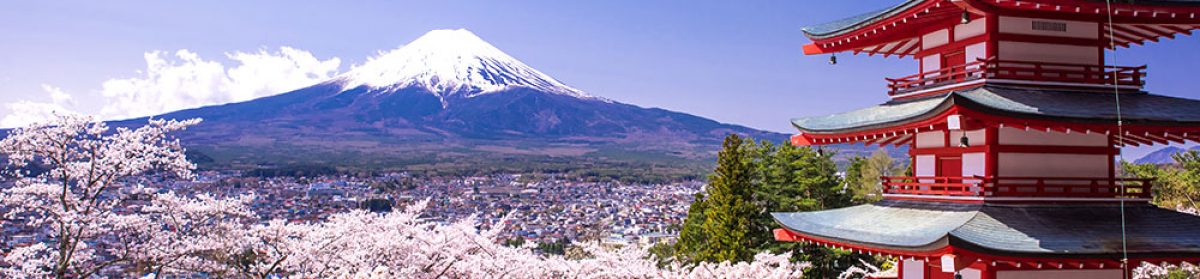
Meiji Jingu

Third day was also a very fulfilling day. I was expected to be the “leader/expert” person, but my limited knowledge about Shinto left me clueless. First, I would like to indicate that I had a wonderful, veggie filled day with the best noodles I have had in a long time. I love subsidized university cafeterias and cheap cabbage. 

I am so glad that Selinger-sensei has such a wonderful friend as Noto-san, who brought her very lovely friends to give us the experience of a lifetime. Continuing my musings on theater and religion (specifically rituals), we got to observe a Shinto ceremony, highly ritualized filled with familiar technical aspects such as music, dance, and lighting. I was miserably underdressed for the occasion but could not take my eyes off of the “stage.” Every step was carefully rehearsed. There were two audiences instead of the usual one. We, the worshippers, and the kami. The stage is the bridge connecting the two, a liminal space! Because of Meiji’s relatively recent construction, the hall included dimming electric lights and lovely air conditioning (much needed for my overheating exhaustion). There is the constant theme of purification and cleansing, reflected in the neat and tidy outfits of the priests. Even more significantly, Noto-san referred to the attire of the priests as “costumes.” Not simply clothes, but costumes, a word that highly signifies to me an additional layer of reality. Selinger-sensei mentioned Victor Turner 

My original project focused on the interfaith collaborative efforts in response to the triple (or more) disaster. Noto-San’s lecture had frequent references to Shinto’s relationship with other religions, such as Buddhism and Christianity. She had no reservations about going to church or temple, even as the daughter of a Shinto priest because Shinto is not a religion, in her definition. The shrine hosts multiple houses for the main kami but also “apartments” for the relatives and guests of the kami. This transactional practice has allowed Shinto to constantly evolve and to adapt. For example, the “shrine” of the Yokohama baseball pitcher not only shows the deification/reverance of individuals but also the ability to reinterpret religion as needed. Furthermore, the book of myth mentioned by Noto-san was created as “myth” but served as the legitimizing factor for the imperial family. Lastly, another interesting point (that differed from our discussions/readings) is the “ritualizing” of objects, 御神体。We talked about wrapping paper around a stone to mark the stone as kami. My understanding Noto-san’s explanation is that the stone is wrapped in order to garner kami presence. This takes away authority and manipulation/power from the human and returns it to the natural world. 

The kind Tanaka-san also gave us a detailed tour of the restricted sacred grounds of Meiji Jingu. I am not well-versed in botany or forestry, so please read Julian’s wonderful notes/observations/reflections about that. 

I wish my Japanese were better so I can ask Noto-san random questions and get to know her life better. Hopefully, she comes to visit Maine in the future and at that time, I can speak my thoughts well. 
6/1 Integrating Shinto in Japanese Life

Since we watched a documentary about the amazing forest of Meiji Shrine on our prep day 5, I have been looking forward to visiting Meiji Shrine and its 不思議な forest, which were created almost 100 years ago. Thanks to Selinger-sensei’s friend Noto-san, we had a wonderful lecture in the morning and an insider’s special experience with the ritual in Meiji Shrine. I was most impressed by the integration of Shinto in the daily life of the Japanese as well as the beautiful integration of Meiji Shrine in the city of Tokyo.

Despite the other great parts of Noto-san’s lecture on what is Shinto and how to worship in a shrine, it especially interested me how Shinto very well engages Japanese people in daily activities. According to Noto-san, Japanese people go to Shinto shrines, Buddhism temples, as well as Christian churches under different occasions–they have no problem having rituals of multiple religions (if ignoring the question whether Shinto is a religion). Interestingly, Shinto shrines are usually related to good things like birth, festivals, and sometimes weddings, while Buddhism temples are most commonly related to funerals, and people also go to churches for weddings. Religions work well together in Japan, and I think it is partly because Shinto is lowering itself to people’s daily life, both physically and spiritually (I am using the terms very loosely here).

As Noto-san introduced, the definition of Kami (the figure of worship) by Motoori Norinaga(本居宣長) is that “whatever seemed strikingly impressive possessed the quality of excellence and virtue, and inspired a feeling of awe” can be called kami. This definition is basically saying everything in our life can be worth of worship. From this perspective, Shinto is embedding worshipping and rituals into people’s daily lives, and this could be shown by the small Shinto shrine Japanese people usually keep at home. The values of Shinto create a welcoming environment for Shinto followers to participate in rituals of other faith systems/religions, such as Buddhism. On the other hand, the setting and construction of Meiji Shrine is incredible in bringing people into the Shrine and practicing Shinto.

We were also super lucky to get a chance to see the ritual of praying. The prayer was done by a priest, who read/sang the wishes of people coming to the Kami-sama and we got to see the sacred dancing, which was supposed to be provided for the kami-sama. Everything at the ritual was oriented at Kami; on our way out of the ritual hall, we were served a small saké dish of sake, which was served to kami and then shared to us, meaning we were receiving the sake as a gift from the kami. (I might be wrong about this)

As mentioned before, by the definition by Motoori, everything can be a kami. It was no wonder that many places and things in the shrine were “wrapped” by white paper straws and ropes: camphor trees outside of the hall and the rice field supplying rice that was given to Emperor Meiji and Empress Shoken, for example. While surrounding kami by ropes is an act of establishing human contact and connection with kamis, the whole shrine can be seen as an act of creating human contact with Emperor Meiji and Empress Shoken, as the shrine and the outter guarding forest was manmade.

Kanpo Clinic Visit

This morning we had the incredible opportunity to visit the Soya-Kanpo School and speak with Dr. Qiu about her clinical practice. Kanpo, a traditional medicinal form adopted from China in the 7th century, takes a holistic approach towards treating illness and largely employs herbal medicines in order to do so. Dr. Qiu has been a practicing Kanpo doctor for many years and is very well known throughout Japan. We were only able to meet her thanks to the generosity of Aridome-sensei’s sister, who has interviewed Dr. Qiu many times while writing health-related pieces for magazine publication and kindly offered to introduce us.

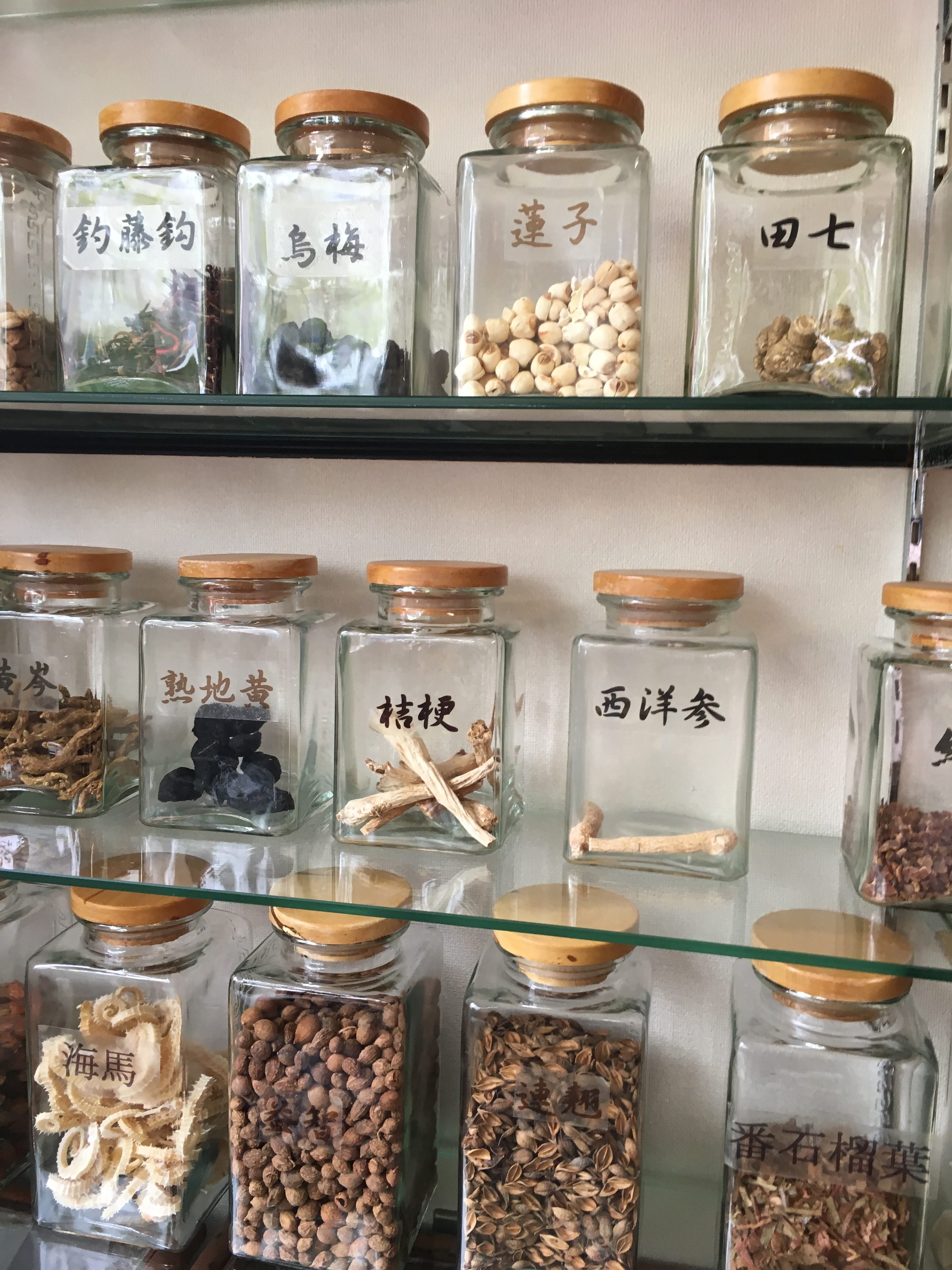
Upon arrival, Dr. Qiu welcomed us into the clinic and provided a space for us to sit down. Having only spent time in Western clinics myself, several differences were immediately apparent. The walls were lined with jars of herbs including several varieties of mushrooms, plant roots, and even seahorses. Diminishing some of the skepticism that I initially felt upon seeing these, Dr. Qiu explained that each of the ingredients used in Kanpo is rigorously tested (for heavy metals, purity, radiation, and potentially dangerous microbes) by the Japanese Government’s Ministry of Health, Labour and Welfare. She further added that Kanpo practitioners are typically trained in Western medicine as well, such that knowledge from these two approaches is not only reconciled but actually employed in a complementary fashion. By focusing on the acquisition of knowledge surrounding disease etiology at the molecular level, Western medicine can provide more specific details about the underlying causes of some illnesses. This can bolster Kanpo’s understanding of illness, which considers factors ranging from bodily constitution and age of a patient to the season and other environmental factors in which an illness emerges.

I want to note one compelling example explained by Dr. Qiu in which Kanpo has been able to work more effectively than Western medicinal approaches. Although she provided several compelling examples, I was particularly interested in her description of atopic dermatitis, a condition for which the cause is unknown where dry and scaly patches appear on the skin. While Western medicine has only been able to treat atopic dermatitis with antihistamines, which prevent the itching that arises from swelling and vasodilation characteristic of an allergic reaction, Kanpo has been able to more effectively treat the underlying causes. It has thus been necessarily embraced and supported by the Dermatological Society of Japan. Given that traditional medicinal approaches such as Kanpo are often overlooked as pseudo- or non-scientific, I found it fascinating that they have been forced to embrace it as a more suitable treatment for atopic dermatitis than anything they have been able to provide so far.

Overall, I was deeply moved by our visit to the clinic. Not only did it attenuate my skepticism surrounding Kanpo, but it opened my eyes to another opportunity in which science, East Asian studies, and Japanese language intersect. Having often heard skepticism myself from others at Bowdoin upon hearing that I study these subjects, it was inspiring to see a kind, skilled, and charismatic medical practitioner employing her extensive knowledge surrounding each of them for the sole purpose of improving the health of her patients.

漢方と江戸〜東京

Kanpo(漢方): Before meeting Dr. Qiu, I gave a  draft of my kanpo-related questions to Aridome sensei (質問は翻訳してありがとうございます!) which he ten sent forward. Dr. Qiu answered all of the listed questions with clarity, but before she did that, she offered us a small a glimpse of her life story and how she ended up as a kanpo doctor. As a child born during late maternal age, she required medical attention, a responsibility which her father as a pediatrician and later a kanji doctor. Through tangible experience, Dr. Qiu decided to follow into her father’s footstep and become a Kanpo practitioner.

Many of the ideas and processes discussed during the lecture resonated with the our readings. Such things were the differences of approach in biomedicine (Bullet Point approach) and Kanpo (Individualistic-Environmental Approach), and the importance of the doctor’s sensitivity to patient’s body language, smell, visual and touch. The new things I learned were:

  • Kanpo is an OBSERVATIONAL Science
  • Kanpo places more importance and the individual and surroundings than “genetics.” In biomedicine forms it is really important to know the race and ethnicity of an individual as some of us are prone to certain diseases such illness. However, although Kanpo does take into consideration these factors-its main regard is the individual’s body constitution and response to the environment.
  • Kanpo’s main goal of restoring balance in the body is achieved through enforcing the body’s immune system or boosting one’s chi or ki. In cases of unknown cause or a new disease, such as radiation exposure, Kanpo’s approach is the above: BOOST THE CHI.
  • Dermatologist, Cancer-Treatment Facilities, and women who wish to conceive are embracing Kanpo.
  • The difference in kanpo between Japan and China: in Japan, Kanpo and biomedicine are seen as complimentary to one another, while China it is regarded as its own way of medicine (separate from bio medicine) and is practiced independently from biomedicine.
Kanpo Medicine

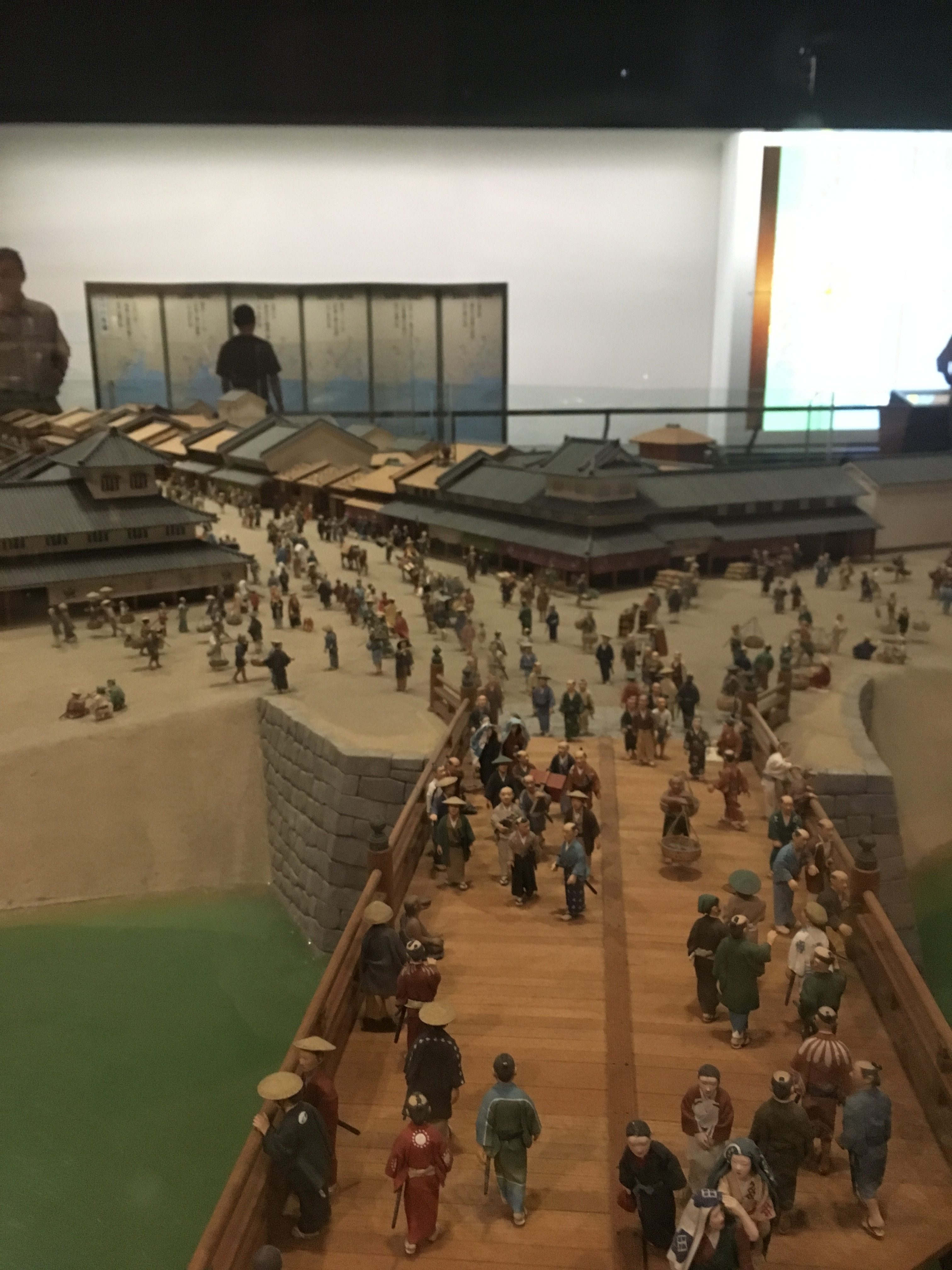
Edo-Tokyo Museum: Definitely, as Selinger Sensei mentioned, no expenses were spared…The museum’s permanent exhibit was extremely detailed. Each model and figurine were carved/molded in such a careful manner…

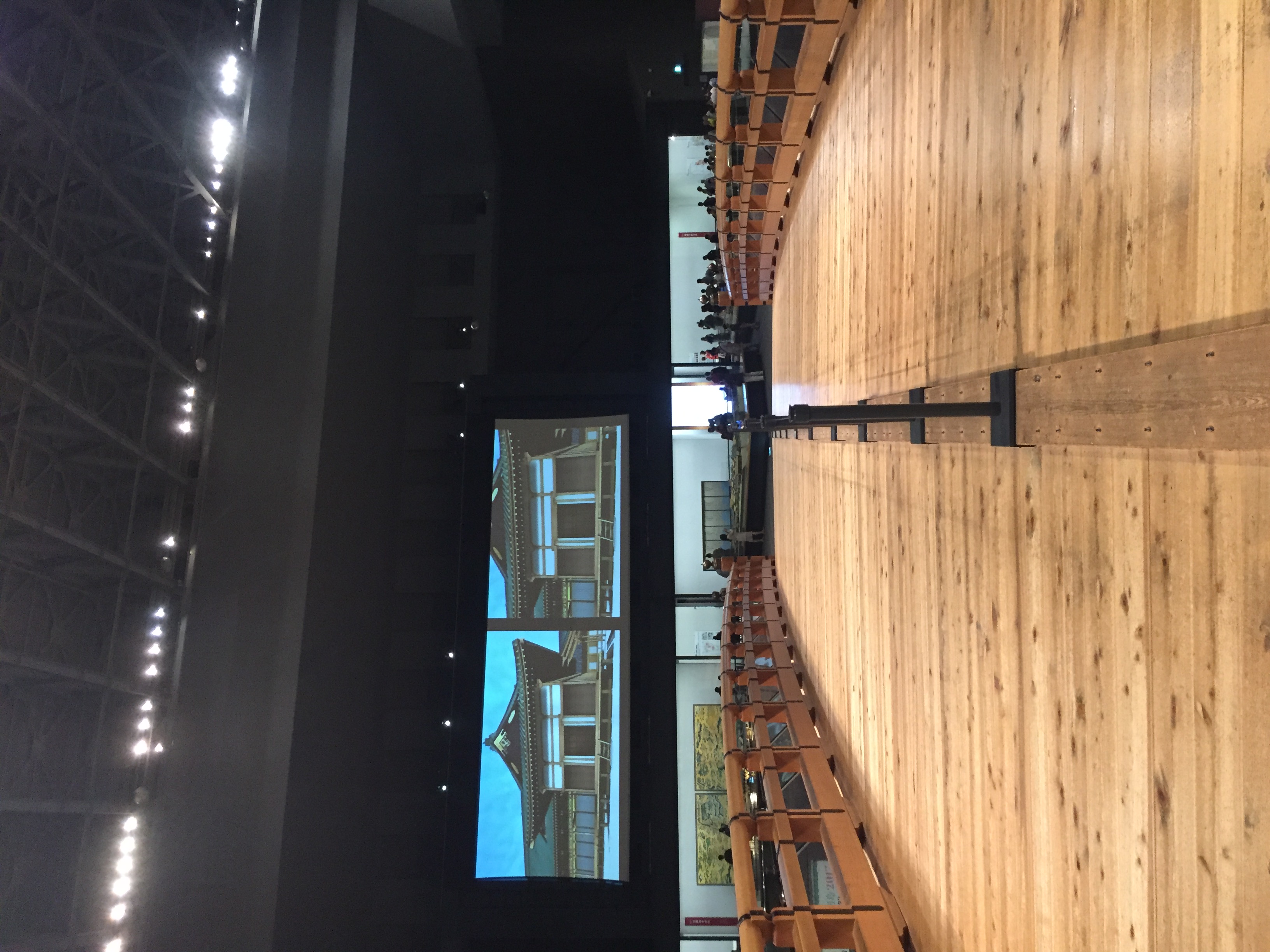
Nihonbashi Bridge Replica (Edo-Tokyo Museum)

This past academic year, besides Japanese language classes, my Asian studies courses consisted of Christmas Sensei’s history class: Modernity and Identity, which covers the Meiji restoration till present, and Culture and Conquest, which’s focus is Japan’s pre-modern history.  In the Edo-Section, there were palanquins in which the daimyo used to ride in and a model of what a daimyo residence in Edo would have looked like… One of the last things we discussed in class this past semester was Sankin Kotai, which in the ended up draining the financial resources each domain-as each daimyo felt the need to demonstrate its power and influence through wealth and fashion. Seeing the the models finally made me understand how much of a toll this procession must have been… (I should have really taken a picture, すみません). Also, last semester we read a Junichiro’s novel, Naomi. The novel explores life Japanese life in the early 20th century. Culture Homes (houses that were made in half Japanese and half western style) were very popular. The Museum had a life-size model of such a home. I have to say- at had imagined it a little different, a little more eccentric maybe. But seeing it, I understood why Naomi picked out a culture house to live in…

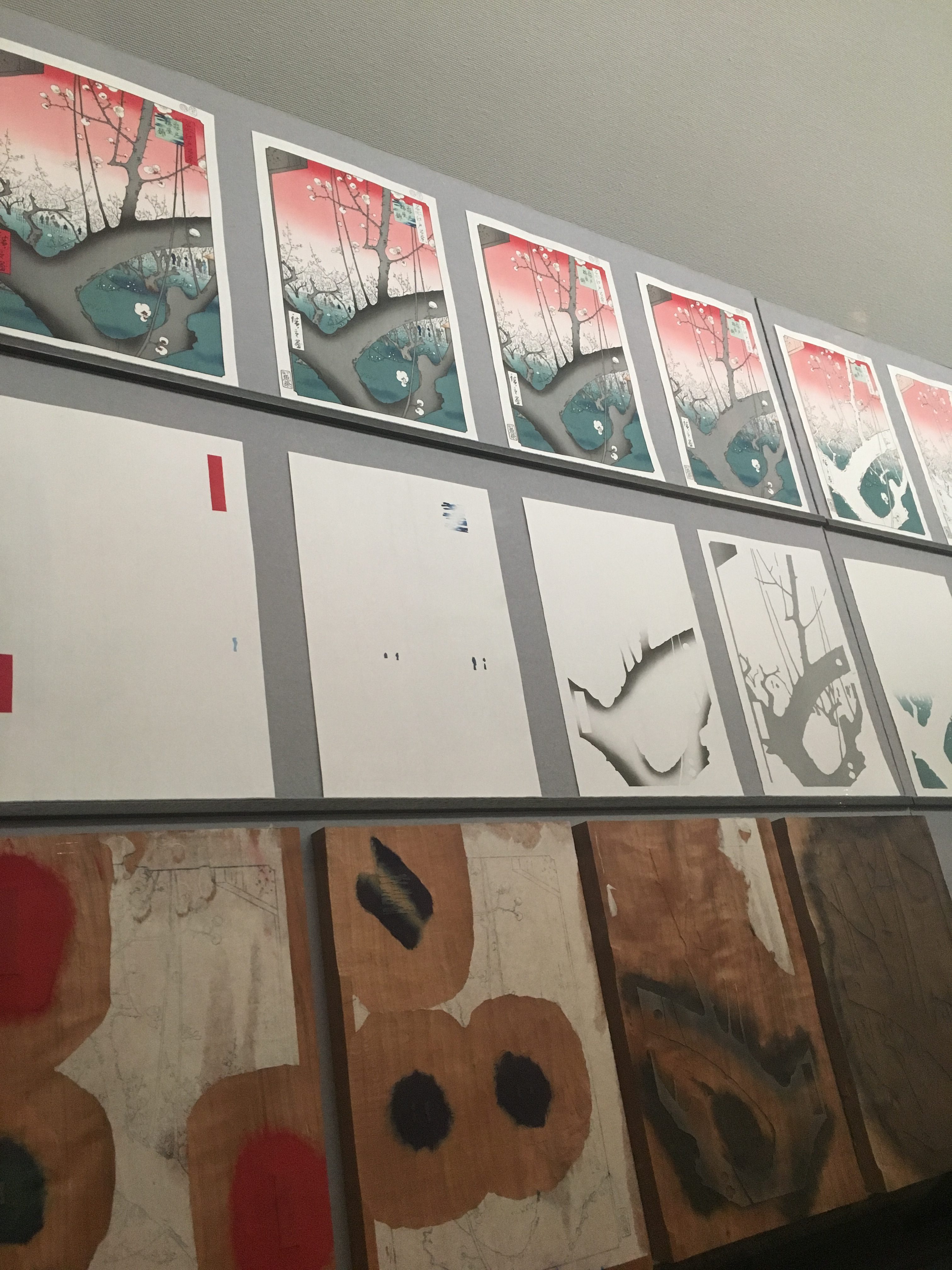
I really like Ukiyo-e prints (a style of woodblock print popular around the Meiji Period). We had discussed the process of woodblock print with Selinger Sensei during class once and I was simply stunned by the intricacy of the process…

The Process of making a Woodblock print (Edo-Tokyo Museum) from right to left. There are many wood blocks that go into making one single print.


5/31 Kanpo and Edo-Tokyo Museum

In the early summer hotness, we took the full train with サラリーマン for half an hour and met Aridome-Sensei’s sister at Ebisu Station, from which we headed to Dr. Qiu’s Kanpo clinic. The clinic first impressed me as a very cultured space, with all the glass containers with herbs and wooden tables and decorations, giving a sense of rituality. And indeed, as Kanpo is all about recovering the balance of the body, boosting 気, and seeking a harmonious relationship between the body and the environment, one could view it as a ritual of purifying, or liberating, the body.

Dr. Qiu is incredibly insightful and articulate, and I really appreciate that she was trying to make Kanpo understandable and relatable instead of mystifying and elevating it. It was very enjoyable to listen to her, and in the room, I could feel an energy flowing that bonded everyone together and relating us to her sharing. Although my previous knowledge of traditional Chinese medicine helped with understanding all the concepts and ideas Dr. Qiu talked about, it was very interesting to hear about her experience practicing Kanpo in different countries. Her example of giving a 強い prescription and 優しい prescription to people of different constitutions (体質) and body build showed that Kanpo was really individual-based and that the treatment heavily relies on the Kanpo doctor to keep a long-term contact with the patient. Dr. Qiu gave examples of treating women with breast cancer but also want to be pregnant to speak to how Kanpo works, and this part was new to me. If thinking about the hormone level, as the Western medicine would do, treating breast cancer and helping a woman have a baby are contradictory since an increasing hormone level to cause breast cancer to deteriorate while to get pregnant a high level of hormone is required.  She approached the issue by attacking the core problem that caused both illnesses. From the perspective of Kanpo, both breast cancer and difficulty to get pregnant are results of 瘀血, or blood stasis, which means that the blood flow in the body is thwarted. The treatment Dr. Qiu did was to boost 気 and give prescriptions to make blood flow easily. And after three years a patient successfully got pregnant at the age of 38.

Her incredible explanation and stories were fascinating and relatable. The holistic view of the body and the focus on the interactions of the body and the environment require that Kanpo is not just medicine but a lifestyle since treating from a holistic view requires living thinking holistically about the body.

After lunch at Ebisu, we “traveled” to Edo-Tokyo Museum, with an incredible design and exhibition of Edo-era and modern Tokyo. This is Nihonbashi (the bridge of Japan), through which people could enter Tokyo during Edo-era. In the museum, Nihonbashi divides the exhibition into Edo-era and modern Tokyo areas and also connects the audience to the heart of Tokyo since we had to walk through the bridge to enter Edo.

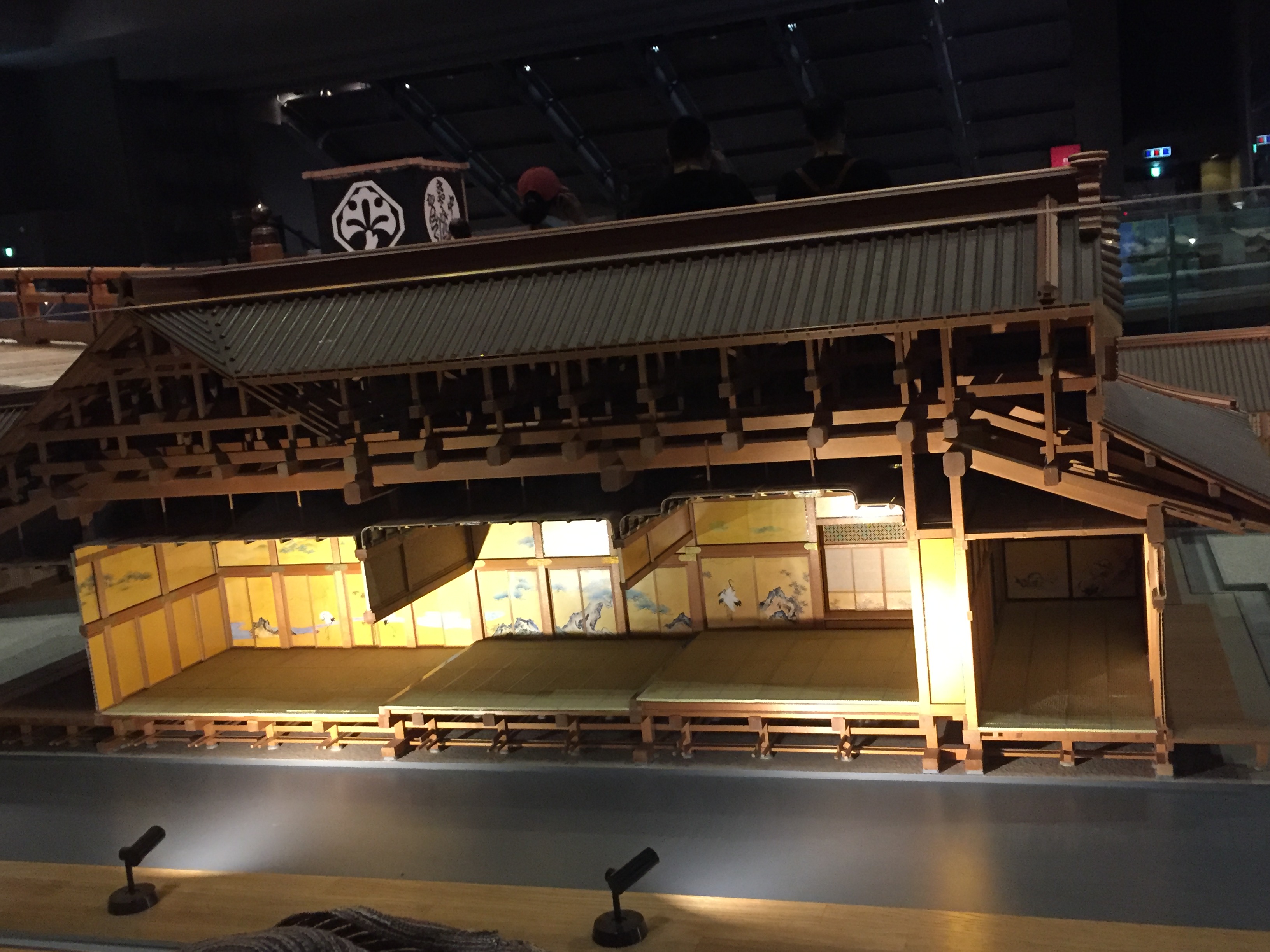
There were incredibly delicate models of Edo-era buildings, among which this Kabuki house impressed me most. The Kabuki house is a manifestation of Shogun’s power and status. The different levels of the floor were suited for people of different political status in the shogunate, and the little door on the highest level was an emergency exit for the shogun if anything happens. The Edo-era exhibition opened up my mind about Japanese history and the part about how the shogun balanced the power of local daimyōs by having them living in Edo for one year every three years and keeping their family in Edo.

This was also my first time really thinking about a museum/exhibition politically. As suggested by the reading, the Edo-era exhibition idealizes the working class while completely ignoring the fact that people in the working class encounter all kinds of difficulties and the riots they started. This observation was definitely true in the museum, since the image of the working class in Edo-era was shown as hardworking and living in harmony, through the vivid house models and delicate interactive facilities. However, the gender factor was absent in the Edo exhibition, while in the modern Tokyo section, the exhibits were mostly clearly gendered, the advertisement for women’s beauty products, for example. When I was talking with Prof. Selinger about the gender factor, she brought up an interesting question: why does the museum choose school girl uniform to represent the 1990s? She brought up an argument that since the economy started to go down in late 1980s, the industry targeted at young girls as consumers and commercializing school uniforms might work. I think that while school girls became the consumers, they were also consumed as a collective, considering that school uniforms could mean the main character of commercials would shift from women to teenage girls, and that school uniforms wiped out the individuality, making the girls vulnerable to the consumption of Shōjo, which emerged later.

courses.bowdoin.edu / Japan and the Environment 2017 Proudly powered by WordPress