Kanpo-limentary Medicine

Okay so maybe that pun was a little bit of stretch. Moving on, today we met with Dr. Qiu at her kanpo (漢方) clinic in Ebisu. I’ll be blunt: it was absolutely fascinating hearing about how she became interested in kanpo, how she came to be where she is today, and the kind of practice she does.

Dr. Qiu was originally from inner Mongolia, where her father was a pediatrician of Western-style medicine. Dr. Qiu, herself, apparently had something of a weak constitution (taishitsu) and Western medicine couldn’t really address or treat it. So, her father took a year’s leave from his practice to study kanpo, searching for a way to heal. When he returned, Dr. Qiu became something of his first “guinea pig,” but to remarkable success. Her father maintained his Western-style clinic, but began to expand his kanpo practice to his neighborhood; eventually, his patients seeking kanpo healing outnumbered those that went to his clinic. After the transition to kanpo, Dr. Qiu and her sister helped out in the waiting room, receiving and serving tea to patients. So Dr. Qiu’s interest in kanpo has a very personal connection and backstory to it that I think is a wonderful story.

According to Dr. Qiu, and very much aligning with what we’d read previously, kanpo is all about identifying and healing the imbalances in the body and has a strong environmental component. Rather than addressing individual problems, kanpo seeks to remedy the body as a whole, and many of these individual problems can be ascribed to an overall imbalance in the body and/or ki. One thing I thought was astounding was the strong regulation on medicine that exists in Japan. Whereas in the US, a lot of treatments might be considered “dietary supplements” and thus would not be regulated under the FDA, in Japan everything is tightly regulated. So many of Dr. Qiu’s medicines are purchased through a middleman company(?) that imports the medicine from China and undergoes strict inspection to ensure that what is on the label is what the patient is getting. I’m not entirely sure how this tight regulation plays out economically, but from a health and environmental perspective it seems like an excellent system that the US lacks. I was also intrigued by how complimentary kanpo and Western medicine are perceived in Japan, whereas elsewhere (i.e. the West) they might be perceived as at odds with one another. I think it highlights the strengths of each; kanpo seems to be particular effective at treating chronic and complex illnesses, while Western medicine might be more effective in the short term at treating specific, targeted illnesses or diseases especially when the pathogen is known. Kanpo also excels at, when an exact “treatment” is difficult to pin down, boosting the body’s natural defenses and ki.

What also struck me was how close and intimate Dr. Qiu seemed with her patients (from her stories). Specifically, when the 3/11 Fukushima nuclear disaster happened, Dr. Qiu was considering returning to Mongolia; apparently, the Mongolian embassy(?) was offering free tickets for citizens to evacuate and return home. Many of Dr. Qiu’s patients called her directly, expressing concern for her and explaining that they would completely understand if she decided to return home. But, they added, they would be deeply grateful, too, if she decided to stay–that’s how close and important they felt Dr. Qiu and her kanpo practice was to them and their healing. I think this is a wonderful example of putting someone else’s needs before your own. I was also struck by how lively and energetic (genki; 元気) Dr. Qiu was, and by how body language and gestures also played an important role in telling her stories. Finally, Dr. Qiu served us some おいしい kanpo medicine to dispel any impressions that kanpo tastes bad. We also got to measure out a little take-home bag of medicine too. すごい! Sugoi! Very cool!

~~~

The rest of the day was devoted to the Edo-Tokyo Museum, housed in a building that looks like it could have been from Star Wars (think maybe the walkers?). The museum documented the historical transition from Edo to modern day Tokyo, but evidently presents a very idealistic, hardship-free view. Still, it was interesting to explore the history of Edo, and a lot of the displays and dioramas were interactive (always a plus for me, when going to museums!). We also took some great, at times hilarious photos, so stay tuned!
I am so terrible with titles that I have decided to skip it altogether.

Today (yesterday as of time of blogging) has been AWESOME. While I do procrastinate on a regular basis, the readings really give wonderful insight and different perspectives into what we are seeing in person. Super ironically, Ethan has been absent from every single site he discussed in his presentation, but hopefully his research is going well and our photo skills are worthy enough.

Three parts: general, kanpo, Edo-Tokyo Museum

General: I do notice that my general pace of living/walking has increased IMMENSELY. I can not only catch up with my Bowdoin peers but also somewhat match the speed of Tokyo office workers heading to their destinations. Very proud of myself for that. Despite having only been here for 2 days, I do feel like I am not in a “new, strange” place because of the previous weeks’ preparation and my personal interest in YouTuber food vloggers. We had Japanese style Thai cuisine for lunch (also interesting is the frequent marketing of the chicken rice combo, often associated with Singapore whereas, in USA, Thai restaurants usually promote pad thai or green curry). I think it is fascinating to try foods outside of their place of origin to see how they have changed to accustom the available ingredients and the palate of the consumers. Yakiniku, despite its Japanese name, is very much associated with Korea. Food can be enjoyed by many, even those who protest against other political issues.

Kanpo: Dr. Qiu was very very engaging even though my Japanese skills are abysmal. The most interesting part of the trip for me, since I have had a lot of encounters with traditional medicine, was the strict regulations of herbs by the Japanese agency for food and drugs. So meticulously guarded that the rich in China are willing to pay extra to buy their medicine from Japan despite the Chinese production. It is very different to consider kanpo as a “complement” or “alternative” to Western biomedicine, which somehow lowers the status of its legitimacy when I have grown up mainly reliant on Chinese traditional medicine. My home in Hangzhou, China is situated near not only the province’s TCM university hospital but also family-owned pharmacies that date back dynasties. It is sold as part of tourism. Especially with the increasing New Age spirituality movements, there is a preference for “nature” products from the “mystic East.” Hopefully, the interest develops as a well-rounded acknowledgment instead of as an enchanted, magical method. While sitting in Dr. Qiu’s clinic, I actually thought about reviving my interest to become a TCM doctor… but we shall see.

Edo-Tokyo Museum: I love interactive museums with moving exhibits and replicas. I am glad to have freshened up on Japan’s recent history last night to be able to better appreciate the exhibits. The skilled and extravagant exhibits, built with bubble money, show signs of a specific political, nationalistic agenda, but without the governmental support and funding, this masterpiece would not exist. Because of my very limited knowledge of Japanese history, I learned a lot about the Edo-dominated narrative of the Japanese identity through the tour. But, I want to discuss a bit about finally connecting my interests. In the Edo section of the museum, there are amazing replicas of kabuki theaters and Shinto festival parades. I am very much involved in the technical side of theater as well as the ritualization of religion. It clicked. Rituals are religions’ performances, altered and renewed through time. Some are discarded while others support the religion’s existence. The misconception, IMO, is to say that theater is an imitation of life. The stage is not reality but wants to become as “real” as possible. I do not agree. I think the stage is useful to construct a particular version of “real” that engages the audience to question and to doubt their idea of the “real.” The rituals grasp with abstract ideas and present them in more accessible forms for the people. I am not very articulate with these thoughts (yet), but I will definitely be thinking about it tomorrow as we venture to the insides of Meiji-Jingu.

(I would also to add that I appreciate the low amounts of sugars added to drinks and food in Japan.)

Holistic and Faux-Holistic Views

Wow, I’m exhausted! We got a little lost on the way back to the AirBnb and in general there was a lot of さんぽう (walking) in my not-so-comfortable-but-professional shoes today. But that’s okay because we got to experience some amazing things today!

Kanpō is not as traditional as it seems. Our first adventure included a meeting with Dr. Qiu, a Kanpō doctor located in Tokyo and specializing in gynecology. I have to say thank you to Selinger 先生 for wonderfully translating what Dr. Qiu had to say because there was no way I would have understood otherwise. ありがとおございました!She thoroughly answered our questions, with the first batch being ones we sent to her prior to the meeting. Some highlights include the difference between Kanpō in China vs. Japan, how she views Kanpō, and the kinds of patients she has treated/is treating. The route in China is to start off studying Kanpō (specialized), whereas in Japan, those hoping to pursue Kanpō go first to medical school (generalized) and then specialize in a topic. She explained that Kanpō is an observational science, meaning that a Kanpō doctor “observes the signs of the hypothetical illness… and views the body as a homeostatic balance with the environment.” Okay, I have to say, that as someone who studies science, all science is observational… there are no facts in science… you support conclusions based on evidence… すみません, I just wanted to comment on the redundancy of “observational science,” but maybe I’m just being too picky? Her practice appears to be doing very well, as she reported lots of success stories (of course, I want to hear about the stories that were not so successful but alas I felt that was too inappropriate to ask). She also talked about Kanpō literature going as far back as 681 years ago, so there is definitely validity in what she is doing; I felt the need to say this because in America there is a stigma against non-Western medicine.

Anyway, I love that Kanpō is so holistic in its treatment style. When the question about whether race matters in treatment, Dr. Qiu explained that what actually is more important is what the patient’s environment is like. It’s the diet, emotion, geography, home life, etc. that are considered, which is in contrast to Western medicine where you either check off boxes and concentrate on what specifically is wrong. When I think about what I learned in my microbiology class this past semester, it makes sense to me that a patient’s illness is not an island. Not only genetics, but also your diet, where you come from, who you’re around, etc all play into what makes up your microbiome, which can affect how your immune system functions. Obviously I do not know if this is the case at all, but I can see there being evidence as to why environment matters. Psychology also seems to play some magical part into this, and that can probably never be backed up by science (at least in the near future), but nonetheless it is there (the placebo effect is real!).

After doing the reading The East Asian Medical System in Urban Japan: Kanpō, Dr. Qiu’s story seems so unique. I had the impression that most Kanpō doctors in Japan were male, Japanese, carried medical degrees, wore lab coats, and practiced in a Western-like clinic (including the use of modern technology like X-rays). Our visit today was nothing like that, as her practice did not look or feel like a clinic in America. The room had an herbal aroma (not “sterile”-smelling or looking), and that was also reinforced by the shelves lined with glass jars containing herb sundries. There was no white; the color palette of the room contained almost exclusively earth tones. Dr. Qiu was also wearing a beige “Chinese” (eh, is it okay to say this? Does it help that I’m Chinese? And that Dr. Qiu is Chinese? I mean no offense) outfit and there was no stethoscope or much equipment in sight. I was too timid to ask about how unique her practice is 🙁 .

Next stop was the Edo-Tokyo Museum! What an entrance. Like my goodness, that behemoth of a building does not look like a museum about the ordinary.

How interesting it is for the government to portray the “everyday citizen” in a museum. Hence, the faux-holistic reference in my title. The government tells the public that this is what people were like back when, yet it is obviously bias because the people are not the ones telling their stories nor are all the people being represented. NEED TO EDIT CAUSE NEED TO SLEEP.

I find the bathrooms so intriguing here. In the train station of all places (a place I would expect to have dirty/unkept bathrooms), there was a small changing platform next to the toilet. Along with sanitizer for the toilet seat and a water level such that the sound of your pee is nonexistent.

People wear so much fabric for it being so humid and hot. Every time we walk on the street and through a train station, I am in awe of how everyone is dressed. Sleeves and pants galore!! Hawaii gets to similar weather as this, but people reveal way more skin there.

P.S. Click on my name because I just updated my author bio!

Tsukiji !

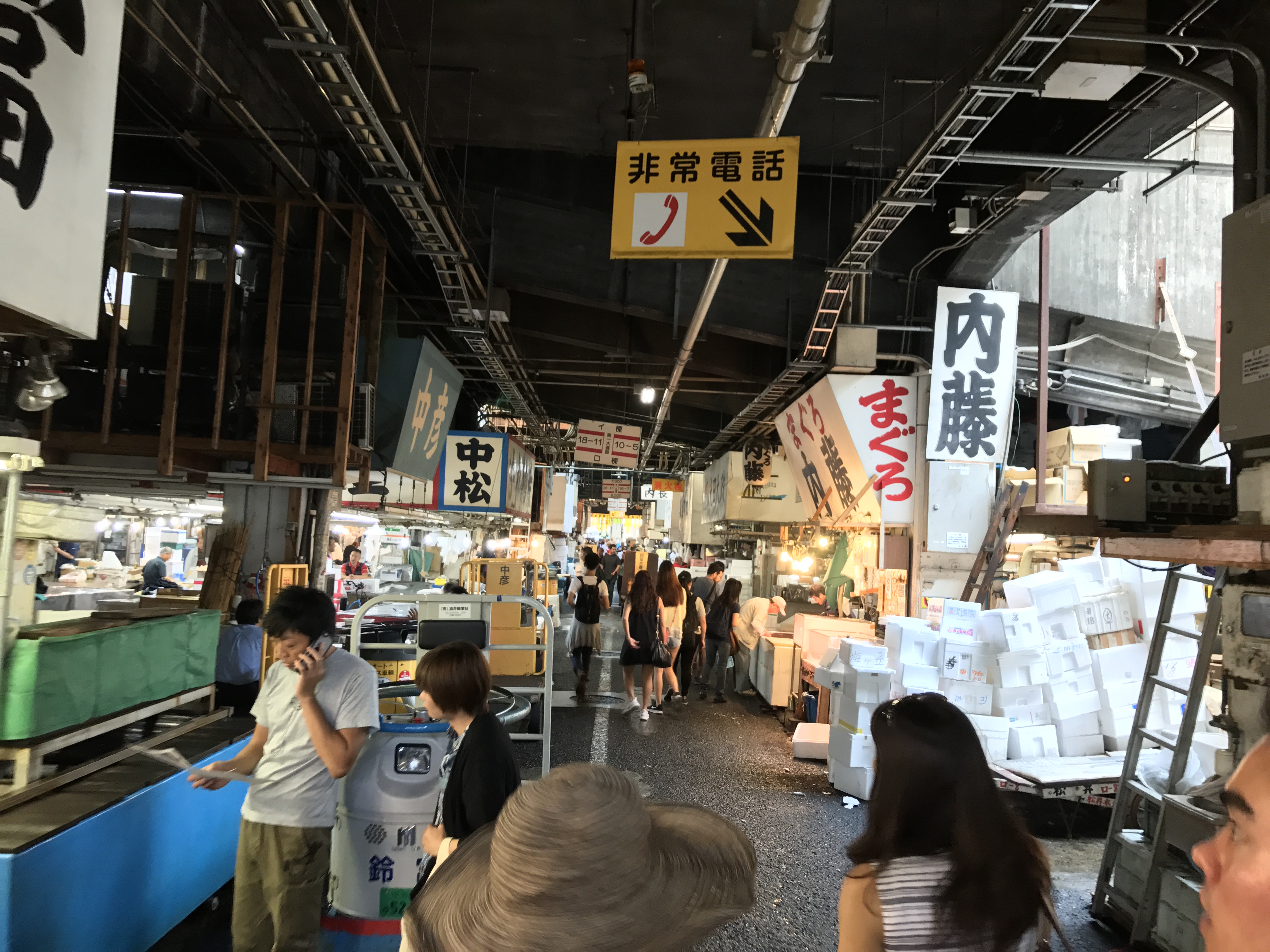
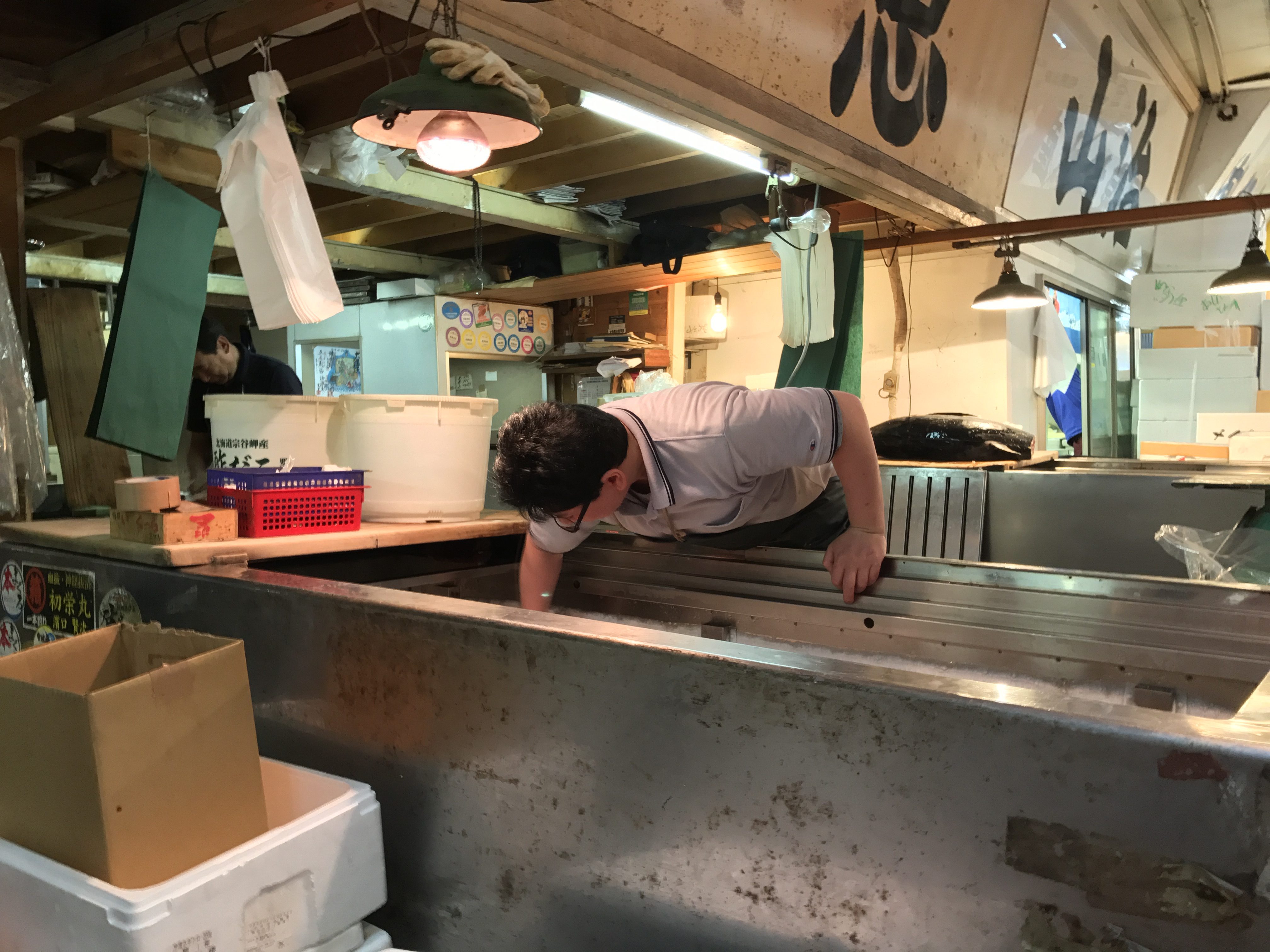
After a rushed visit to a konbini to grab breakfast, we began our day at Waseda University where we met Aridome-sensei’s former elementary school classmate, Ozaki-san. I chatted briefly with Ozaki-san as we walked towards Tsukiji Fish Market and immediately felt grateful to have such a warm and caring guide for the day. Tsukiji was massive and overwhelming. We shuffled in and out of rows of intermediate wholesalers selling everything from huge pieces of tuna to thousands of squirming sardines. As I thought back to Theodore Bestor’s piece entitled “Wholesale Sushi: Culture and Commodity in Tokyo’s Tsukiji Fish Market” that we had read in preparation for our visit, I tried to look for consistencies and inconsistencies at the marketplace itself. For example, Bestor discusses the perception of fish as fundamentally Japanese cuisine, such that the market not only serves as a place of transactions but also as “the stage upon which consumption is rehearsed and displayed.” The sheer fact that so many tourists—foreign and Japanese—gathered with cameras around the market was sufficient to demonstrate the extent to which this market and its fish provide a deep cultural experience, and are thus perceived as fundamentally Japanese. In contrast, however, I did not feel that the arrangement of the market or the attitude of its wholesalers were geared towards observers and consumers whatsoever. Very few English signs or labels were present relative to many other parts of Tokyo, and wholesalers barely acknowledged the existence of those walking through (besides yelling or honking their horns for them to move). I wonder if Bestor’s idea that Tsukiji rehearses and displays consumption will shift to not just include the marketplace as one node in a chain that determines the prices, demand, and availability of fish, but also to include visual displays at the marketplace itself. As Tsukiji prepares for relocation in the near future, it will be fascinating to see how these perceptions of fish as fundamentally Japanese and the boom in tourism intersect to create a new kind of marketplace.

First View of Tokyo

The thin red curtains cast a strangely pink glow as the sun’s rays peak over the city skyline and sneak their way into our apartment. It almost simulates a real sunrise, even though surely it’s been hours since the sun rose. It’s about 6:00 or 7:00 am, here in Shinjuku, Tokyo; a surprisingly normal wake up time considering jet lag. We started our day off with a コンビニ (conbini; convenience store) breakfast: I got a strawberry yogurt drink, egg sandwich, and musubi. Surprisingly tasty and filling for the price, time, and long day ahead of us. I don’t think I can even begin to capture all the information and details and everything that Oozaki-san (our tour guide for the day and Aridome-sensei’s good friend) left us with. So I’ll be focusing mainly on highlights and things that stood out to me.

~~~

We met Aridome-sensei’s dear friend (親友; shinyuu), Oozaki-san, at Waseda University. Oozaki-san is a nationally certified tour guide, so we were definitely in for a treat today! After a 上手 (jouzu; skillful) 自己紹介 from Ethan (and shorter ones from the rest of us), we set off for Tsukiji Fish Market. Selinger-sensei and Aridome-sensei both expressed concern that, given my fascination with marine life and vegetarianism, if I would be okay walking through the aisles of Tsukiji, where wholesalers prepare and package the fish they bought earlier (think 5:00 to 7:00 am) at the auction. It’s definitely an interesting question that I’ve been asked before and is perhaps relevant to my own project: If we are to value marine life so highly, especially Japan as an island nation, does that mean we forego consumption of marine life? Or, does consumption of it also convey that reverence? For me, I tend to approach vegetarianism from an environmental perspective; that is, I think the way meat is produced and processed (especially in the United States) is inefficient and leads to a whole host of environmental problems. Also, it’s hard to know exactly where your meat (or any food really) comes from and how it was handled. So processing of fish, like at Tsukiji, doesn’t really bother me. The way I see it, if it’s not the blades of a skilled wholesaler, it could very well be the blade-like teeth of, say, a shark or other predator a trophic level above that fish. More so the case, I was really interested in trying to identify various species as best as I could, to as specific a taxon as I could manage. I was also intrigued by the decisions to either present fish as live fish, whole (dead) fish, or in pieces.

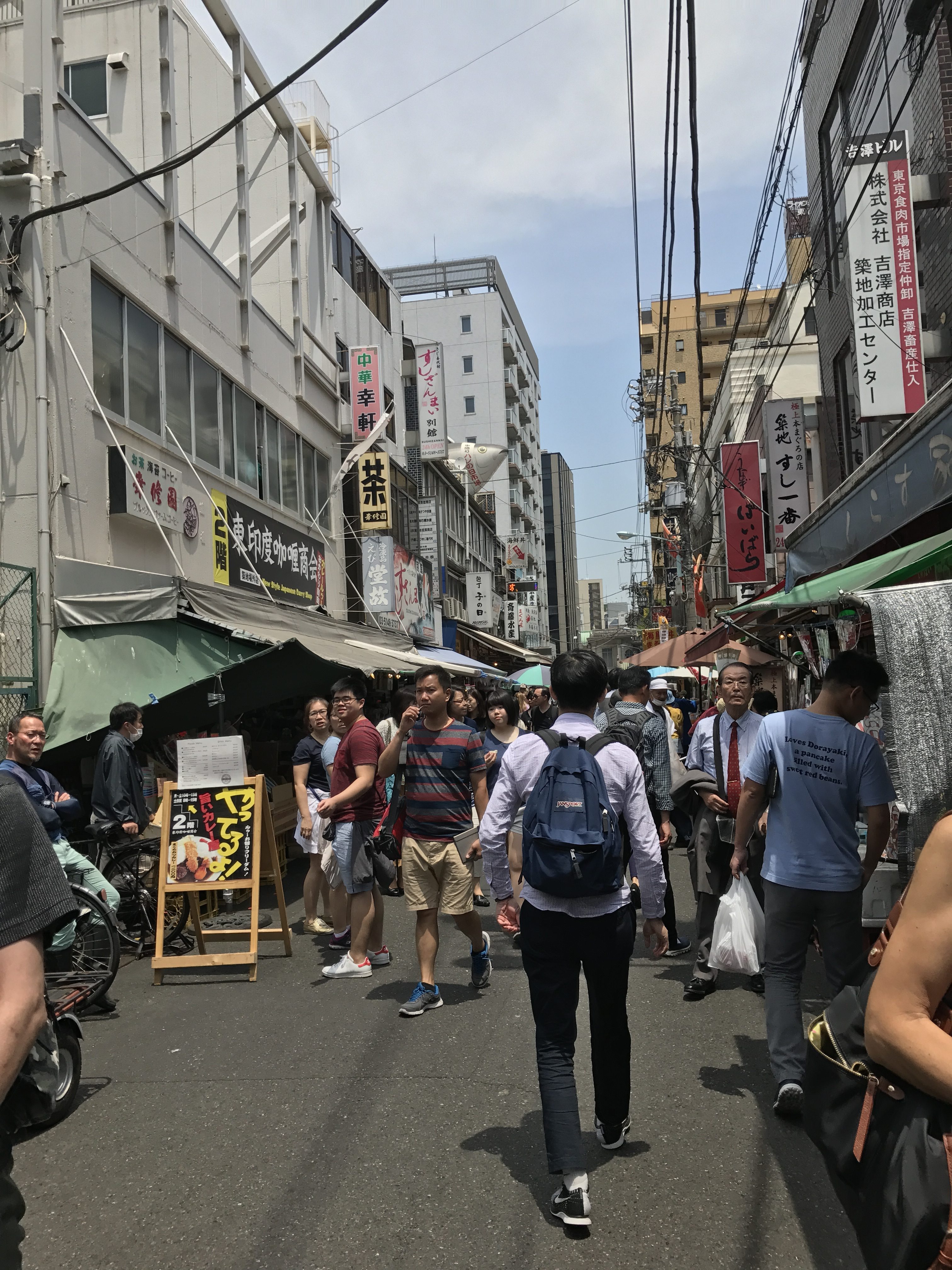
Walking through the aisles of Tsukiji Fish Market.
A wholesaler at Tsukiji Fish Market.
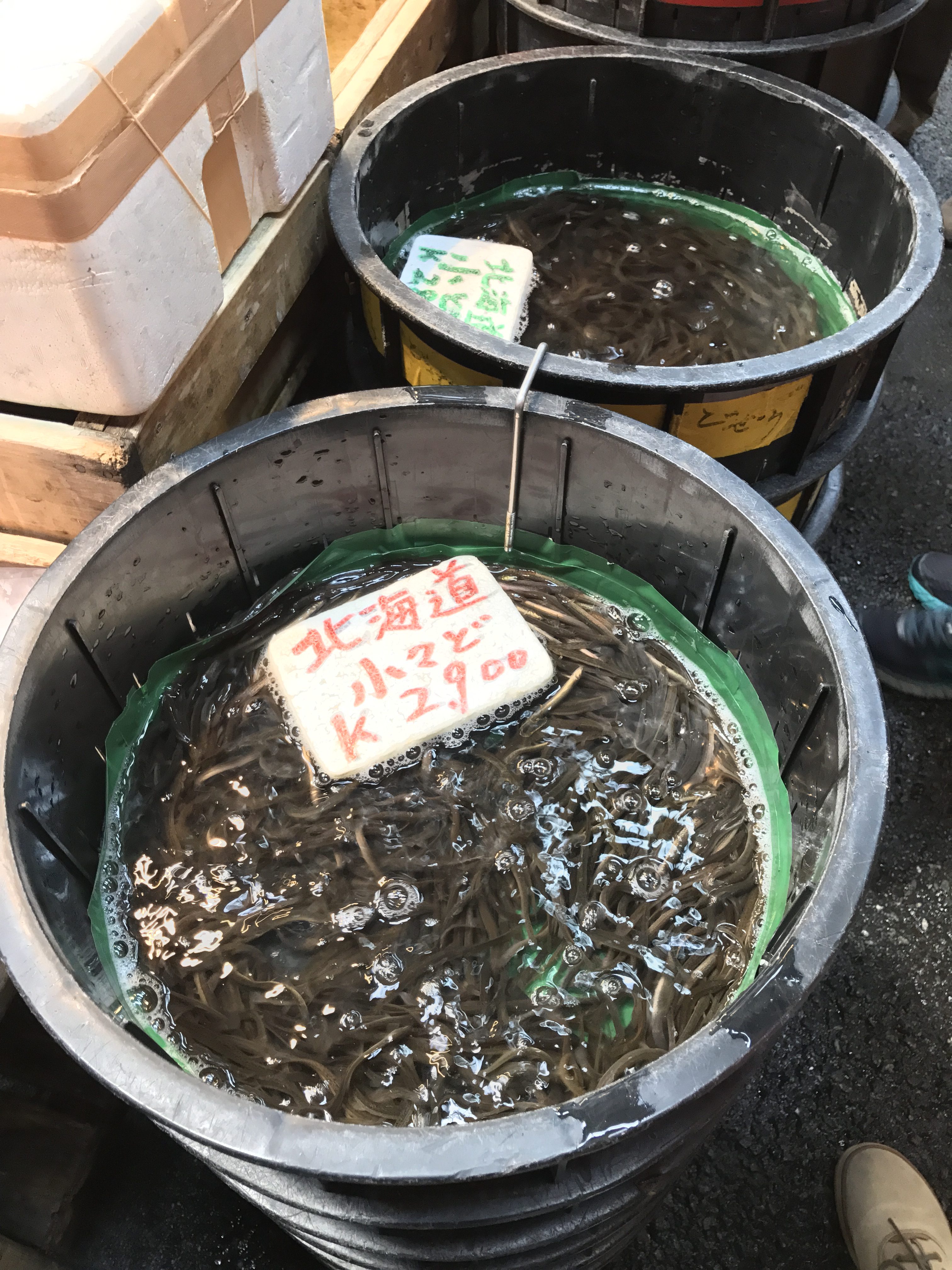
Sardine-looking fish at Tsukiji. An example of live fish displays.

~~~

We also visited numerous shrines and got a really historical view of Tokyo. Apparently, a large portion of it, which encompasses Tsukiji, is reclaimed land. I was also very impressed with the Tokyo skyline, from two separate buildings (I’m blanking on one of them, apologies; the other was the Tokyo Metropolitan Building). I’m usually not much of a city person (some friends from Boston like to joke that I’m from the “countryside”), so I had some mixed feelings about Tokyo. As I was telling Aridome-sensei, I think Tokyo feels more open and less suffocating than a city like New York, where skyscrapers obscure the view of the sky and everything feels grid-like. Maybe it just had to do with the district, but Shinjuku and Ueno had a different, lighter and more modern feel than New York. I also think Tokyo has more green spaces interspersed and the skywalks and monorails help you get off the ground and add a lot of layered complexity to the city. Speaking of transportation, I was impressed by the efficiency and sleekness of Tokyo’s subway system. Definitely rivals New York’s subways in terms of sprawl and Boston’s T in terms of organization and modernity (namely, the T’s blue line). Tokyo subways are a lot more crowded, though, and it kind of made me realize that, besides the lack of natural spaces and being surrounded by concrete/metal faces (which I already knew), cities bother me because of how congested they are. I like efficiency, so moving at a snail’s pace amidst a crowded street or subway and being pressured from behind to keep moving even though I physically can’t is somewhat frustrating for me, I think.

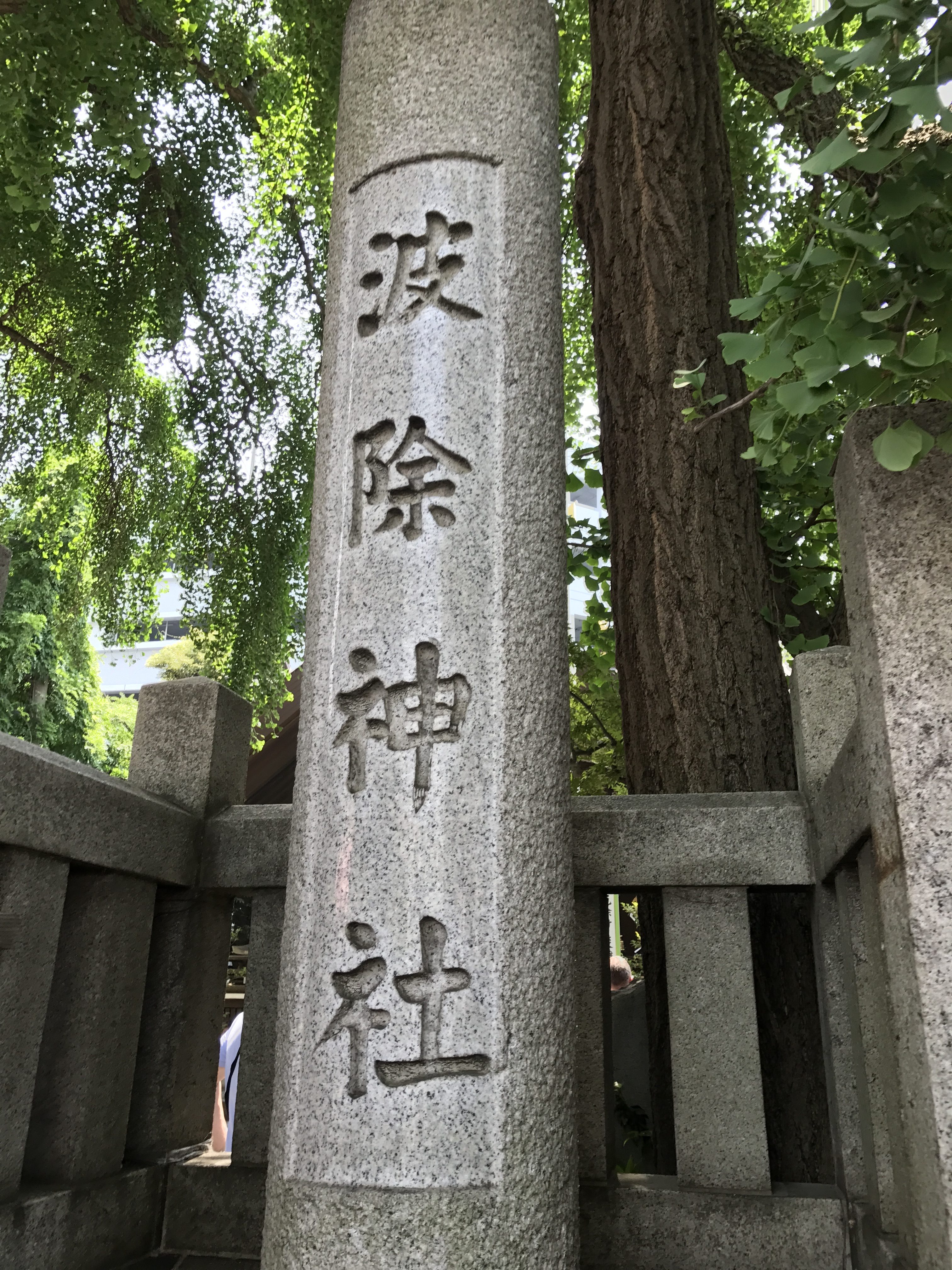
Namiyoke Inari Shrine. “Namiyoke” apparently means “protection from waves,” which I think is really cool!
A relatively crowded market street. We got daifuku mochi here. おいしかった!
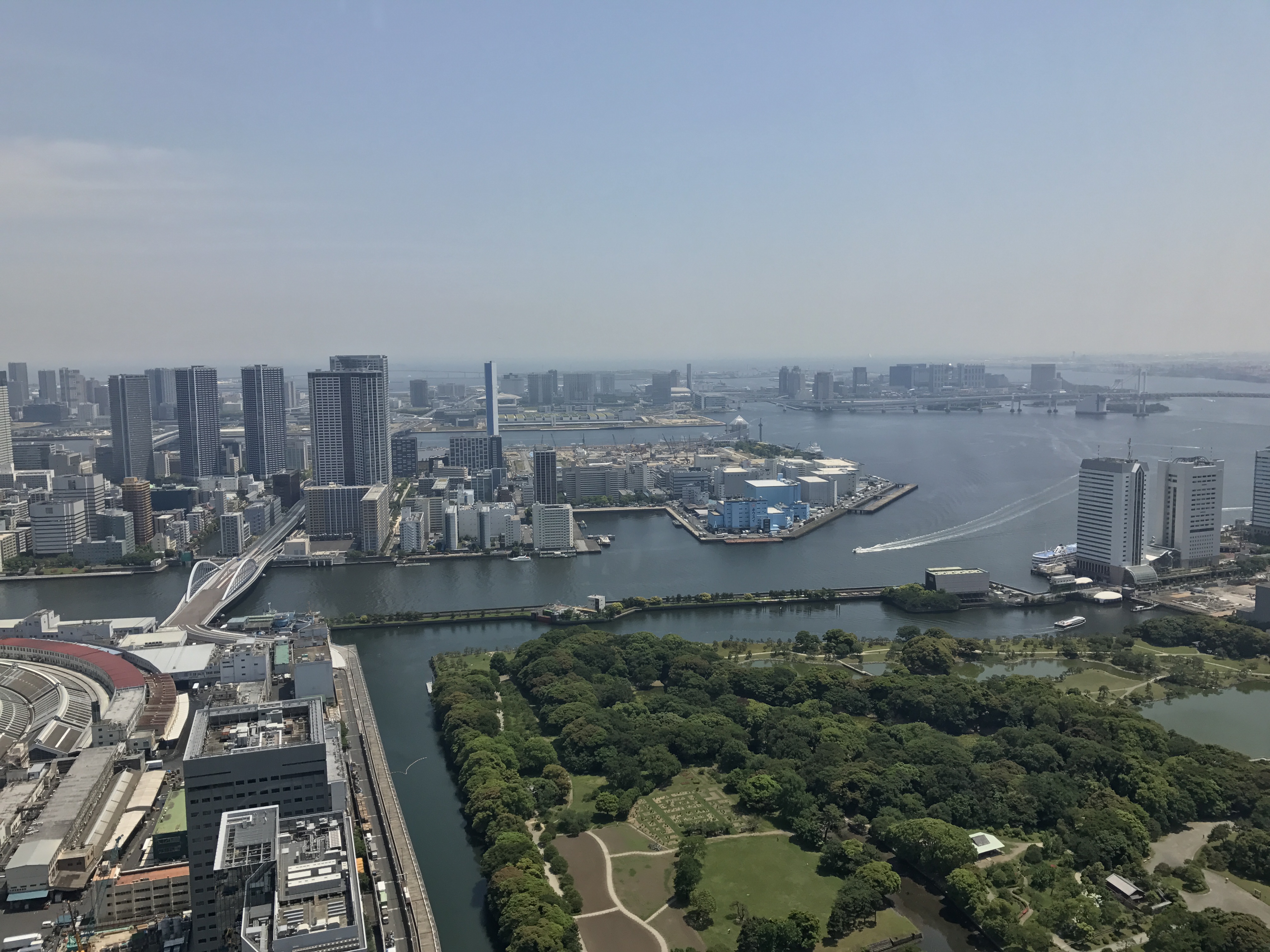
Stunning view of the Tokyo skyline. All of this is reclaimed land, and if you look to the left you can see a bit of Tsukiji.

~~~

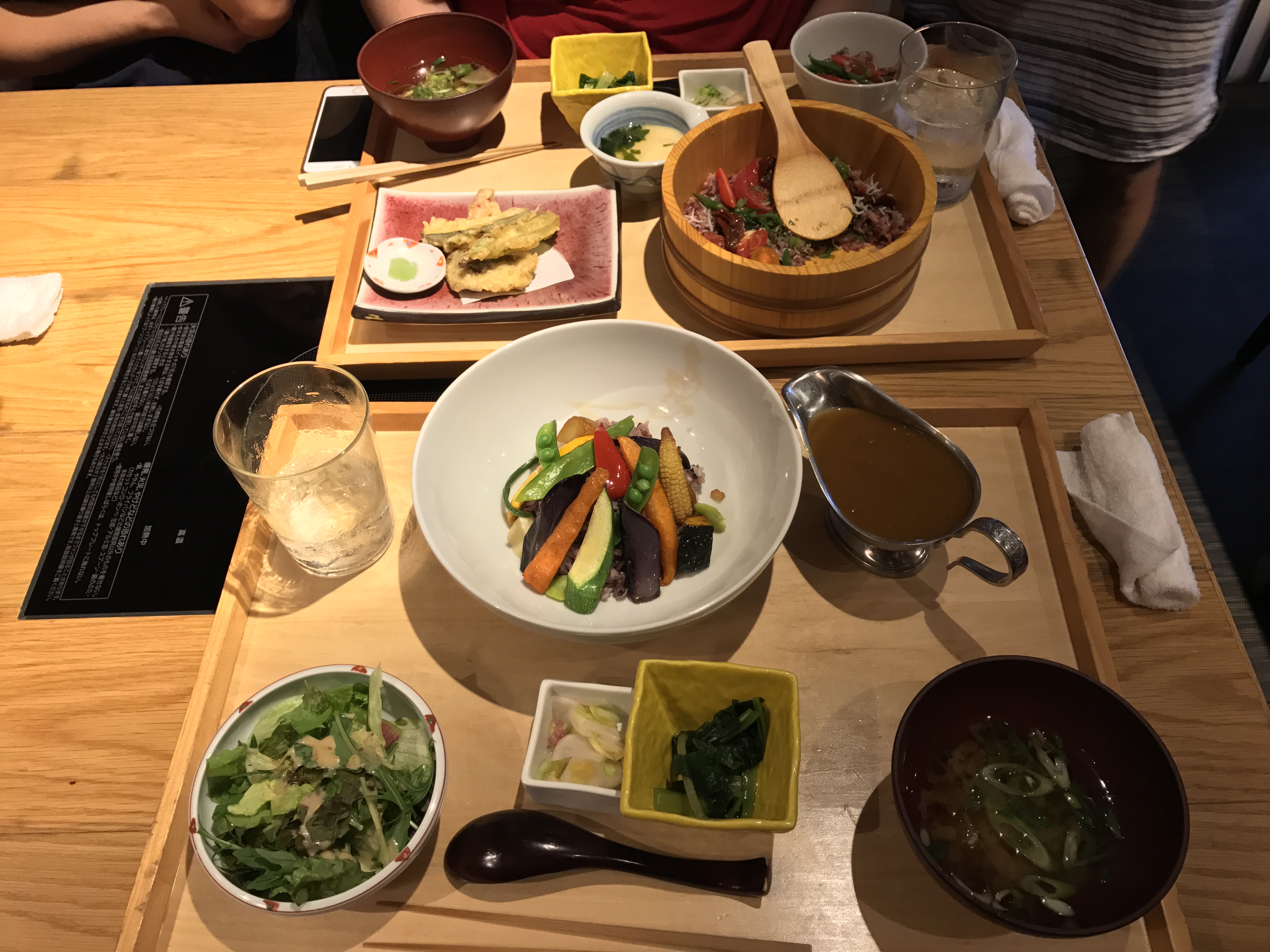
I was also struck by how difficult it can be to have dietary restrictions in a foreign country. We ate lunch at this wonderful restaurant on the second or third floor of an outdoor-ish mall. They had an English menu, thankfully, but even then they had relatively few vegetarian options. I ended up getting curry again (granted, it was すごくおいしかった = sugoku oishikatta = extremely tasty), but it came with a bunch of sides like miso soup, salad with a peanut and ginger dressing, etc. Later, when we were getting dinner after a long day (I was dragging at this point) at a デパ地下 (depachika; contraction of デパート and 地下; aka, department store basement), Oozaki-san showed me around to the various vegetarian (肉がない; niku ga nai; meatless) options. 本当に肉がないオプションをみせてくれてありがとうございました (hontou ni, niku ga nai option wo misetekurete arigatougozaimashita). I realized it’s really difficult simply browsing and trying to discern what options don’t have meat; I suppose a more active approach (i.e. asking which options are meatless) is probably more effective.

Lunch consisting of curry rice and vegetables, salad with peanut ginger dressing, and miso soup. すごくおいしかったよ.


courses.bowdoin.edu / Japan and the Environment 2017 Proudly powered by WordPress