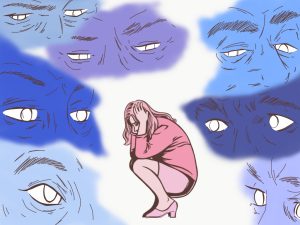
If I Had Your Face by Frances Cha is a novel that is set in modern-day Korea and centers around four young women: Ara, Miho, Wonna, and Kyuri. The characters are vastly different in backgrounds, occupations, and personalities. Ara is a mute hair salon stylist who seems to be level headed at all times except for matters that regard her favorite Kpop boy band members. Miho is an artist sponsored by fellowships at universities and has a wealthy boyfriend. Wonna is a married office worker who struggles to make ends meet but desperately wants a child. Kyuri works at a room salon where she is paid to have drinks or sleep with men. These women are tied together by the fact that they all live in the same officetel building. Their stories move independently but parallel with one another until their paths all cross over towards the end.
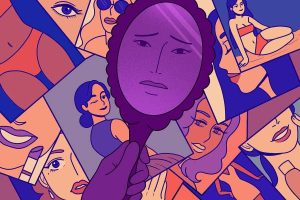
Kyuri and other secondary characters perform and reinforce gendered beauty rituals. She, as previously mentioned, works at a room salon, but not any room salon. Hers is considered a “10%” room salon which entails that it employs 10% of the prettiest girls in the business. Kyuri has obtained this job by obtaining gender beauty ideals through a popular beauty practice in Korea—plastic surgery. Similarly to Elizabeth Hordge-Freeman’s Color of Love and how Brazillians automatically associate white traits as higher class and success, Kyuri’s adherence to Korean beauty standards give her the upper hand. Cosmetic surgery may literally give Kyuri a smaller face, larger eyes, and a petite nose but it also grants her great progress in the room salon industry.
However, the book implies the detrimental effects of these beauty practices. Kyuri climbs higher in the industry the more surgeries she receives but consequently also finds herself constantly in debt because of loan interests. The need to fulfill the unrealistic Korean beauty standard becomes an obsession. She gets her eyes done and then finds herself wanting to get her jaw done. Then she feels like she needs a nose job. And from there she is chained by a never ending cycle of “touch-up” surgeries. The positive resulting effect of her surgeries displays how she can capitalize on beauty, related to the ideas expressed in Kimberly Kay Hoang’s “Economies of Emotion, Familiarity, Fantasy, and Desire: Emotional Labor in Ho Chi Minh City’s Sex Industry.” Kyuri teaches the readers that the addiction to gender beauty practices is not just about appearing beautiful and attractive to society—it is about wanting a better life.
In addition to these gendered beauty rituals, the book describes Kyuri’s unpleasant experience in the third-tier room salon she started out in:
“When I got there, I vowed to get out as fast as I could, and when I did they told me I was a ruthless, toxic bitch, that they couldn’t believe how ungrateful I was to leave them behind when they had done so much for me. They tallied things they actually viewed as favors—“I gave you time off each week to go to the bathhouse,” “I bought you those expensive shoes,” “I helped you decorate your ‘room,’ ” “I took you to the doctor when you were sick.”
Kyuri is negatively affected by a socioemotional economy she is dragged into. Her clients have an expectation of reciprocal beneficence even though they have offered up gifts without it being asked of them. The way Kyuri describes her clients “tallying” favors shows how they have mental ledgers and keep a cognitive list of favors to demand Kyuri to behave in a certain way. It is evident that there is a misconnect between the two parties due to the inclusion of the word “actually”— it implies that Kyuri disagrees over the value of her clients’ gifts. This disagreement leads to what is an unbalanced exchange, causing her clients to respond with harsh reactions of cursing her out. The experiences with these relationships is akin to the concepts in Chapter 5 of Arlie Hochschild’s The Managed Heart: Commercialization of Human Feeling.
Kyuri’s life as a room salon girl shows the taxing beauty pressures and expected gratitudes that she has to confront. The book uses her experience exposes the physical and mental burdens of a women in the beauty centric Korean sex industry and how that can ultimately wear down a person.