

An anguished woman cries out in despair
Whether or not this Rescue and Recovery Operation was successful overall is a highly debated matter. It is true that the program resulted in the recovery of thousands of Hindu, Muslim and Sikh girls. Indian government fact-finding missions estimate that there were 50,000 abducted Muslim women in India and 33,000 abducted non-Muslim women in Pakistan, though many argue (such as Mridula Sarabhai, who’s job it was to orchestrate the Recovery and Rehabilitation Operation) that this estimation is far too modest.
Approximately 30,000 of these abducted women (Muslim and non-Muslim women combined) were ultimately rescued, leading officials in both governments (but especially those in the Indian government) to be frustrated with the seemingly bleak results of the Operation. If the obstacles in even just locating and forcibly returning women to their “home” were not enough, 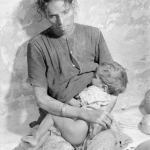 social workers and officials of this operation were also confronted with the complication of Indian families refusing to accept their “tarnished” and “dishonored” daughters, sisters and wives back into their homes. We know this not because it was discussed in public or even acknowledged in any of the interviews or memoirs, but rather because of the pleas made by government administrators and related propaganda found in certain news articles.
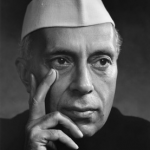
Prime Minister Nehru himself made a public appeal in a January 1948 newspaper:
I am told that there is an unwillingness on the part of their relatives to accept those girls and
Jawaharlal Nehru
women (who have been abducted) back in their homes. This is a most objectionable and wrong attitude to take and any social custom that supports this attitude must be condemned. These girls and women require our tender and loving care and their relatives should be proud to take them back and give them every help.
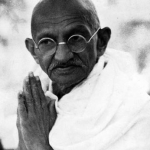
Mahatma Gandhi
Gandhiji too publicly expressed displeasure at this refusal to accept supposedly “impure” women, attesting to the pervasiveness and significance of this issue; Gandhi and Nehru were nothing if not highly occupied with greater issues of continued communal violence, yet this issue was common enough to have garnered the attention of these leading political figures. Gandhi denounced this “matter of great shame,” stating that the women who were abducted were “as pure as the girls sitting by [his] side,” and that “if any of these recovered women should come to [him], then [he] would give them as much respect and honor as [he] accord[ed] to these young maidens.”
Authoritative denouncements of rejecting “defiled” women apparently not doing much to ameliorate the issue, the Ministry of Relief and Rehabilitation attempted to educate the public by distributing pamphlets concerning the issue of “impurity.” According to Gulab Pandit, a female social worker, these pamphlets claimed that menstrual cycles purified a woman, cleansing her of any “impurities” she might have acquired by contact with a Muslim and removing any element of “untouchability” she might have acquired.
But despite the obvious difficulties in restoring women to their “correct” home and the ostensible failure in fully attaining this goal, women were being returned to the two countries as late as 1956 and the Abducted Person’s Act was renewed every year in India until 1957 (it was eventually abrogated in Pakistan). And though most of the recoveries occurred between 1947 and 1952, the Operation was carried throughout this time.
As can be deduced by the multitude of government ordinances, conferences, letters and public addresses, as well as the sheer monetary and human capital invested in the recovery effort, the Indian government was incredibly invested in the restoration of non-Muslim women to their “proper” home in India. This begs the question of why the Indian government-already burdened by issues of state formation and border conflicts with Pakistan- put such outstanding effort into reclaiming women, even years after their initial abduction. In other words, why was the “women question” such an important one for this foundling state?
The Rescue and Recovery Operation was certainly a humanitarian endeavor, and in many ways foreshadowed the welfarist attitude that would dominate mid-century Indian politics. But I would argue that the state’s commitment to the restoration of abducted women had much more complex motivations than solely a moral undertaking, and had everything to do with India’s newly acquired independence as a modern, secular state.
I believe that three overriding factors drove the Indian state to commit itself so thoroughly to the rescue and restoration of Hindu and Sikh women:
- According to the fact-finding mission led by G.D. Khosla, government employees and officials engaged in much the same communalism as the general populace, oftentimes turning a blind eye to criminal activity due to their own religious bigotry. Even worse, Khosla alludes several times to the sexual violations that many law enforcers openly committed; even after the legislation of the Abducted Person’s Act, a rumored 2,000 non-Muslim women remained in the possession of government servants in Pakistan.
But the Indian state, to maintain the legitimacy it required to lead a nation, needed to distance itself from the sexual chaos of mass abductions, and set itself as a beacon of reason and law amidst the break-down of order. Because the government had yet to establish itself as a trusted institution amongst its people, the state had to form a basis of trust. And there was no better way to do this than to address a crisis that-for reasons already discussed in the section concerning Honor-was of great concern to the Indian population (more specifically, the male leaders of this population).
- The Indian state’s desire to define its modernism and secularism in opposition to the theocratic Pakistani state.
The division of the country was a great humiliation to the leaders of the independence movement and the Indian people in general, an all too permanent reminder of India’s inability to attain the kind of independence they had so long envisioned. To assert the superiority of their “modern, secular” state, the Indian government had to rescue its female “citizens,” as this is what a “civilized” state would do, rather than its theocratic counterpart, whom they depicted as archaic and an instigator of further sexual violence.
One might argue that India was moderately successful in this endeavor, if one were to measure success numerically. India managed to restore some 22,000 Muslim women to Pakistan, whereas officials in Pakistan could only admit to about 9,000 non-Muslim women being returned to India. Indeed, this was a major point of contention between the two states, officials in the Indian government feeling that Pakistan’s “intentions never quite squared to its performance,” a reflection of their illegitimacy as a “modern” state. But because Pakistan was established as a Muslim homeland and thus a theocracy, it was self-defined; the Indian state, having declared secularism, had to define itself despite no clear, homogenizing characteristic. Thus it defined itself as an (read: superior) alternative to Pakistan.
- Much as independent India’s leaders liked to tout their fidelity to democracy and secularism- the vast majority having attended Western institutions of higher learning that espoused ideals of this genre-the reality was that the South Asian populace was, by and large, unexposed to these more “modern” values. As was painfully evidenced by the archaic communal violence brought on by Partition, the peoples of both communities were still deeply entrenched in traditional, patriarchal-based mores that emphasized the importance of maintaining honor and violently revenging its violation. Much as they might have preferred it, India’s political leaders could not impose Western/European methods of state formation and legitimization on a country that may very well not recognize this form of authority.
Idealists Nehru and his peers might be, but foolish they certainly were not. Trained as they were in political thought, Indian administrators knew that they would only be successful in their foray into self-determination if they successfully legitimized the Indian state in the eyes of its people and established itself as the legitimate source of authority. Given that the South Asian population would hardly turn “democratic” or “modern” overnight, the only way to accomplish this necessary goal was to use traditional modes of authority, masked in the rhetoric of modernity (so as to maintain international acceptance).
While the Rescue and Recovery Operation then was, on the one hand, a way to establish the “civility” of the Indian state (compared to Pakistan) in the eyes of the international community, it was also a way to re-establish the traditional patriarchy that the people of India would recognize and respect. Rehabilitating women was key to the Indian state’s perception of itself as benign and paternalistic, the parens patriae of its wronged citizens. The Operation restored India’s honor because it restored too its violated manhood- its legitimization as the patriarch of all patriarchs- because it returned to its fold that which had temporarily robbed it of its honor and status: the body of the woman, the physical manifestation of a nation that was as yet but an intangible idea.
But what all of these motives fail to take into account are the subjects that they ultimately concern: the wronged women of Partition. The next section discusses how this part of Partition too has abundant silences when it comes to the agency of women and the truly violent attributes it takes to mutate this agency into something that is useful to the patriarchal goals of those who control the narration of Partition history.