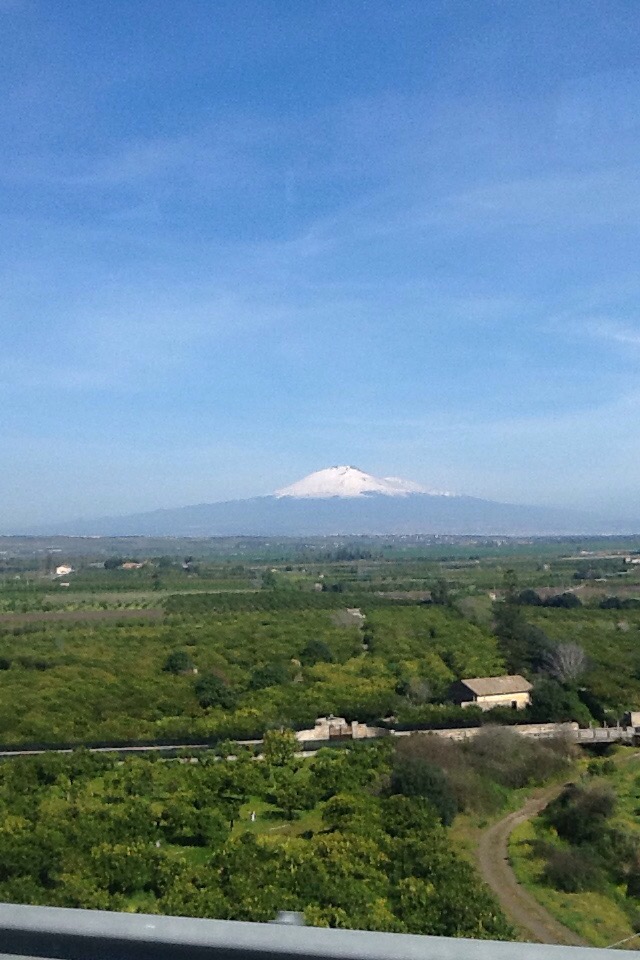
This marks our final full day of touring Sicily. As our bus approaches the ominous, pulchritudinous shadows of Mount Etna, I cannot help but note that this outing is, allegorically and literally, the climax of our trip. For millennia, Sicilians have derived both divine and monstrous connotations from this volcano, worshipping it through the use of its volcanic rock in much of the area’s architecture, and demonizing it in mythological and literary comparisons to a cyclops or a dramatic, disastrous result of nature. As the soil surrounding the volcano is incredibly fertile, farms have taken up post despite the threat of an eruption, and companies have taken over the mountain to reap all possible rewards from its waves of tourists. In many ways, Etna is one of the only static symbols of Sicily, and one that Sicilians can rely on, while the rest of Sicily’s history is arguably as dynamic as can be. Being at Etna’s summit literally and figuratively took my breath away.
Chameleons?
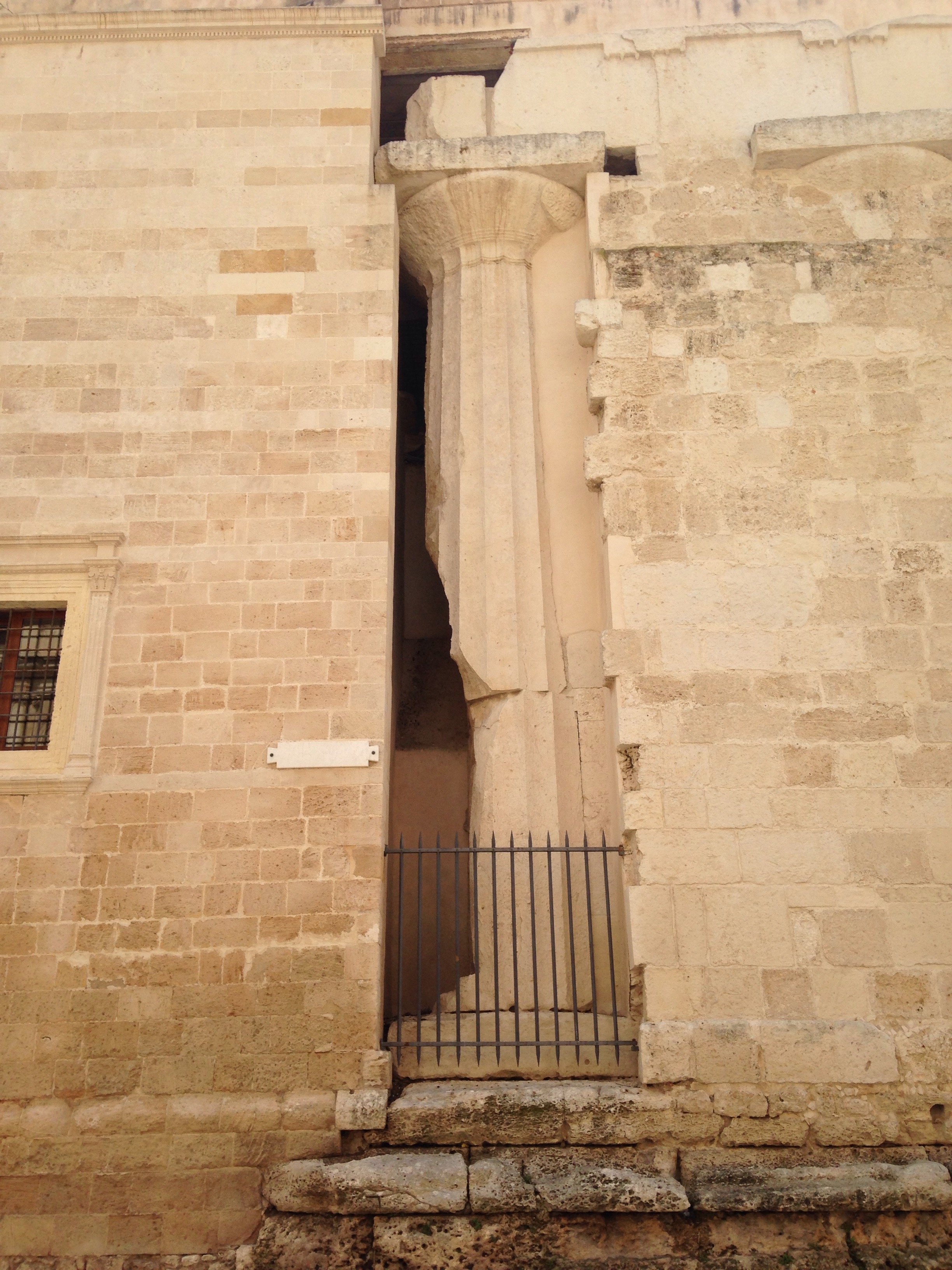
Much like a chameleon, this Doric column camouflaged itself within the wall of Siracusa’s Duomo, staying hidden from the gang while it took in the Sicilian night life mere hours before this picture of such an elusive object was taken. Upon entering the facility, I decided every church should be built around the model of a Greek temple. The Duomo’s central naves are framed by the Doric columns later architects decided to preserve and work with, creating, in my opinion, a sublime and ultra-holy space of worship. In general, I am perturbed when humanity builds over ruins or other places of worship to create their own holy spots, as much of Christian Spain did after 1492 when demolishing mosques and churches in their stead, but I feel this Duomo did a sound job of preserving and balancing the art of the Greeks with their own culture.
First Taste of the South Coast
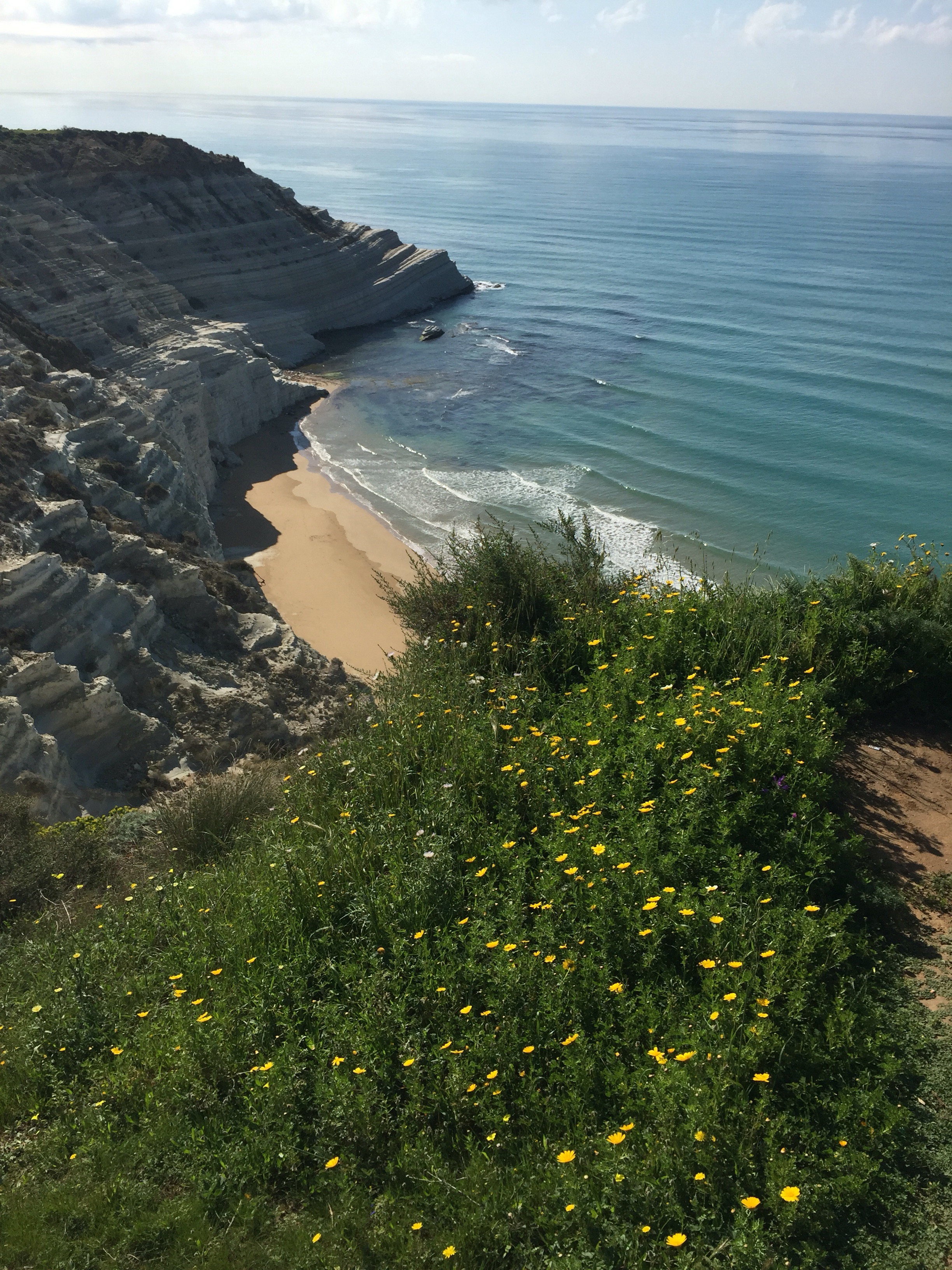
We stopped for a breathtaking vista on the southern coast. This is, apparently, the place where some Saracens landed during their conquest of Sicily in the 10th century. I can’t imagine they were disappointed with what they found.
Tons of dragonflies and some really interesting geological formations. I’m sure Cam was pumped.
Later, David and Victoria did a little out-of-bounds exploration. Scandalous. 
Angus
Baroque Time !!
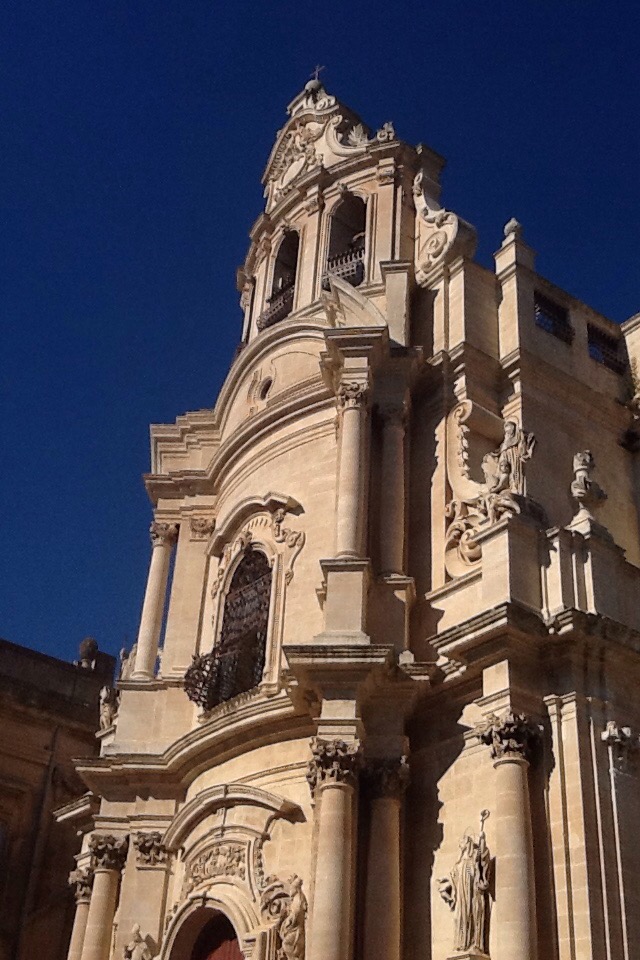
Today the gang travelled through time. We had spent much of the trip visiting ancient ruins, but today we entered Sicily’s Baroque era in the quaint town of Noto. Evident upon the sandy church pictured above are a number of Corinthian columns borrowed from Greek architecture, all the while juxtaposed with statues of religious figures sculpted into the natural convex and concave curves of the building, and finished with brushstrokes and thickets of iron bars framing the church’s many windows. Decades ago, the countless sandy buildings of Noto and surrounding towns fell victim to a devastating earthquake, rendering the collapse of a central baroque cupola and many reconstruction projects. The gang is blessed to see these buildings standing on Day 7, and to understand the influences the Greek world had on the evolution of architecture.
The Mystery of Selinunte
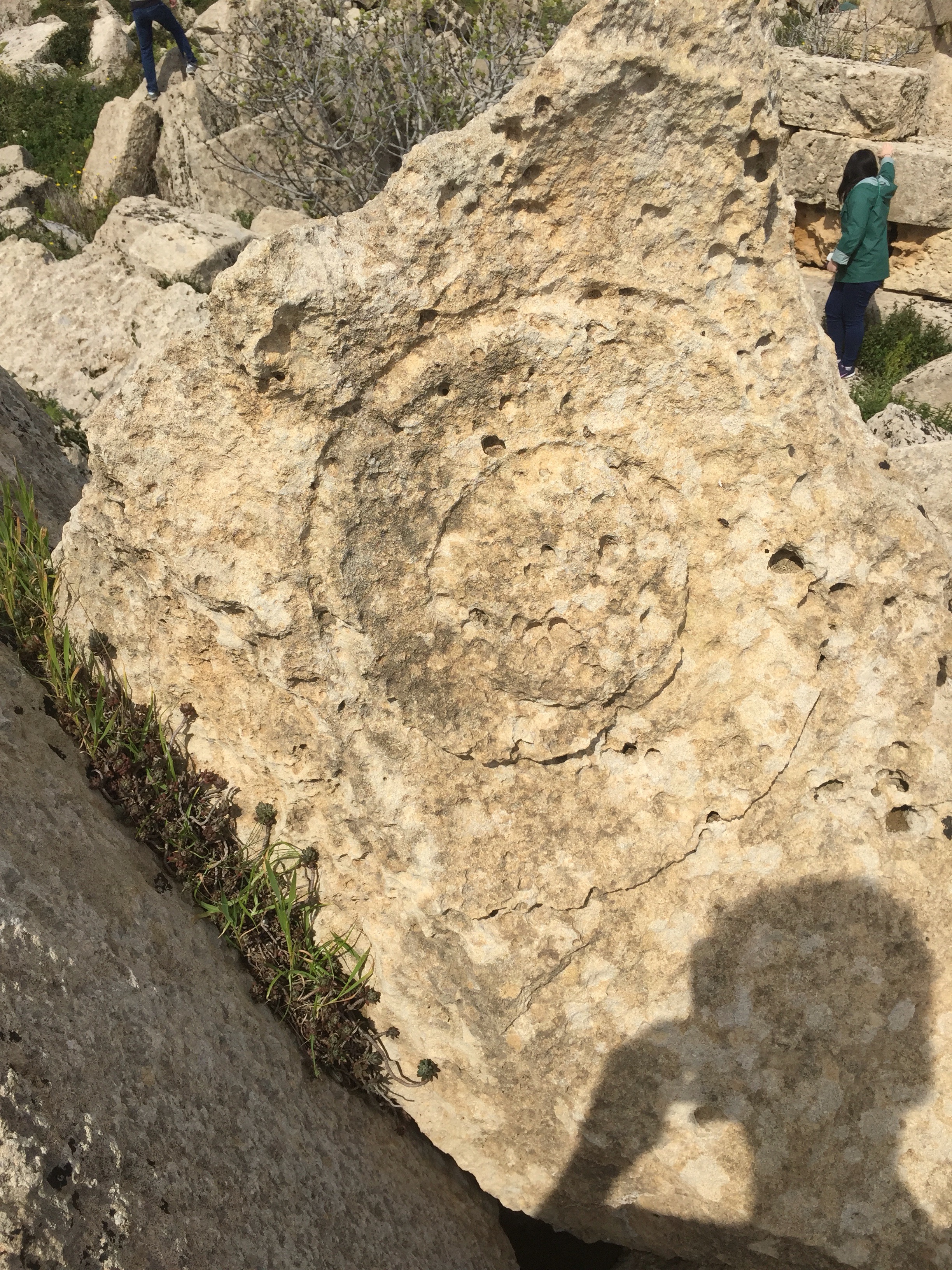
I found this interesting spiral pattern on a fragmented capital in the ruin of the Olympeium at Selinunte. Is it an original feature? If so, what purpose did it serve? Did some Punic soldier leave his mark on the destroyed temple? Is it chance erosion from millennia of exposure? Is it an addition by later artists?
Do we find similar features/patterns in other ruins, temple or otherwise?
Angus
- « Previous Page
- 1
- …
- 11
- 12
- 13
- 14
- 15
- …
- 26
- Next Page »