• Skip to main content
  • Skip to secondary menu
  • Skip to primary sidebar

Sociology 2310 - Fall 2022 - Sociology of Emotions - Group 13

Sociology of Emotions - Professor Shruti Devgan

  • Home
  • WordPress Tips
  • Course Description & List of Student Sites
  • About the Authors

Photo Essay – The First Wave

November 30, 2022 By Ben Kiritsy '23

Mathew Heineman’s The First Wave offers a harrowing account of the first few months of the pandemic in New York City, an epicenter for COVID-19 infections and one of the hardest hit cities globally. This documentary focuses on the Long Island Jewish Medical Center, a division of Northwell Health System, and follows the experience of various doctors, nurses, patients and families as they grapple with a disease that fundamentally alters their way of life. While we have discussed the topic of COVID-19 in class, Heineman’s work presents an additional opportunity to connect the pandemic, and its impact in New York, with themes presented throughout the course including, feeling rules, surface acting, grief and closure.
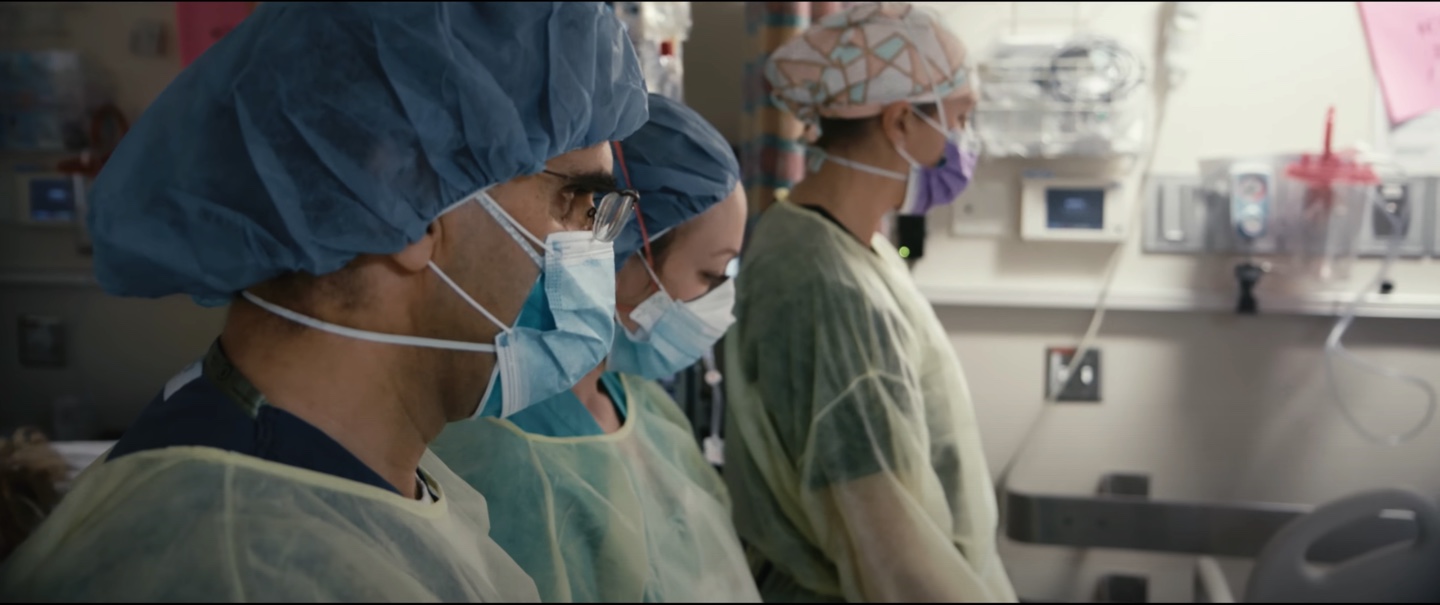
 

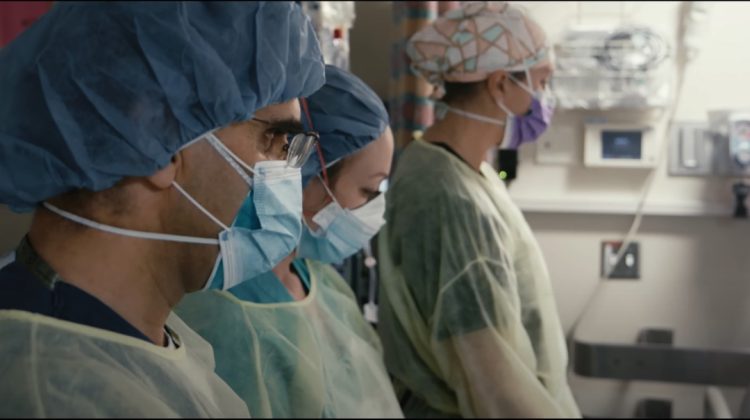
Finding Space to Grieve in a Time of so Much Death: The image presented above focuses on three medical personnel who are taking a moment of silence after one of their patients could not be revived. In the film, when the patient’s pulse flatlines, one of the nurses says “one moment of silence. Just one minute” before marking the time of death and preparing to have the body transported. This image and quote highlight the sheer volume of death and the strain that the hospitals and staff were being placed under during this time. However, despite the grim reality, there is a very clear set of expectations for the emotions deemed appropriate for medical staff to display in this setting. This rubric of emotional regulation is known as feeling rules, a term coined by Arlie Russell Hochschild, in her book The Managed Heart which consist of “the standards used in emotional conversation to determine what is rightly owed and owed in the currency of feeling.” (Hochschild, 18) In the medical context, staff cannot display their emotions, even if they are feeling immense sadness or grief at the death of a patient. This ritual of giving a moment of silence at the death of a patient allows for the staff to process their emotions and grieve in a limited fashion that adheres to the feeling rules expected of them as medical staff.


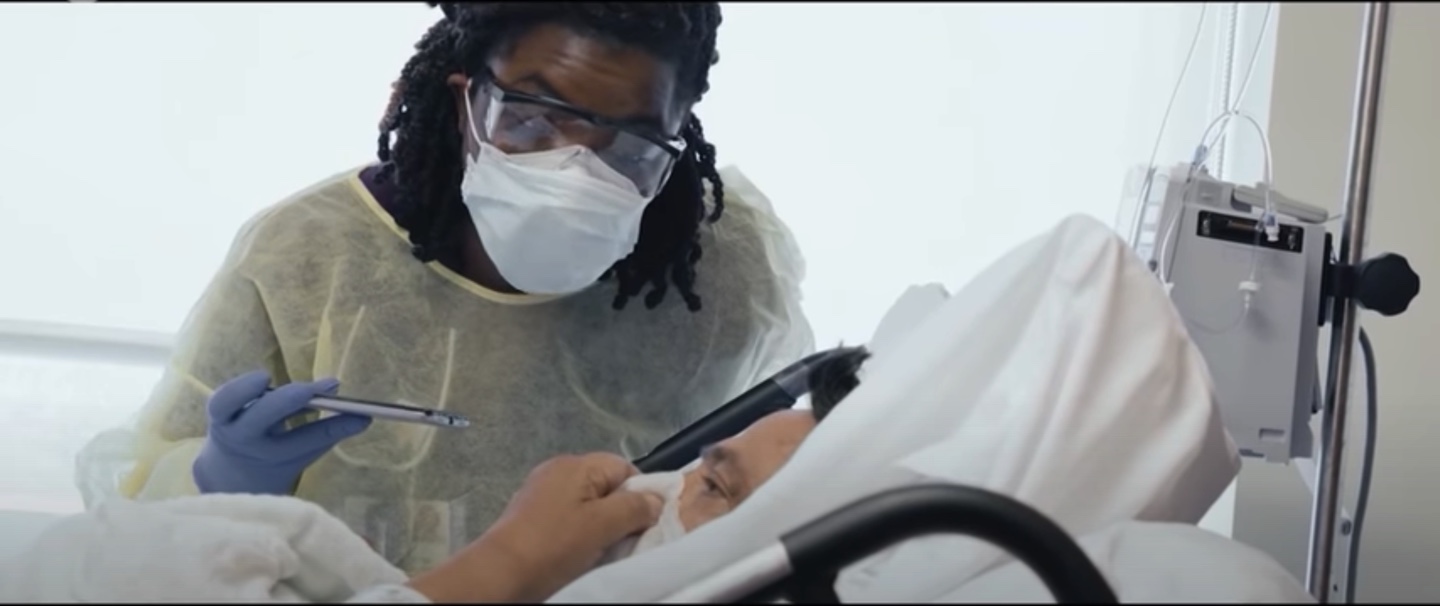
Testing the Limits of Surface Acting in the Workplace: This image features a close up shot of a nurse pushing a patient through the hospital to get them on a ventilator to boost their depleted oxygen levels. It is an incredibly stressful moment in the film, and you can see in the nurse’s eyes the fear that this patient, like the many other COVID-19 patients with preexisting health conditions, will not make it out of the hospital alive. As she is wheeling the patient a voice of another medical staff member narrates “it’s hard not to hold onto the emotions of your patients and their families, but I have to separate myself to get through my day.” This nurse’s description of her job, in many ways, mirrors the experience of the flight attendants in Hochschild’s The Managed Heart. Given the feelings rules associated with the role of a flight attendant, there is an expectation of a warm disposition and calming presence whether the flight attendant truly feels that way or not. In order for both flight attendants and medical personnel to display the emotions appropriate for the given scenario, they have to employ “surface acting” to disguise how they really feel. Hochschild defines surface acting as “try[ing] to change how we outwardly appear,” and with surface acting “the action is in the body language.” (Hochschild, 35) In the film we see nurses continually use a positive and upbeat tone of voice despite the grim circumstances. Similarly, they control their facial expressions to not cry or tear up in front of patience. They also employ specific affirmative words and rarely reference and words connoting doubt to instill a sense of confidence in their incredibly fearful patients. These all represent forms of surface acting.
Traditional Definitions of Closure Upended During the Pandemic: The third image focuses on one of the doctor’s speaking with a family member of a sick patient through their iphone. In the scene the doctor is updating the family member on the status of the patient. This is one of many scenes in the film in which cellphones and ipads are used by medical personnel in order to update the family with the condition of their loved one and keep the family in touch, albeit virtually. Given the infectious nature of Covid-19, family members were not able to physically be in the hospital with their loved ones when they were sick and even when they were dying. While the concept of closure lacks specificity and uniformity in its application, author Nancy Burns in her book Closure: The Rush to End Grief and What it Costs Us offers a general guideline to the term stating, “closure typically implies that something is finished, ended, closed. Finally you can move on.” (Burns, 6) She cites the instance of 9/11 and former NYC mayor Rudy Guiliani’s decision to remove all debris in the aftermath of the attack as an instance where people affected by 9/11 were denied closure. As stated by an interviewee, Sabrina Riversa, “we never had closure because as soon as 9/11 happened he [Rudy Guiliani] had all the remains shipped to Staten Island, in a dump.” (Burns, 6) With the pandemic, family members similarly lacked closure in the sense that they could not physically comfort their loved ones as they battled COVID-19 in the hospital. Additionally, as depicted in the film, the sheer volume of deaths from COVID-19 in New York City during the first few months of the pandemic meant that hospitals and morgues had to use mass graves to keep up with the deaths from the disease. This form of burial denied many families the traditional funeral experience that has come to embody a standard notion of closure and grief from the perspective of many Americans.


Primary Sidebar

More to See

Fiction/Poetry – 4 Short Poems

December 2, 2022

Photo Essay – The First Wave

November 30, 2022

Photo-Essay

September 14, 2020

In the News

September 14, 2020

courses.bowdoin.edu