Who Decides (FERC)
Federal Energy Regulatory Commission (FERC) has jurisdiction over dam licensing.
The Commission’s major hydropower activity is relicensing existing projects whose licenses are about to expire. Staff prepares either an Environmental Assessments (EA) or an Environmental Impact Statement (EIS) and bases recommended license conditions on these reviews. It is a multiyear process where FERC, in close collaboration with dam owners, navigates stakeholder concerns while prioritizing continued hydro power use. Historically, most applications for renewal are approved with moderate requests for improvements. This is due to a standard whereby baseline conditions for dam licensing, particularly within the Federal Energy Regulatory Commission (FERC) process in the United States, are established based on the existing, current environmental conditions at the time of the license application. For relicensing projects, this does not require recreating pre-project conditions, but rather assessing the impacts of ongoing operations.
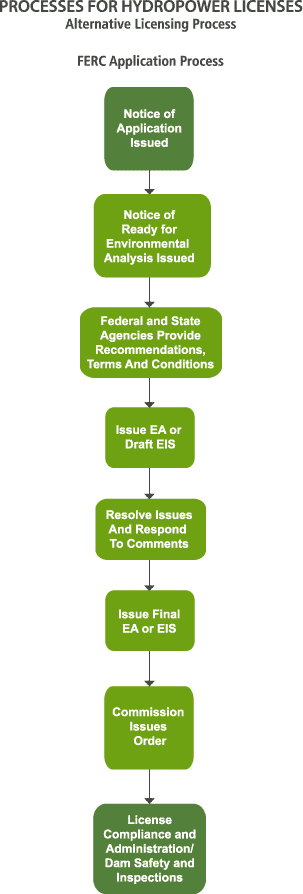
Within the FERC permitting process there are opportunities for other agencies (and other stakeholders) to request studies it deems necessary in order to provide information that will assist in development of recommendations, terms and conditions, or prescriptions then submitted to FERC for potential inclusion in any license issued for the project. Historically the influence of these entities on FERC’s ultimate licensing decision has been somewhat limited.
National Oceanic and Atmospheric Administration (NOAA) reviews projects to protect, mitigate, and enhance fish and wildlife habitats. They mandate fish passage improvements and recommend conditions to protect species like salmon, steelhead, and sturgeon.
“NOAA reviews existing and proposed hydropower and hydrokinetic projects in cooperation with applicants and operators, the Federal Energy Regulatory Commission (FERC), federal and state natural resource agencies, tribes, communities and interested citizens. We review proposed projects throughout the pre-licensing and licensing phases and work with stakeholders to develop recommended license terms and conditions necessary to protect, mitigate damage to, and enhance fish and wildlife habitat affected by hydropower project construction and operation. We also review existing hydropower projects to ensure project operations are meeting our goals for protecting trust species. We have five broad goals for the hydropower review program:
- Ensure the safe, timely, and effective passage of migrating adults and juveniles past hydropower facilities;
- Support the recovery of endangered and threatened species including Atlantic salmon, Atlantic sturgeon, and shortnose sturgeon;
- Improve the prey base for multiple offshore species, including Gulf of Maine groundfish, to support recreational, commercial, and subsistence fishing;
- Promote habitat restoration that results in benefits to water quality, watershed based recreation, and resilient coastal communities; and
- Increase collaboration across NOAA line offices to maximize the benefit of public investment in natural resources.
To support these goals, we use the Federal Power Act to protect, mitigate damage to, and enhance fish and wildlife habitat, require the installation and operation of fishways, and ensure the project is best adapted to a comprehensive plan for improving or developing a waterway. In addition to our authorities under the Federal Power Act, NOAA Fisheries has responsibilities related to hydropower projects under the Fish and Wildlife Coordination Act, Clean Water Act, the Endangered Species Act, Marine Mammal Protection Act, and Magnuson-Stevens Fishery Conservation and Management Act.
US Fish and Wildlife Service (USFWS) staff provides technical evaluations on the effects of hydroelectric power projects to fish and wildlife resources. Federal Energy Regulatory Commission (FERC) regulations, as authorized by the Federal Power Act, and the Fish and Wildlife Coordination Act, require license applicants and licensees to consult with the U.S. Fish and Wildlife Service (Service) prior to and after project licensing, so the Service may provide FERC with:
- ecommendations for the protection, mitigation of damages to, and enhancement of fish and wildlife resources for licensed projects;
- mandatory prescriptions for fish passages;
- mandatory conditions for the protection, mitigation of damages to, and enhancement of fish and wildlife resources for exempted projects; and
- mandatory terms and conditions to provide for the protection and utilization of Service lands upon which proposed hydropower projects may be located.
The Maine Department of Marine Resources (DMR) works to restore historical habitat access for diadromous fish, such as alewife, shad, and salmon, by improving fish passage and supporting dam removals, exemplified by major efforts like the Kennebec River Restoration Project. DMR projects, often in collaboration with partners, involve constructing fishways (e.g., at Woodland Dam) and removing aging dams to re-establish, for instance, over 2,000 miles of habitat in the Penobscot River basin.
Share this page: