The Matrix — trans narratives and use of allegory

Recently I’ve been thinking back to The Matrix film — as some of you may know, it was written and directed by two trans sisters (Lana and Lilly Wachowski). I’ve linked below an interview with Lilly Wachowski where she discusses being closeted during the making of the film, as well as why she was drawn to science fiction and the power of the genre to imagine worlds beyond your current reality. One of my favorite quotes from this interview is when she speaks to the “seemingly impossible becoming possible.” This reminds me of Arthur C. Clark’s 3 Laws and venturing a little ways past the impossible 🙂

I’ve also linked an interesting review of the film by a writer I’ve been reading lately, Andrea Long Chu (an excerpt from her book “Females: a Concern”). She challenges this narrative quite strongly, stating that “Allegorically is the least interesting way to read anything.” Do you agree with this? I think at the time that this film was made, the writers were looking for a way to communicate their experience without having to delve into specifics. It’s interesting to think about science fiction as a vehicle to tell your story indirectly especially to such a mass audience such as the Matrix franchise. I’d be curious about science fiction that more outwardly engages with gender — I’m excited to reread Bloodchild by Octavia Butler, as I remember it reimagined reproductive rights in a nuanced way. Overall, I think The Matrix accomplishes a lot of alternate reality building, and it is in many ways is productive to recontextualize this narrative in terms of gender. Hope you all enjoy the video and article!


https://www.vulture.com/2019/02/what-the-matrix-can-teach-us-about-gender.html


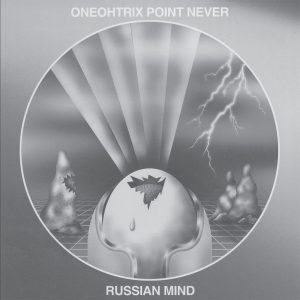
Oneohtrix Point Never – Rifts

0. Who is Daniel Lopatin? The composer of the soundtrack of what became everyone’s favorite Adam Sandler movie: Uncut Gems; a born-and-raised Masshole, like me(!); the director of The Weeknd’s 2021 Super Bowl halftime show; a wizard with a Roland Juno-60 synthesizer; an all-around great guy. 

1. Betrayed In The Octagon. Rifts evokes a narrative more than it could ever hope to present one. This is characteristic of any piece of music that’s almost entirely wordless. Musically speaking, however, it’s clearly indebted to the ambiance of soundtracks to SF films like Bladerunner, the synth work of new-age music of the 60s and 70s, and the experimental noise scene of New York City. That these influences range from music that was almost purely commercial to sounds that most people (myself included) have a hard time calling “music” is characteristic of the project as a whole, regardless of whether the influences in question are musical or literary.

2. Zones Without People. The titles of the songs on Rifts are full of references to technology (“Laser to Laser,” “Disconnecting Entirely,” “Computer Vision,”), the uncertain nature of time (“Months,” “Time Decanted,” “ Immanence”), and bastardized locations (“Terminator Lake,” “Behind The Bank,” “Melancholy Descriptions Of Simple 3D Environments”). Electronic music is already associated with notions of the future, technology, and the unreal. Add the fact that the album is already influenced by works of past science fiction, and there you have it: my yet-unshared theory that this album is about a(n) astronaut(s) traveling through/lost in space/time is clearly a great one. I win.

3. Russian Mind. I would also argue that this album is influenced by works of new wave SF and hard SF in the same way it’s influenced by new-age and noise. Starting with the former, we can see that Lopatin is interested in the mind and the surreal. Songs like “Grief and Repetition” and “Blue Drive” are as wandering and hypnotic as their titles suggest. It might not come as a surprise, then, that the only two countries referenced on the tracklist are the United States (“When I Get Back From New York”) and Russia (“KGB Nights”). Lopatin is the child of Russian-Jewish immigrants, and this is music inspired by the sounds and mindset of the 80s: it is, at times, very anxious and very lonely. 

4. Drawn And Quartered. Elements of hard sf are present as well. A title like “Lovergirls Precinct” feels like it could be ripped out of a pulp magazine, while one takes it a step further and references a real person: philosopher Emil Ciroan. Then there are songs like “Transmat Memories, “ “Sand Partina,” and “Hyperdawn,” which feel concerned with exploring the very specific discoveries of unnamed scientists and the brand new experiences of long-lost astronauts.

5. The Fall Into Time. Are our characters alone? “Learning to Control Myself” implies yes, while “A Pact Between Strangers” suggests otherwise. Are they lost in a Zone Without People or have they been Betrayed In The Octagon? My favorite song on this album answers none of these questions and poses at least three of its own: “I Know It’s Taking Pictures From Another Plane (Inside Your Sun).” If you’re not into electronic music, give this a shot. When I listen to it, I imagine the universe’s loneliest man sitting alone with his guitar at an abandoned bar on the moon of some unexplored planet. The contrast between the horror of the Lovecraftian title and the humanity of Lopatin’s voice is both grounding and disorienting, but altogether beautiful in its own way.

00. What is Rifts? One of the only albums I can comfortably call musical science fiction, and one of my favorite electronic albums of all time; the soundtrack to the greatest space epic never made; best heard when you’re on the edge of sleep in a dark room. Preferably alone.

 

Kurzgesagt: Emphasizing the S in SF

Hey folks.

I wanted to take a moment to share a Youtube channel that some of you may already know about. It’s called Kurzgesagt, and the work being produced by this animation studio in my opinion provides some of the best and most thought out explanations to theoretical science. Their videos cover a wide range of scientific and philosophical topics, such as the complexities of the immune system, realistic ways to combat climate change, and how to live your life with purpose. Often their videos focus on a central debate or topic relevant to present-day science to which they apply literature and expert opinions to formulate a set of answers to the video’s central question. But sometimes their topics get a bit more “what if”. For example, this channel exposed me to: the Fermi Paradox, the Dyson Sphere, uploaded consciousness, stellar engines, and other more SF-ey topics we’ve already talked about in this class.

To me, what is unique about this channel is rather than producing videos that simply outline ideas such as the Dyson Sphere, these people are like “no, what if humanity actually built a Dyson Sphere? How long would it take us? What resources would be necessary to construct such an engineering feat? When in the future could this idea actually become feasible?” Kurzgesagt takes far-fetched ideas and applies science, reason, and understanding to arrive at what they acknowledge is only Kurzgesagt’s answer to the question at hand. I wanted to share this with you all not only because they have some great videos explaining some pretty wild technological ideas (see links below), but their methodology behind video production is some of the most transparent I’ve seen on Youtube’s platform. They provide links to their papers, cite each one of their claims, and (in my opinion) are incredibly objective to the topic at hand. And when an opinion does arise, they are explicit in their video to say something like “based on what we’ve just shown you, this is what we think”. Kurzgesagt provides some of the best educational material regarding science on a platform that too often represents the epitome of misinformation. I encourage y’all to peruse their videos and find one that looks exciting. Oh, and their animation is likewise stellar.

Enjoy!


Dyson Sphere:


Fermi Paradox (there’s also a part 2):


Loneliness (one of their more holistic videos):


Alien Physiology and the Limits of Our Imagination

I would like to take a minute here to begin traveling down a line of reasoning that, I’m sure, will be a perennial one in this course; this being the ability of human beings to imagine what alien life would be like.

The nature of aliens is a question that appears all over science fiction literature, film, and television, with interpretations ranging from people in green body paint to giant pixelated amorphous blobs. The Kanamits of To Serve Man are – and I say this as somebody who thoroughly enjoyed the episode – a good example of a rather unimaginative take on alien life. They are simply tall humans with bulbous heads. Visual mediums like The Twilight Zoine seem to be more commonly guilty of such portrayals, partially because it is much easier to leave appearances up to the imagination in writing than it is in film or the visual arts.

I understand that, often, the physiological nature of the aliens is besides the point. For many works of science fiction, it is enough that they are signified as “other”, and that signifier can be as simple as a pair of antennae attached to a headband. This, paired with a narrative, is enough to let us know that, wherever the beings are from, it isn’t Earth. However, biologically speaking, I can think of no good reason that a species which developed on a planet other than ours should look too humanoid in nature. To me, visualizing aliens as such all to often reeks of an anthropocentric point of view that I find to be quite aggravating.

That, or a lower-than-optimal budget.

There are some exceptions to this viewpoint of mine. For example, it may be the case that an author wishes to explore the possibility that human life came from another planet. In which case, the inhabitants of that planet would likely look quite a bit like us. And yes, if aliens were to be subject to similar selective pressures as life on Earth, they could certainly evolve similar features to organisms on our planet. Fin-like organs, for example, would be useful in water on any planet. These are, however, specific exceptions and somewhat besides the point. Assuming that the alien life is truly alien and thus evolved on a planet far from Earth in response to a different set of selective pressures, to have them resemble life on Earth – especially human beings – too closely would be unrealistic and unimaginative.

Or would it? As I write this, I am reminded of the incredible diversity of life on this planet and the many and varied solutions that different species have developed to cope with many and varied selective pressures. The odds that some form of life on another planet might have evolved a similar solution to a similar challenge as has an Earth-creature are nonzero. So maybe it isn’t the plain fact of alien life being often portrayed as similar to life on Earth that’s getting to me, but the reasons for that trend. It often seems to occur due to a lack of interest in the nature of alien physiology and, though I am not at all saying that that is the most worthwhile question for science fiction to pursue, I do wish it were pursued more often.

This is why I am so excited by science fiction stories like Prott, which really take the time to delve into alien biology and to ask what alien physiology would really be like. Just how far from what we are used to would it be? Would we even recognize it as life? How would a human being react to the truly alien, to life different in every way to that which we are used to and understand? All these are wonderfully interesting questions that make for wonderfully interesting literature.

Is Pokémon SF?!

Something we have been discussing in class this week was the ever-shifting border between science fiction and fantasy. A characteristic of science fiction that perhaps helps us best distinguish, is the genre’s curiosity about how things work. Like discussed in class, Iron Man feels much more SF than the rest of the Marvel superheroes because of the science that backs up Tony Stark’s gadget suit. Fans of the franchise can even remember the prototypes and earlier models of the suit, leading up to the super-advanced nanotechnology we see in the later Avengers films. Has the fact that we have seen a gradual evolution of the Iron Man suit from more straightforward tech contributed to our perception of Iron Man as SF? Perhaps.

I have recently been playing a lot of Pokémon Legends: Arceus, and I noticed something very similar happening, although backwards. For context, the game is set in a time much earlier than the rest of the Pokémon games, when humanity is still figuring out how to coexist with the mysterious creatures. For the first time ever, we are given an explanation for how Pokéballs work: they activate the mons’ innate ability to shrink, and can be made from very simple materials found in the wild (wood and stone, and some iron for the more improved versions). In fact, Pokéballs are so simple that they can be crafted from these materials by the protagonist. Their appearance in-game features a wood-pattern and a simple-looking sealing mechanism. All this struck me as intriguing and relevant because it seems like a step by the Pokémon franchise toward science fiction. I wonder what you all think!

Some thoughts on Time Travel in SF

Since It is the day after Groundhog day, here is an interesting video that discusses a number of different modes of time travel in Science Fiction. Definately worth a watch:

My personal favorite time travel story is a short story called “The Merchant and the Alchemist’s Gate” by Ted Chiang which I read last term for the “Nature of Time” FYWS. Time travel in that story takes the Harry Potter esque time travel to the extreme, calling into question our free will whether or not we engage in time travel.

There are also tonnes of questions about causality (and it’s possible violation) rising out of the fields of Quantum Mechanics and General Relativity which is very exciting. Does time proceed in one specific direction (forward)? if it does does that mean that backward time travel is impossible? if entropic time is not a universal law, what would complete time-reversal be possible? lots of SF material here.


The Book of Boba Fett

One of my favorite and one of the most mysterious characters from Star Wars is finally getting his time to shine on the air. Boba Fett is one of the most intriguing characters in Star Wars despite the few lines he has and few minutes on the screen. The series came out a while ago one episode at a time, but I have only seen the first one so far (so no spoilers please). The show is supposed to add layers to Boba Fett who unfortunately suffered a quick defeat in episode 6. Although I have only seen the first episode, I would highly recommend the show to any Star Wars fan. The Book of Boba Fett shows how Boba Fett rises to power in Tatooine and the struggles he has to go through to live after being swallowed alive. This show will explain the time between episode 6 and his appearance in the Mandalorian.