La Spedizione Siciliana

Italian 3008 – Spring 2016 – Professors Barbara Weiden Boyd and Davida Gavioli

  • About
  • Authors
  • LoginPress
  • About
  • Authors
  • LoginPress

Modica and Noto

March 24, 2016 By abradley

IMG_1535

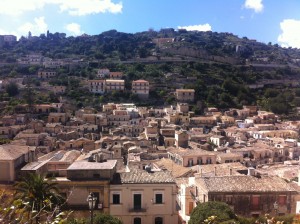
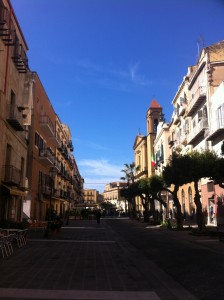
This day was a personal highlight. We drove to Modica, a small town on the top of a hill best known for its unusual, grainy chocolate. Like many of the towns we visited, Modica has been under the rule of Greeks, Arabs and Romans, and the influence of each group is still visible. We ran up the hundreds of stone steps to the center of Modica Alta, where we had an amazing view of the valley, Modica Bassa and the ocean. At the top of the steps is a baroque cathedral, the duomo di San Giorgio, and a maize of cobblestone streets. We learned that in the nineteenth century aristocrats from the surrounding area moved to Modica Alta, pushing the less wealthy to Modica Bassa.

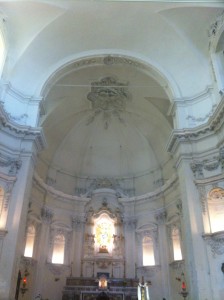
We left Modica for Noto, a baroque town that was almost completely rebuilt in the nineteenth century and again following an earthquake in the 1990s. Unlike Modica, Noto was crowded with tourists. We visited the duomo, which was ornate and white in the Sicilian baroque, a stark departure from the decadent gold mosaics of the cappella palatina.
IMG_1544

Filed Under: Sicily

Porto Empedocle: Montalbano

March 24, 2016 By abradley

IMG_1511

On our way out of Porto Empedocle we stopped to see the town’s statue of the commissario Montalbano, a character from Camilleri’s novels and a television series, and to have coffee at the character’s favorite bar. The town of Porto Empedocle plays a large role in the Montalbano films we’ve seen, and we were excited to see it in person. We took pictures with the statue of the commissioner and admired the artwork in the piazza inspired by Camilleri’s writing. Our sunny morning in this town was a great way to start one of our biggest days of the trip: the Valle dei Templi, with some of the most important and best preserved Greek temples in Sicily.

Filed Under: Sicily

Day 3: baby’s first Greek temple 

March 24, 2016 By aglynn

Day three was a special one.

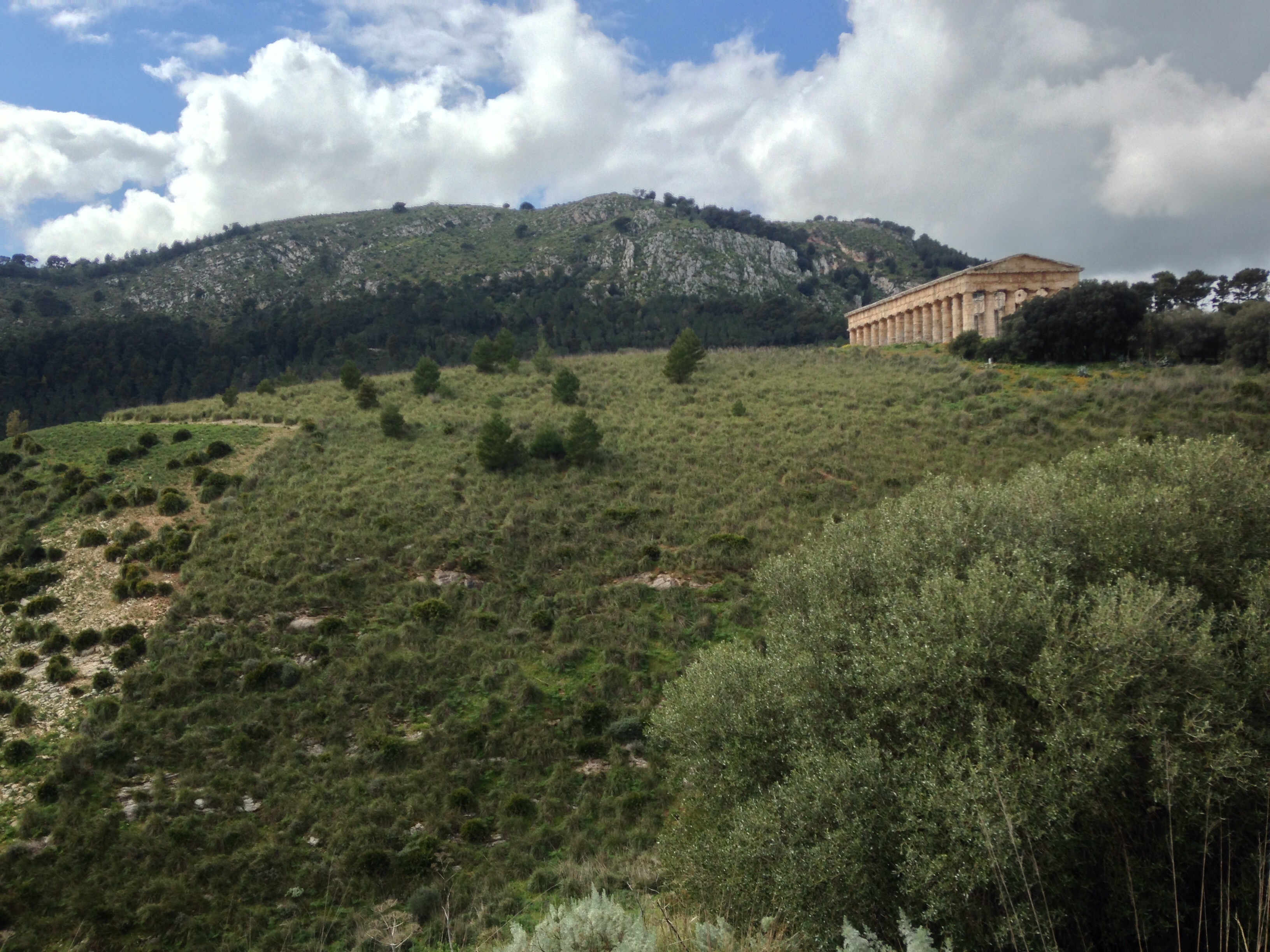
  Here’s a photo from our fantastic excursion to Segesta, where we saw a beautiful Doric temple — my first Greek temple, in fact. We cooed at stray dogs while Professor Boyd showered us with knowledge and teased out the eccentricities of this particular temple (columns not fluted! weird lifting nubs still visible!).
We then walked through the rolling hills to the Greek (and then Roman) amphitheater that overlooks the sea, and I was always looking back to see the temple from afar. Although the Greeks were sometimes  overcompetetive and overambitious about it, the architecture of these temples always makes sense — strong, simple, and imposing. It was a quiet area, the hills were green and overgrown, and the from far away it was hard to see the temple’s centuries of wear — we were seeing views that were almost exactly what the Greeks used to see. The inspiration and power of the temple was obvious, as was its subtlety and willingness to work with its natural surroundings.  –AG 

Filed Under: Sicily

Day 8: Etna

March 23, 2016 By mcolbert

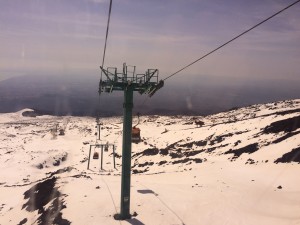
IMG_1903For the last post, I share a photo of the epitome of Sicilian picturesque: Mount Etna. I’ve always found irritating people who talk about skiing in the morning and then going to the beach in the afternoon, but we more or less did that on our last day on the island (although we saw snow and a beach but didn’t do either activity).
Etna is important because discussing its untamed, indomitable character often serves as a stand-in for the crazy, passionate Sicilians.

Filed Under: Sicily

Day 7: Arethusa, Siracusa

March 23, 2016 By mcolbert

Growing up, I was always fascinated by Greek mythology and the Rick Riordan books, which locate these myths in the U.S. One thing I’d never considered, though, was that these stories had to be located in sites of the ancient world as well.

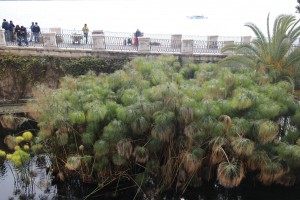
IMG_4927While visiting Siracusa, Professor Boyd pointed out this fountain of Arethusa. Arethusa was a nymph who was pursued by the river god Alpheus and ended up in Sicily from Greece, taking refuge in this fountain.

While Demeter was searching for her daughter Persephone, who’d been taken by Hades to the Underworld, she finds Arethusa in this fountain who gives her critical information to help her find her lost daughter.

I talked with Professor Boyd afterwards, and she said that sites of mythology have been tourist attractions for ages. Many places claim to be entrances to the Underworld or battle sites. This fountain didn’t draw too many visitors, but it’s cool to think that a river nymph might be hiding somewhere inside.


Filed Under: Sicily

  • « Previous Page
  • 1
  • …
  • 18
  • 19
  • 20
  • 21
  • 22
  • …
  • 26
  • Next Page »

Authors

  • abradley
  • aglynn
  • agorman
  • alamont
  • bboyd
  • cdewet
  • dbanks
  • dgavioli
  • djohnso
  • dvargas
  • gmaslak
  • jglewis
  • jhartley
  • kgilmore
  • kvise
  • mcolbert
  • mkim
  • ssim
  • vwu
  • About
  • Authors
  • LoginPress

courses.bowdoin.edu