Category Archives: Romancing the Sonnet

on “authenticity”…

Representation, as we have discussed in class, is a central theme in Twelfth Night (and certainly in Shakespeare’s sonnets as well). Viola masquerades as a man and Olivia masques herself. The fool qualifies his title as Olivia’s “corruptor of words,” always speaking aslant of meaning, playing with multiplicities, paradoxical, ironic, or taboo, putting language itself to task, doing away with the “over-worn”; And Viola says that the fool is more clever for it: “For folly that he wisely shows is fit, / But wise men, folly-fall’n, quite taint their wit” (3.1.66-7). This play does not just represent representation. It demonstrates how representation might convey reticence and virtuousness in Olivia, sharpness and laudable skill in the fool, deceit on Viola’s part that creates a messy love triangle situation, which, she says at one point, she cannot possibly untangle. Representation and “seeming” in Twelfth Night (if we can say that representation and seeming are the same… ?), are also themselves a matter of interpretation, as we learn in Viola and Olivia’s comedic/cringe-y repartee in Act 3 scene 2. Viola says, “[I think] you do think you are not what you are.” Olivia replies, “If I think so, I think the same of you.” Viola: “Then think you right, I am not what I am. Olivia: “I would you were as I would have you be.” Viola: “Would it be better, madam, than I am?” Olivia and Viola are not, of course, referring to the same sorts of misrepresentation, since Olivia does not know Viola is actually a woman. But their dialogue is so synchronized, so syntactically and tonally matched, that the reader/spectator might lose the plot here. What is the veiled truth? Who is what? Shakespeare’s characters often ask, “what are you?” as opposed to our familiar “who”… So, is there any “authentic” self? What is “authentic”? Can’t representation–especially self-presentation–be authentic? Maybe today, but perhaps not in Elizabethan England.

Viola’s Language

Having played Viola before, I’ve really enjoyed looking at her language when she is playing Cesario. For example, in 1.5, she says to Olivia, “No, my profound heart; and yet — by the very fangs of malice I swear — I am not that I play”(1.5.175-76), and when asked about Cesario’s parentage, she responds, “Above my fortunes, yet my state is well. / I am a gentleman” (1.5.266-67). As in both of these cases, while she is playing Cesario, she never fully lies about her identity. With “I am a gentleman,” one could say the word gentleman by using ‘gentle’ as an adjective, stating she is a ‘gentle man,’ which can be interpreted as a way of her distinguishing herself from the male sex and subtly hinting at her own by using an adjective traditionally associated with women.

Chastity and Flowers- Response

Hi Rachel,

I also noticed the connection between flowers and chastity throughout The Faerie Queene. Although flowers are usually associated with sexuality, our discussion from Monday has helped me reconcile the idea of Britomart being both the human embodiment of chastity and also “the flowre of chastity,” which may imply something more sexual. We spoke about how Spenser did not view chastity in the way that we do currently. For Spenser, chastity did not mean suppressing sexuality; rather, chastity referred to the pursuit of a monogamous romantic relationship. If we read the poem from the historical context from which it was written, therefore, I think it makes sense that Britomart is referred to as “the flowre of chastity,” for chastity and sexuality were not necessarily opposing forces.

ekphrasis!

So excited I get to use one of my favorite words, ekphrasis.

Spenser does linger quite long over the tapestries of the House of Busirane. He does not just show them to us–which would be just to say that a tapestry depicted, for example, the story of Leda and the Swan. Spenser does not say, “Oh, what a lovely tapestry. The artistry in it is just remarkable.” The tapestry, the material object, is subsumed by the remarkable story it represents. It is overtaken or elaborated upon by the narration, from Britomart’s perspective. The tapestry is like a translation (transubstantiation??) of the Leda and the Swan story, a new language through which the viewer can actually come into contact, emotional and visceral, with the myth. Britomart is taken with the “snowy Swan,” with “his lovely trade,” “wondrous skill” and “sweet wit.” She is admiring. So, I wonder, is this RAPE SCENE, quite literally writ large here, an occasion for Britomart to assume a more womanly form and be taken with/by the swan? Or, is Britomart empowered and inspired to take, to “invade”?

I carried our discussion of space from class on Thursday, into our reading for today. In Canto three, Spenser places a lot of emphasis on Merlin’s home and the wall he intended on building. In a way he relies on his house and its location to convey characteristics about Merlin. I wonder what his purpose was, of relying so heavily upon description of space instead of direct characterization. It reminds me of how in Shakespeare’s sonnets there never was a direct speaker or adresses, placing the focus largely on the action and images created. As the Faeire Queene is, after all, a narrative used to describe virtues, maybe reliance on space is for the same function; so that they can be applied to everyone and importance can be placed on the message through action.

Reply to Carly Berlin: The Bechdel Test

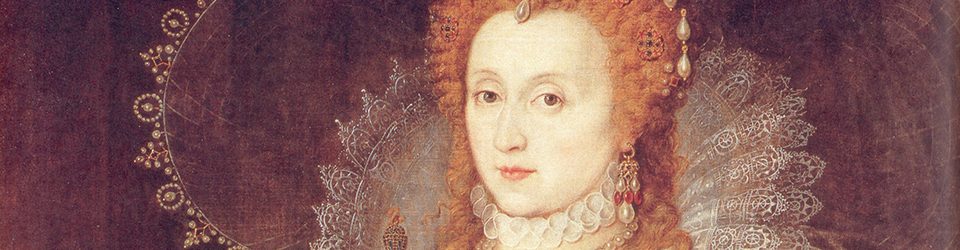
I’ve also been paying attention to Spenser’s portrayal of women, and find the Bechdel test an interesting cultural barometer, but not always necessarily a good indication of the role women play in narratives. For example, Spenser continues to praise Queen Elizabeth and establish connections between her and valiant and powerful heroes in Faerie Queene. While these instances are not considered under the Bechdel test, the books elevate her stature and position in history.

Shifts in Context

I’m interested in the shift from the pastoral ,to knights and ladies. Although Spenser relies on the same language we’ve become accustomed to from Shakespeare, such as fairness and darkness to define beauty, and nature and animals to represent sexuality; there seems to be an implied shift. I believe there is a shift from the private interiority, which defines sexuality and the choice to reproduce; to a greater social idea of sexuality and institutional interest in temptation and virute; as represented by the characters in the epic.

Reply to Rachel

Rachel,

I agree completely with your response to Kacie on the seeming contradiction in Spenser’s depiction of women. I think it is more a question of how Spenser is fashioning an image of Queen Elizabeth as a monarch than how he views women in general. The poem is a glorification of the monarch and the nation, and Spenser advocates for extreme chastity because it was a glorified virtue at the time. Of course, this appears to contradict our own modern concept of feminism, but I think we must read the text with an appreciation for its historical context. I am not sure if we should consider Spenser an early feminist; I am more interested in the ways Spenser projects an image of the queen as “an ideal object on which to practice their art of praise…thereby gaining the authority which they had lacked” (4), as Hamilton discusses.

Sonnet 62

Sonnet 62—in which the speaker examines his own narcissism, including both external and internal beauty—contains many repetitive “s” sounds throughout: “self-love,” “soul,” “glass,” etc. The slippery sound of the “s” relates the feel of the poem to the subject of narcissism, connecting the self-involved words together as the speaker struggles with his own acknowledged “sin” (1). I thought it was interesting that the only line that doesn’t contain the “s” sound is line 10, in which the speaker acknowledges the decay of his external beauty as he ages. Realizing that he has become “Beated and chapped with tanned antiquity” (10), the speaker temporarily abandons the smoothly-connected “s” sounds in exchange for more arresting “b,” “p,” and “t” sounds, which bring the flow to a halt just as the speaker’s mirror gives him a reality check.