Philips’ “Innocence”

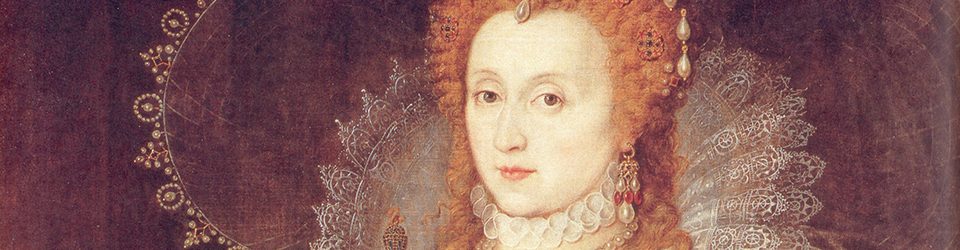
At the end of her piece on the lesbian subtext (if it’s even subtext) of Katherine Philips’ poetry, Traub defines her “innocence” as a sort of chaste feminine love, rather than a denial of her sexual leanings or any other previous interpretation by other scholars. Is this “innocence” a sort of female-female version of the “married chastity” that Britomart and Queen Elizabeth were said to represent, or is it too different in other ways to make that comparison?

Re: Agency with God

I’m also interested in how the poet’s political/religious beliefs relate to their portrayal of God/Christ as either bodily or more spiritual. Crashaw, who converted to Catholicism, uses very physical descriptions of the body of Christ, which contributes to the eroticism of the texts. The short “Blessed be the Paps which Thou has Sucked” ends with the strange line: “The Mother then must suck the Son” (4). This offers an somewhat erotically-charged representation of salvation through the body of both the Virgin Mary and the dying Christ. Crashaw’s conversion to Catholicism affected his imagery as he focuses more on the corporal representation of the divine.

Henry Vaughn

Henry Vaughn’s poetry, especially “Unprofitableness” and “The Night,” remind me very much of Gerard Manley Hopkins’ poetry, particularly “Pied Beauty” and “God’s Grandeur”. More than two hundred years before the Victorian poet Hopkins, Vaughn professes wonder and awe, an unironic appreciation of divine beauty, and gratitude for a god for bestows him with all this spiritual and aesthetic pleasure. Vaughn does not engage the contest between Protestantism and Catholicism. Is it possible that he writes to transcend this political debate? Is his apolitical poetry actually kind of political in its insistence on what really matters?

Re: Homosocial in Rambuss

Hi Sarah and Jae-Yeon,

I am also interested in the discussion of Christ and the homosocial bond Rambuss identifies. I think that in addition to what both of you are mentioning about the connection between Christ and embodiment, there is another element relating to the bonds between the people themselves. It seems to me that religion justifies atypical love bonds between couples that might not normally be sanctioned, for example, the love between the two missionary women. I would guess that mediating their love through a more sanctioned medium (God) allows for society to be more likely to accept these non-traditional loves.

Crashaw and Christ as Lover

Crashaw’s poem “On the Wounds of Our Crucified Lord” struck me for the descriptions of Christ’s body parts. The metaphors surrounding his wounds reminded me of the way poets liked to list the different body parts of their lover to compare them to other objects (blazon). I think an inspired technique is being used here, particularly in the second stanza.

On the Wounds of Our Crucified Lord

While reading the poem “On the Wounds of Our Crucified Lord” I became confused and interested as to why Crashaw compared Christ’s wounds to mouths and eyes. Personally I understand the mouth because the mouth, I’m assuming, could represent when people speak sins and because God died for our sins the blood dripping from those wounds could be the actual physical purging of the world of their sins( or more like forgiveness). He is giving his body and so the blood dripping from Him could be the sins leaving the world. As for the eyes, I am still confused. I know that the blood dripping from the “eyes” represent tears which can represent how tragic and sad the whole ordeal was, but I feel like there may be a deeper meaning to it, can anyone explain?

Agency with God

In the various poems that we have read for this week’s theme, I’m intrigued by the different amounts of agency that the narrators have. In Donne’s Holy Sonnet 19, the speaker appears to have absolutely no control on how religion is “ravishing” his heart/soul to poems; in contrast, Herbert’s narrator is the one that is invited and chooses to feast upon Love. Yet another different approach is in Herrick’s Prayer to Ben Johnson, in which Herrick explicitly creates a new “saint” and seemingly mocks “old religion” (lines 3-4), denying God’s agency and choosing to craft a new path for himself. I understand that these poems represent the wide range of Christianity practiced in the Renaissance, but I am curious to see what links there are between the authors’ stances on agency and their ‘ political/particular religious beliefs (i. e. Herrick’s stance as a Royalist? Donne’s Catholic upbringing?).

Re: Homosocial in Rambuss

Hi Sarah,

I agree with you about how Ramous seems to replace the woman in homosocial relationships with the figure of Christ; I think that ties nicely into our discussion about how Christ(/especially the Holy Spirit) was traditionally seen as more “feminine” than “masculine” — an object of desirability, regardless of Christ’s biological sex. As you suggested, I think this vision of Christ may have helped people to build a more concrete and physical relationship with religion, extending God into all realms of their life (vs. just spiritual).


The Homosocial in Rambuss

In the Rambuss reading, I was struck by his discussion of same-sex relationships and friendships in this form of erotic, devotional poetry. In particular, I am interested the way that he uses Sedgwick’s theory of the homosocial to create a triangulated relationship between people and Christ. It seems that Rambuss is replacing the role traditionally filed by the woman in the triangulation with Christ. Does anyone have any thoughts as to the implications of doing so? Does this say something about the way that people envisioned Christ or perhaps having a more direct connection to religion and God?