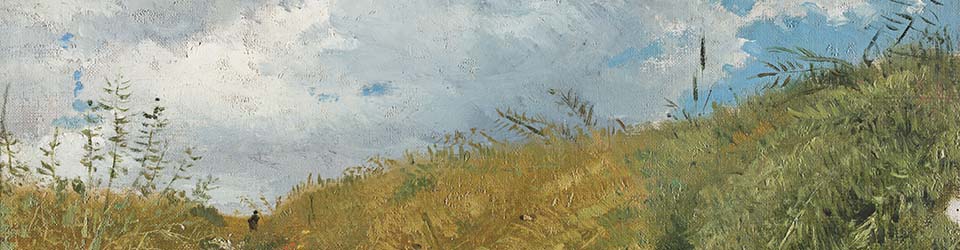
Autumn the New Spring?

Pushkin’s poem “Autumn (A Fragment),” examines human attitudes toward seasons by rejecting common characteristics associated with them. One aspect of particular interest is the narrators apparent disdain for spring. In the second stanza, the narrator describes himself as “bored with nature’s thaw” and rendered “ill” by the advent of spring (10-11). While spring is commonly associated with ideas of rebirth, youth, and vitality, the narrator rejects this notion and instead assigns these characteristics to other seasons. In the eighth stanza, for example, the narrator describes how with the return of autumn he is “young again… and full of life once more,” which is in stark contrast to the traditional thought of autumn as the final chapter in the natural lifecycle before the dead of winter (62-63).

In the ninth and tenth stanzas, the narrator again plays with traditional seasonal characteristics by describing his intellectual creations in relation to agricultural production. By late autumn and early winter, he describes how he is allowed to “nourish in [his] soul[‘s] expansive dreams” and “bring forth at last the fruit of free creation… the harvest of [his] dreams” (71,78,80). Pushkin’s use of “fruit” and “harvest” allude directly to agriculture and bounty from the land, but it is to some extent surprising that he uses these words while describing creation during late fall and winter, when the agricultural harvest has long passed.

While these terms create a stronger bond between intellectual creation and products of the natural environment, the narrator points to the rift between humans and the natural environment not only by the seasonal misalignment of when intellectual vs agricultural harvest occurs, but also through a comparison to other natural occurrences. In the third stanza, the narrator asserts that “[t]he bear himself must hate so long a sojourn in a cooped-up place,” which presents itself in contrast to the narrator’s love for both autumn and winter (21-22). As the natural environment’s vitality begins to wane throughout autumn and winter (exemplified by the bear going into hibernation), the narrator to the contrary becomes invigorated and reaps the products of his intellect. The narrator may simply be describing the attitude of a writer who relishes in the calmness of autumn and winter, but his view of the natural environment through the seasons may reveal what the writer sees in the environment that the common person fails to see.

“The Poet”

Pushkin’s two stanza “The Poet” presents descriptions of writers before and after moments of divine inspiration. Pushkin idolizes the poet, describing the average citizen as “this world’s unworthy sons” (7). Pushkin’s poet may exist within the average society, but is occasionally called upon by a divine figure and through this connection is given a unique inspiration in which his verse is produced. The concluding couplet of Pushkin’s “The Poet”, as well as choice descriptive adjectives imply that not only is a pious connection necessary to produce a profound commentary on society, but also a separation of the poet from society and a devolution to the natural.

Pushkin’s second stanza describes the inspirational process of the poet and the metamorphosis that “divine inspiring word” (10) has on the writer. Such inspiration causes the soul of the poet to, “like a mighty eagle wakes” (12). The eagle is a natural symbol of freedom and mobility: the eagle is an apex predator who can navigate natural landscapes with ease. Additionally, the eagle cannot be tamed or domesticated, rather can only thrive and exist away from society in the wilderness. Pushkin’s inspired poet is similar to the eagle in that it no longer can thrive within society, and has to remove itself to thrive. His comparison fortifies the poet’s heightened connection to nature, and inability to work within the confines of developed society. His ending couplet fortifies the necessity of the reclusive poet. To comment on society, the poet must remove himself inhabiting only the “vacant” (14) natural spaces.

Even more so, Pushkin’s adjective choice fortifies the poet’s necessary transmutation to the natural. The inspired poet is a misfit in normal society, is “fierce and savage” (17) and “consumed with madness” (18). Puskin’s adjectives depict the poet similarly to a wild animal who is misplaced outside of the wilderness. The poet’s transformation “unbowed” his “head” (16) and frees his thinking from the pressures and demands of the society’s “blabbling crowd” (14). The poet’s reversion to natural society is required for his insight into society and allows him to think freely.

Pushkin’s naturalistic poet fortifies Pushkin’s commentary on the necessity of the natural environment. Although Pushkin believes that one can exist within society finely, Pushkin also elicits that poetic perspective is only obtainable through reclusiveness and a deep connection to nature.