Incest taboo in the Renaissance

In Book 3 Canto XI, Britomart has a brief run in with a giant, Ollyphant, and the Norton mentions that Ollyphant and his sister (also a giant) had an incestuous relationship and that this was Bad. But it made me curious about the incest taboo during the Renaissance period—is it about the same as today, or are there any significant differences in terms of how we might understand it?  (Strong feeling that it’s going to be the latter.)


I did do a cursory Google search of this and there didn’t seem to be any smaller articles on the subjects—only books.


So I guess I am wondering if anyone (coughProfessorKitchcough) might have an answer to this off the top of their heads?


Belphoebe

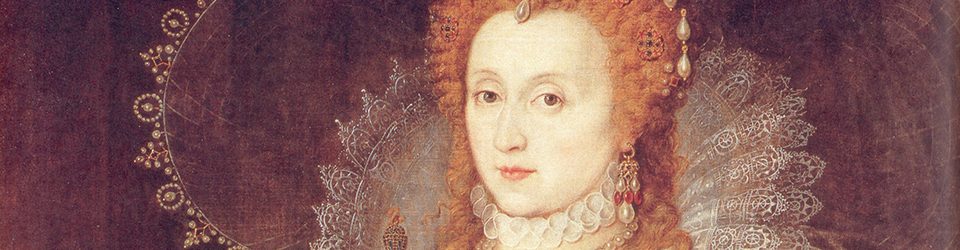
I was intrigued by the narrator’s praise of Belphoebe at the end of Book 3, Canto 5. When Spenser was writing The Faerie Queene, Queen Elizabeth was known for her cult following that focused on her status as a virgin. Here, Belphoebe is exalted for her “chastity and vertue virginall, / That shall embellish more [her] beautie bright” (3.5.53.6–7), meaning that her chastity only makes her more beautiful. It seems that virginity gets its value from the way men deem it a quality; somewhat ironically, being chaste makes the woman more beautiful and revered in men’s eyes.

Britomart

In book 3 canto 1, Arthur and Sir Guyon chase after Florimell with the intention of saving her, as well as marrying her as we discussed in class. They were not able to fight off their temptation, but I find it interesting that later on in book 3 we find out that Britomart was not distracted by Florimell because she had to fulfill her own quest: to find her destined husband, Artegall. It seems as if Britomart, Sir Guyon, and Arthur are on the same chase. Although Britomart knows Artegall will be her husband as told by Merlin, is she able to fight her temptation of love? It is clear that she isn’t able to because Glauce is concerned about Britomart, and she is described as having a sickness:

Old Glauce call, to cure this Lady’s Grief:
Full many ways she sought, but none could find,
Nor Herbs, nor Charms, nor Counsel, that is chief
And choicest Med’cine for sick Heart’s Relief

I carried our discussion of space from class on Thursday, into our reading for today. In Canto three, Spenser places a lot of emphasis on Merlin’s home and the wall he intended on building. In a way he relies on his house and its location to convey characteristics about Merlin. I wonder what his purpose was, of relying so heavily upon description of space instead of direct characterization. It reminds me of how in Shakespeare’s sonnets there never was a direct speaker or adresses, placing the focus largely on the action and images created. As the Faeire Queene is, after all, a narrative used to describe virtues, maybe reliance on space is for the same function; so that they can be applied to everyone and importance can be placed on the message through action.

Reply to Carly Berlin: The Bechdel Test

I’ve also been paying attention to Spenser’s portrayal of women, and find the Bechdel test an interesting cultural barometer, but not always necessarily a good indication of the role women play in narratives. For example, Spenser continues to praise Queen Elizabeth and establish connections between her and valiant and powerful heroes in Faerie Queene. While these instances are not considered under the Bechdel test, the books elevate her stature and position in history.

The Bechdel Test

In reading Spenser, I have been keeping the Bechdel Test in mind: that is, whether the work features two women discussing something other than a man or a boy. Our reading for Monday comes close, yet does not quite pass the test. Venus stumbles upon Diana and her nymphs in the woods while searching for her lost son, Cupid. Venus asks for their help in finding Cupid; Diana responds rather cattily that Cupid has aided Venus in her evil tricks, so she’s now getting what she bargained for. Venus persists, saying: “Faire sister, ill beseems it to upbrayd/ A dolefull heart with so disdainfull pride;/ The like that mine, may be your paine another tide” (3.6.21.187-189). So, the two are discussing a boy, therefore the conversation does not square with the Bechdel qualification. But there is something interesting here about entreating a common sisterhood: Venus addresses Diana as her sister, and presses that this–implicitly motherly–pain may inflict Diana another time. I’m interested in further exploring how women characters in the poem interact with one another.

Spenser’s Sources

In Book 1, I was struck by Spenser’s attention to detail and use of imagery–which would sometime span many stanzas, often making it more challenging to follow the plot. It seems, though, that when Spenser relies upon imagery and description he is directly invoking the use of sources into his poems, a technique that Chaucer and his contemporaries often used. In particular, Spenser uses the Mixed-Forest technique in the 8th and 9th stanzas of the first canto to describe the garden or forest. As the footnote says, Spenser is imitating Chaucer’s use of the rhetorical device, who originally got the idea from Ovid. Upon a closer examination of Chaucer’s use of the device in Parliament of Fowls (which I did last year for a paper in Professor Solberg’s Chaucer course), the mixed-forest serves a broaden purpose than simply idealizing nature, but uses the technique to represent broader ideas about love, philosophy, experience and knowledge. I wonder if upon closer examination of Spenser’s use of the technique if he falls more in line with Ovid or Chaucer. Finally, Spenser’s continual use of sources and classical and biblical references also further illuminates his and his contemporaries’ thoughts on invention vs. copia.

Shifts in Context

I’m interested in the shift from the pastoral ,to knights and ladies. Although Spenser relies on the same language we’ve become accustomed to from Shakespeare, such as fairness and darkness to define beauty, and nature and animals to represent sexuality; there seems to be an implied shift. I believe there is a shift from the private interiority, which defines sexuality and the choice to reproduce; to a greater social idea of sexuality and institutional interest in temptation and virute; as represented by the characters in the epic.

Una’s support for the Redcross Knight

I thought Una’s encouragement for the Knight during the fight with Error was very interesting. As he is getting beat, she yells, “Now now Sir knight, she what ye bee, Add faith unto your force, and be not faint (1.1.19.164-165)”. Because of her strong warnings against his entering the den, it would be easy for her to have made certain that he knew she was right. She does come close to saying this, but in a more encouraging way. It comes across more as, “You said you could handle it, and I know you can. Now prove it.” This shows the strong unwavering support she has for the Knight during this episode.

Reply to Rachel

Rachel,

I agree completely with your response to Kacie on the seeming contradiction in Spenser’s depiction of women. I think it is more a question of how Spenser is fashioning an image of Queen Elizabeth as a monarch than how he views women in general. The poem is a glorification of the monarch and the nation, and Spenser advocates for extreme chastity because it was a glorified virtue at the time. Of course, this appears to contradict our own modern concept of feminism, but I think we must read the text with an appreciation for its historical context. I am not sure if we should consider Spenser an early feminist; I am more interested in the ways Spenser projects an image of the queen as “an ideal object on which to practice their art of praise…thereby gaining the authority which they had lacked” (4), as Hamilton discusses.