Re: Kacie and Rachel

I have also been thinking about the note that Woolf considered Spenser an early feminist. Not only does Spenser explicitly promote chastity and demonize female sexuality, he uses female adjectives to describe ill-willed creatures in the poem. In the first canto of Book I, Error is described as “Halfe like a serpent horribly displaide/ But th’ other halfe did womans shape retain,/ Most lothsom, filthie, foule, and full of vile disdaine.” (1.1.14.124-126). Duessa, in the next canto, is “a cruell witch” and “a false sorceresse,/ That many errant knights hath brought to wretchedness” (1.2.33.289;34.305-6). These descriptions could be read as providing women with more agency than we have seen in other contemporary poetry. However, it seems that Spenser could be merely adding a third archetype to the ones allowed for women: virgin, whore, and monster.

Re: A female audience?

Hi Kacie,

I agree with you that the depiction of women within the text appears to be questionable as being particularly feminist–or at least what we would think of today as being feminist. I think that the seeming contradiction you are getting at–that Spenser seems to both advocate for women’s leadership while also advocating for extreme chastity–makes sense when approaching the text as a glorification of Queen Elizabeth, as we discussed in class. In this context, promoting chastity as the supreme feminine virtue while also expressing the strength of exceptional women works when both concepts were part of the image Queen Elizabeth cultivated. One part of Book III that stood out to me along similar lines was in stanza 7 where the narrator comforts Guyon when Britomart  knocked him off his horse: “For not thy fault, but secret powre unseen,/That speare enchaunted was, which layd thee on the greene” (3.1.7.62-63). In the next stanza, the narrator tells Guyon that he would be embarrassed if he realized “that of a single damzell thou wert met” (3.1.8.67). Essentially, it is shameful if a man is overthrown by a woman, but in this case it appears to be somewhat okay because Britomart has an ‘enchaunted’ weapon. This type of thinking allows for the continuing of a general rule–women should not overthrow men–while also saying that in this instance, it’s alright because the reason is outside of anyone’s control. This seems to go along with a justification for a woman to reign as an exception to a general rule and is reminiscent of Queen Elizabeth’s speech where she refers to God’s decision to make her Queen, even though normally the kingdom would be entrusted to a man.

A Female Audience?

I also struggled (and continue to struggle) with not only interpreting, but following the poem. One way that I found it helpful to engage with the text is by utilizing our secondary source, the Hamilton article. For example, I found that Hamilton’s remarks that Virginia Woolf considered Spenser a feminist and that his first intended readership may have been female (4) to be an interesting lens through which to read parts of Book III. In particular, it appears that Spenser is catering to a female audience in the opening of the second Canto with his remarks that women were once powerful “till envious Men fearing their rules decay / Gan coyne streight laws to curb their liberty” (801). This line seems to almost critique patriarchy, yet in the previous Canto, Spenser spends a lot of time critiquing a woman for expressing sexuality, essentially curbing her liberty as much as the men in his poem. I am not sure how these moments are meant to relate to one another. Are they meant to be subversive in relation to one another? Or is this relationship hypocritical and / or paradoxical?

Re:Raisa

I am too finding this to be a difficult reading. On a literary level, the density of the text renders me pretty incapable of enjoying Spenser’s usage of the English language. Spenser is clearly a master of the poetic form, but I’m finding it difficult to dig at all into these pleasantries. Having said this, part of my difficulties stem from my inexperience in reading epic poems from this time period. Indeed, I often need to spend a great deal of time to figure out what is going on in the plot of our average class sonnet – with poetry of this length and of this density, establishing and maintaining the narrative arc of the story is, for me, a success in and of itself. Tl;dr I’m finding The Faerie Queene hard to read as an English student because I’m having a hard enough time trying to maintain an understanding of the plot. I feel like any literary analysis I attempt to offer on this epic is bound to fall short. I wish I could offer you some help, but I’m struggling to find an entry point myself.

Reply to Raisa

Hi Raisa,

Thanks for bringing that question up – I’m having a lot of difficulty with The Faerie Queene as well. I’m still working on finding a specific part that I want to respond to, but something really technical that helped me was reading parts of it out loud. Maybe it doesn’t work for everyone (and it certainly is too much to read everything out loud), but reading the more dense stanzas out loud personally helped me in a lot of ways. First, it forced me to slow down, which heightened my awareness of Spenser’s many references and imagery. Second – perhaps because that culture was still very rooted in oral tradition? – it somehow helped me to make better sense of the language/text.

I don’t know if this will help, but good luck!

Entry Point for The Faerie Queene

Hi Raisa,

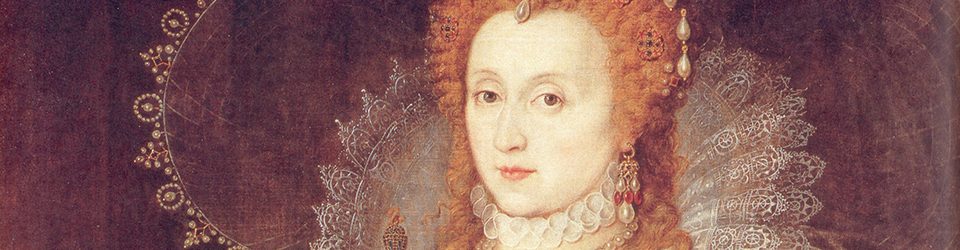
I definitely agree that this is a tough text to get your teeth into. Most of the time, it feels as though Spenser is either teaching an open-and-shut moral lesson or describing something in such a way that I have no idea what’s going on. I personally responded to the parallels in imagery between Una and the Virgin Mary, and how that relates to Elizabeth in terms of our discussion of portraiture, but something else that struck me was the idea of “invention” that we discussed last week. Spenser references Chaucer and Ovid fairly frequently in his style and subject matter in The Faerie Queene, so his use of that technique and how it relates to poetic authenticity at the time might be a cool thing to examine.

Hope everyone’s enjoying the snow day!

Sonnet 62

Sonnet 62—in which the speaker examines his own narcissism, including both external and internal beauty—contains many repetitive “s” sounds throughout: “self-love,” “soul,” “glass,” etc. The slippery sound of the “s” relates the feel of the poem to the subject of narcissism, connecting the self-involved words together as the speaker struggles with his own acknowledged “sin” (1). I thought it was interesting that the only line that doesn’t contain the “s” sound is line 10, in which the speaker acknowledges the decay of his external beauty as he ages. Realizing that he has become “Beated and chapped with tanned antiquity” (10), the speaker temporarily abandons the smoothly-connected “s” sounds in exchange for more arresting “b,” “p,” and “t” sounds, which bring the flow to a halt just as the speaker’s mirror gives him a reality check.

Sonnet 116

Following from Monday’s conversation about alliteration/assonance/consonance in Shakespeare’s sonnets, I noticed a cool effect in the first stanza of sonnet 116:

Let me not to the marriage of true minds
Admit impediments. Love is not love
Which alters when it alteration finds
Or bends with the remover to remove.

There are a lot of t sounds and d sounds (bolded in the quote)—when you read them out loud, they  force your mouth to close and your tongue to press against your teeth/palate (?). What’s cool about it is that it’s mimicking the impediment itself; Shakespeare uses the diction to amplify his meaning. I find this effect to be strongest in the first line—”not to” has two ts, back to back, which slows the momentum of the line and makes it very percussive. There are sounds and sounds throughout the rest of the poem, but I didn’t find them to be quite as noticeable as in the first stanza. They get displaced by th sounds and tsh sounds, which mimics the poem’s movement away from the subject of impediment to the subject of harmony.

Shakespeare the Private Poet?

Wells talks at some length (particularly on pgs 48-50) about many of Shakespeare’s poems being personal rather than for public consumption. “Many of the sonnets, including–indeed, especially–those that seem most revelatory of sexual infatuation and self-disgust, are private poems, personal and almost confessional in nature” (Wells 50). He also speaks on page 49 about how, if Shakespeare had been writing for a public audience, he would have published them himself, etc.

I am drawn to one of his more famous sonnets, number 18, to somewhat question Wells on this point. “When in eternal lines to time thou grow’st; / So long as men can breathe or eyes can see, / So long lives this and this gives life to thee” (No. 18, 12-14). This is as blatant a statement as ever: to paraphrase, Shakespeare says, “as long as you are in my poem, you will live forever.” This does not sound like a man writing into a fire, it sounds like a man who expects his poetry to last. To me, this poem is a clear indication that Shakespeare was writing his work to be read not by one but by many. That this is one of the earliest in his collection is also significant, in that it shows his early recognition that his poetry would live on through the ages.