Category Archives: Post #3: Public Space Reflections

Mix of the Old and New in Public Spaces

Creating a public space in a smart city that appeases everyone is going to be hard, but is possible. However first and foremost, the most important thing is safety. No matter what gender, race or social class a person identifies with they need to feel okay in that space. They need to not worry about experiencing the fear of being attacked or tormented by a stranger. (1) “A new defensiveness has arisen since the September 11 terrorist attack,” writes Low. In other words, since the terrorist attack on 9/11 our society has been hypersensitive to whom we surround ourselves with. This in itself is troublesome because when is enough protection enough? Is the militarization of our public space good? Men and women in uniform are stationed throughout public spaces, such as Penn Station and Grand Central Station, just in case something arises. This has become the new normal. Commuters and residents of New York City do not live in fear of the men and women in suits, rather, they have grown accustomed to seeing them and do not think twice about them being there. Is it okay that the majority of people have now accepted the subtle and not so subtle cues of the government as a part of everyday life? Are smart cities just going to move these armed forces behind a computer or camera?

For a public space to be completely “open” to the public, everyone needs to feel at ease and not just the majority. The idea of a public space in a smart city in itself seems to contradict what society deems to be “smart”. Public spaces are caught at the intersection of old vs. new.  Words such as sustainable, efficient, and control are associated with the future of smart cities. However, the connotation behind each word is very traditional. For this reason, it is even more crucial to build a successful public space that encompasses both traditional and nontraditional attributes. A public space in a smart city should display the effortless mold of the old and new, which leads to a space serving the common good. [2] As Don Mitchell writes, “The right to the city implies the right to the uses of city spaces, the right to inhabit,” thus, making it everyone’s basic right to be able to enjoy the space.

Portland often reminds me of Hoboken, NJ. Hoboken, which is often overlooked due to its proximity to New York City, has many great cool and exciting things going on. It is comparable in size to Portland, but Hoboken has done wonders to its waterfront. Along the waterfront there is a series of paths, which leads to parks and piers that overlook the Hudson and New York City. Additionally, New York City has also done similar things with its waterfront along the Hudson. Public spaces, such as paths around the waterfront that lead into other areas of social interaction, like a small park or an observatory, create a very fluid and open environment that people can come in and out of as the please. Finally, While creating a space like this Portland needs to take into consideration the five freedoms, which are: access, action, claim, change, and ownership. Moving forward as spaces produced, no matter how advanced or “smart” they become, they will not be totally public without these five basic freedoms in place.

Works cited

[1] Setha M. Low . 2002. “Spaces of Reflection, Recovery, and Resistance: Reimagining the Postindustrial Plaza.” In After the World Trade Center: Rethinking New York City, edited by Michael Sorkin and Sharon Zukin, 164. New York: Routledge,163.

[2]  Don Mitchell . 2014 [2003]. “To Go Again to Hyde Park: Public Space, Rights, and Social Justice.” In The People, Place and Space Reader, edited by Jen Jack Gieseking, et al, 195. New York: Routledge, 2014, 193.

Striking a Balance in Public Space

Public space, a seemingly innocent concept, is one of the most contentious issues in urban planning. Intended as a place for a nice stroll, somewhere to sip your coffee, or an escape from your office cubicle, public space, so we think, is more often than not abused by homeless men, a home for illicit activity, and a playground for angsty teens. In the wake of 9/11, security and safety in public spaces are in a constant battle with how the public can enjoy these spaces and access our rights of public space. As Mitchell succinctly puts it, “public space engenders fears, fears that derive from the sense of public space as uncontrolled space, as a space in which civilization is exceptionally fragile.” [1]

How do we strike a balance between the tamed and the wild, the policed and the terrorized? Although public space in New York City and Portland are vastly different, geographically and demographically, patterns observed in the Big Apple can still be relevant in midcoast Maine. In order to deal with the unruliness that these parks develop, both in terms of landscaping and its inhabitants, many public spaces have become privatized. Through this kind of business, parks receive the money and upkeep that cities often are unable to provide. Bryant Square Park in New York City has used this privatization to increase their “smart” factor, utilizing the space for concerts, movie nights, and skating rinks. However, natural qualities and park autonomy are compromised by advertisements and other marks of the permeating consumerism influence. In New York, such advertisements may not seem out of place, but in a small city such as Portland, it is hard to imagine advertisements lining the quaint parks and quiet, cobblestoned streets.

Privatization and product placement in the park. [2]
Portland’s Lincoln Park has all the potential for a beautiful public space: a central location, plenty of space, greenery, and a fountain that just needs some TLC. This park needs a severe overhaul, however, in order to keep up with its smarter contemporaries and serve its growing population. Although privatizing the park would help fix up its decrepit pathways and lackluster landscaping, I think that smaller scale funding and entrepreneurship could do the park equal justice. By planting one or two food trucks in the park, the space would become more attractive to the public and would also provide some business to local vendors. Some more aesthetic seating and a smaller splash fountain surrounding the larger one would also greatly enhance the park’s seatability and appeal to families with children.

Children playing in Boston's new Greenway.
Children playing in Boston’s new Greenway. [3]

The park could also do away with its abominable fence which closes it off from the surrounding streets and perpetuates “the loss of freedom of movement so characteristic of the American way of life.” [4]

Lincoln Park fence
Lincoln Park, Portland, ME. [5]
While I don’t see surveillance cameras, sensor-activated water fountains, and an interactive energy consumption display necessary in public spaces such as Lincoln Park, intelligent (but not necessarily “smart”) improvements would greatly promote the common good in Portland.


[1] Mitchell, Don. 2014 [2003]. “To Go Again to Hyde Park: Public Space, Rights and Social Justice.” In The People, Place and Space Reader, edited by Jen Jack Gieseking, et al, 192. New York: Routledge, 2014.

[2] http://1.bp.blogspot.com/-3z51KkF2hGQ/UI3BzbyqcbI/AAAAAAAANQU/8yOZa-ZbhHs/s1600/30_b00be1f06a_o.jpg

[3] http://3.bp.blogspot.com/-Tg9u1b1eNfk/UC5gLQ9rTyI/AAAAAAAAScE/Z62XS7ZDfOM/s1600/Greenway_Fountain_HORIZ.jpg

[4] Low, Setha M. 2002. “Spaces of Reflection, Recovery, and Resistance: Reimagining the Postindustrial Plaza.” In After the World Trade Center: Rethinking New York City, edited by Michael Sorkin and Sharon Zukin, 166. New York: Routledge.

[5] http://mainecampus.bangorpublishing.netdna-cdn.com/files/2011/10/IMG_5563WEB-975×651.jpg


Back-to-Basics Approach to the Smart City Public Space

“A park with a garden and a café where you can put flowers and a place to light candles. And have and event there every year.” (Low 169)

This is one of the ideas described by an eighth grader as a plan for public space on the site that previously housed the World Trade Center towers, pre-9/11. The public place is framed as a memorial space, but that small space embodies all of the characteristics of the optimal public space/installation: place to loosely congregate, green space, local and user-friendly business, space of remembrance and celebration, and a space to (annually or spontaneously) assemble and express our rights. Not to speak for the legend himself, but if F. L. Olmstead could have summarized his vision for Central Park in one sentence, this eighth grader’s brief suggestion would have it covered.

I believe that in order to establish a successful, smart-city-oriented public space, the characteristics outlined in the above example represent the key to success. What the green space and flowers suggest is that people enjoy aesthetically pleasing and comforting spaces to visit—and the more pleasing and comforting a space is, the more likely people will stop and stay within the space. This user-spatial relationship is especially apparent in the dichotomy of interactions visible in Bryant Park versus Zucotti Park.

The café represents a positive characteristic for two reasons: first, the business exists at ground level, contributing to the atmosphere of the park as it caters to the users of the park and even extends the boundaries of the park inwards, within the interior space of the cafe; and secondly, the café makes the space marketable. As Low makes apparent, “unless North American urban spaces become commercially successful, their future remains in question.” (164) Investment in the comfort and aesthetics of the park is thus beneficial to the businesses that cater to it, as it ensures continued patronage.

Lastly—and arguably most importantly—is the use of a space for assembly and remembrance. These two characteristics carry a common theme: Americans coming together, in union, for a shared purpose. This is the very root of the public space in all cities, and while the public space held a largely utilitarian purpose in its original conception, the idea behind it was that there needed to be spaces within the labyrinth of the city where people could come together and accomplish a wide variety of civic needs. These needs have not disappeared—they’ve simply changed appearance over time.

Don Mitchell (without coming out and saying it directly) favors the concept of the public space catering to the smart city: “Out of the struggle [over its shape and structure] the city….emerges, and new modes of living, new modes of inhabiting, are invented.” (193) Mitchell’s statement suggests that the public space has held different purposes, different functions, and different draw over time—yet it still remains as an aspect of the city, having diverged little from its original offer.

In terms of implementing this concept in Portland, with smart-city implications, the name of the game is to remain true to what a public space embodies: a place of comfort and aesthetics, a place of congregation and assembly, and simply space in general. Whether future interventions include WiFi hub installations, programmable seating arrangements, or photovoltaic surfaces (to name but a few possibilities) they must keep these key characteristics in mind in order to be successful.

  • Mitchell, Don. (2003) “To Go Again To Hyde Park.” Public Space, rights, and social justice. Routledge, New York
  • Low, Setha. “Spaces of Reflection, Recovery, and Resistance: Reimagining the Postindustrial Plaza.” After the world trade center: rethinking new york city. Routledge, New York

Safe Public Space for the Common Good

Here at Bowdoin, everyone has a heightened awareness of the common good and a connection to place. As part of the application to Bowdoin, students have the option of writing about either of these features – two things that directly relate to the use of public space. These values garner much attention on campus and most every Bowdoin student feels a special connection to place, whether it be in Maine or elsewhere. People feel these deep connections often because it is a public space that they feel comfortable and at home in. There are so many aspects that make connection to place possible, a number of which are included in the 5 qualities of spatial rights that Low discusses: freedom of access, freedom of action, freedom to claim, freedom to change, and freedom of ownership. [1] Part of this sense of place comes from the idea that anyone can access, claim, or use a space – similar to Henri Lefebvre’s idea that cities are public spaces and everyone has “the right to the city”. [2] As a Bowdoin student I feel a deep connection with Maine which has grown stronger as I have progressed through Bowdoin – mainly due to the qualities that Low and Lefebvre discuss.

Mitchell discusses another aspect that is absent in many of the connections we have to place: fear. Nobody feels a connection to a place where activities such as “wilding” occur. [2] With an increased presence of security since 9/11, it is more difficult to feel a connection to place with military personnel stationed at every corner to maintain a safe environment, while simultaneously creating an artificial one. [2] Although there is a fine line between not enough and too much patrol and surveillance, everyone should feel comfortable in the space that they are in. Fear ignites the opposite feeling that a public space should encourage.

Both New York City and Portland contain many areas of public space. As cities are becoming more “smart”, there is an increasing need for development and maintenance in different aspects of cities. If we have learned anything yet about public space, it is that public space needs to have adequate and usable seating for the public. Public space cannot be properly utilized without seating, and it is an essential aspect which all public space requires. Additionally, a safe public space gives rise to important aspect of the common good. Although this comes in all different shapes, smart cities have to be safe to allow for the connection that Bowdoin holds so dearly.

I am hesitant to encourage public-private partnerships because they often overly privatize public space and create the sense of limitation through exclusive events. However, they can also promote a sense of order. If a corporation partnered with a space such as Lincoln Park in Portland, there could be vast improvements and a new sense of community development that it currently lacks. Presently, there are no efforts made to maintain or visit the park due to its poor location and lack of vibrancy, which a small corporation could change with a little tender-love-and-care. Everyone has the right to ownership of this public space, although there is currently no incentive to act upon this ownership. [1] In developing public space, Portland needs to focus on maintenance and safety to encourage all to access and use the space, but be cautious of overly privatizing such. Through increased seating and increased lighting, these can be achieved, perhaps with the help of corporate partnerships.

Attempts to create a “smart” city however are contrary to some ideas about increasing utilization and accessibility of public space. A smart city usually appeals to a smaller, more technologically advanced segment of the population, and can further deter people away from public space that cities are trying to attract. If there are inconspicuous developments such as public wifi, more people could be attracted to this public space at the same time as not deterring anyone from it. Public wifi is a system that does not change the layout or public view of a public space, but encourages additional activities to occur in such a public space and allows for things that were previously impossible. There is a line between smart developments and developments that can appear to be “too smart” for certain segments of the population. However, public wifi seems to be an inclusive improvement in a smart city. As long as Low’s 5 qualities of space are available to the public, it seems to be a space made for the common good.

[1] Low, Setha M. 2002. “Spaces of Reflection, Recovery, and Resistance: Reimagining the Postindustrial Plaza.” In After the World Trade Center: Rethinking New York City, edited by Michael Sorkin and Sharon Zukin, 163-172. New York: Routledge.

[2] Mitchell, Don. 2014 [2003]. “To Go Again to Hyde Park: Public Space, Rights, and Social Justice.” In The People, Place, and Space Reader, edited by Jen Jack Gieseking, et al, 192-196. New York: Routledge, 2014.

Creating Public Space for the People

Similar to the idea of a smart city, the public space in a city should exist for the people to promote social and intellectual capital. Therefore, smart cities should create that public spaces are both safe and integrated into the community through meaning and utility. However, there is a balancing act for ensuring safety in public spaces. Especially in urban settings, there has been an increasing trend of policing and privatizing public spaces in the nation. After the September 11th attacks, fear spurred support for more surveillance and “Big Brother” technology particularly in public spaces. Setha Low argues that the tradeoff of freedom for safety has become too high. Rather than policing public spaces, sites such as Ground Zero should be “transformed into a communal center for people to meet, mix, mourn, and remember.” [1] There is potential to indirectly create safety by memorializing public spaces to create the mentality of respect and mutual rights.

Low explains the idea of five “spatial rights” in public areas: access, action, claim, change, and ownership [1]. By trying to ensure all people have these rights in public spaces, we promote mutual benefits and thus aim for a greater common good. Furthermore, Don Mitchell explores how the heterogeneity of people within a city can stimulate “new modes of living, new modes of inhabiting.” [2] Therefore, public spaces should aim to incorporate these ideas and promote public spaces as a center of exchange for both social and intellectual growth. This can be in the form of tables for lunch, greens to play sports, or any venue that creates human interactions. However, these interactions can only occur when residents feel safe and comfortable. Again, we must find the balance between public, private, and policing in order to efficiently create spaces that promote the common good.

Though Portland is a relatively small city, its public spaces should still exist for the same purpose of larger cities. Public spaces should be a central hub for social interactions to encourage the flow of information. Though blatant surveillance techniques (police officers, surveillance cameras) might make public spaces safer, they often cause discomfort for people and infringe on their spatial rights. Rather Portland should attempt to create spaces with meaning and purpose for the people. Historical importance, nostalgia, or utility can be powerful drivers in making public spaces accessible and respected by all. Temporary privatization of public space can encourage use and meaning, but public spaces should first and foremost be for the people and the common good of the city.


1 Low, Setha M. 2002. “Spaces of Reflection, Recovery, and Resistance: Reimagining the Postindustrial Plaza.” In After the World Trade Center: Rethinking New York City, edited by Micheal Sorkin and Sharon Zukin, 163-72. New York: Routledge, 2014.


2 Mitchell, Don. 2014 [2003]. “To Go Again to Hyde Park: Public Space, Rights, and Social Justice.” In The People, Place and Space Reader, edited by Jen Jack Gieseking, et al, 192-196. New York: Routledge, 2014.

Responsibility and Representation in Public Space

Considering the readings and our discussion in class, it is evident that public space, and the public sphere in general, is at odds with the largely pervasive private sector of capitalistic America. I found that a point in the Mitchell reading when he references Jeremy Waldron (1991) highlights this point: “In a society where all property is private, those who own none…simply cannot be, because they would have no place to be.” [194]1 This emphasizes the importance of owning property as a significant attribute to being an American citizen and how it marginalizes those who do not possess any property. Public space, thus, can provide a space that allows an opportunity for representation for those unable to be represented by simply the private sector and is illustrated when Mitchell writes “In a world defined by private property, then, public space (as the space for representation) takes on exceptional importance.” [194]1 However, admittedly, it may not be the public space that allows for this representation, but rather it is the representation that “both demands space and creates space.” [195]1 Regardless, there is inherent need and importance surrounding public space as it, in many ways, is a vehicle for many basic spatial rights like access, freedom of action, and changes. [17]2 Despite the fact that public spaces are meant to fulfill many key spatial rights, we still found, through our walk through Portland and examples in class, that these spaces may not be indeed used as often as we would think for something that is so necessary by definition.

Thus, considering this foundation, it is evident that in the smart city, public spaces will continue to be at odds with the private worlds that surround them. Whether or not this distinction puts public spaces in a place of power or is oppressed by the private sector, it would certainly be wise for the public (e.g. the City of Portland) to partner up with useful smart city technology providers (e.g. IBM). Such partnerships can certainly be much smaller and still help to make public spaces much more effective. The Bryant Park Corporation is the group we focused on in class because of the way this privatization of a public space has been widely successful. It would seem highly likely that if corporations, especially those near a public space, are allowed some stake in the public space that they would feel somewhat of a responsibility to take care of it because of the investment made. This is certainly something that Portland and other potential smart cities should keep in mind.

Another factor that smart cities and Portland should consider in developing public space is its utility and how people interact in these spaces. I found an interesting article describing how Keith Hampton is building on the findings of William Whyte decades later in understanding how technology is changing the use of public space. [3] This article mentions the Whyte videos we watched in class that concluded that seating is one of the most important factors in developing useful public spaces. Many of the spaces filmed were near Bryant Park and Hampton did some recent filming to compare with those of the past. Hampton found that social interactions, the number of people, and the number of women has increased in public spaces since Whyte’s filming. This was unexpected as many assume that technology (i.e. use of mobile phones) would actually cause use of public space to decrease. Although he mostly considers technology in the article, certainly the Bryant Park Corporation had some to do with the findings.

It still should be noted that by making public spaces private in some ways, we are preventing them from delivering their original purpose: to allow for a space that has the potential to represent anyone. Although partnerships between the public and private can certainly improve public spaces, does this allow for the representation that is theoretically expected of a public space and benefit the common good? Certainly partnerships may seem to move away from an idea for the common good due to their nature, but they do seem to improve the life experiences of so many people in an efficient manner. When considering the World Trade Center Memorial like in Low’s article, I am not sure we would want an important place of remembrance for all Americans to be in any way controlled by a private company. We would allow, however, for some type of public control (e.g. security), while perhaps still granting many rights to spaces like freedom of action. [4] Both the suggestions by the grade schoolers in Low’s article and the actual result (One World Trade Center and the 9/11 memorial) are certainly a mixture of both public and private as 1WTC is partially owned by a real-estate company and many of the grade schoolers suggested options that varied between the two sectors.


References

1. Mitchell, Don. 2014 [2003]. “To Go Again to Hyde Park: Public Space, Rights, and Social Justice.” In The People, Place and Space Reader, edited by Jen Jack Gieseking, et al, 192-196. New York: Routledge, 2014.

2. Low, Setha M. 2002. “Spaces of Reflection, Recovery, and Resistance: Reimagining the Postindustrial Plaza.” In After the World Trade Center: Rethinking New York City, edited by Micheal Sorkin and Sharon Zukin, 163-72. New York: Routledge, 2014

3. http://www.pps.org/blog/technology-brings-people-together-in-public-spaces-after-all/

4. http://abcnews.go.com/US/selfie-911-memorial-teens-story/story?id=24676819

Blog Post #3: Public Spaces against the Smart City

It seems that the proper function of a public space seems to function contrary to (or at least in tension with) the function of a smart city—or at least the smart city as proposed by the likes of IBM, Cisco, etcetera. Setha Low, for her part, praises those public spaces “where all people are embraced and tolerated,” places we go to “heal and reconcile our hopes and dreams.”[1] The smart city, however, identifies with efficiency, control, time-saving. These words are much more the words (and ideas) of capitalism and government authority than democratic forums a la the acropolis—they do not permit much in the way of deviation from intended purpose.

This is not to say that public space cannot coexist with the smart city; on the contrary, it suggests that public space is all the more necessary in modern urban society as a place of repose and reflection from the city (and in particular, perhaps, the smart city). And as a space for the promotion of the common good, it seems all the more crucial. Low notes that the places people created meaning in in the wake of 9/11 were the “more spontaneous, less-regulated spaces” such as Union Square.[2] Don Mitchell echoes this point, noting that public space rarely meets the demands of people “under conditions of its own choosing.”[3]  The common good should not be a notion determined or framed by elites, regardless of their agendas. Thus the public space that serves the common good should be general, broad, and accessible to all.

To this end, I wonder how public wifi creates, as Low might call it, “a design vocabulary that appeals mainly to the upper-middle class.”[4] It is free, open to all, egalitarian in theory. But it means you must have a certain technology (one that is not even close to free) to take advantage of it. It becomes a status symbol, or simply narrows how the space is conceivably used.

Both Low and Mitchell complicate the idea of planning for a public space and thus defining what sort of common good it will serve. In a truly democratic spirit, it seems that the common good for a public space requires an amorphous quality, a lack of definition or imageability. This ensures it’s utility can be claimed by all—and especially by those who seek public space in lieu of private property.[5]

One potential idea for public space design in Portland could center around movement, and in particular walking. A narrow and long park, like Riverside in New York, promotes walking and, if not social interaction, at least awareness of others.


[1] Low, Setha M. 2002. “Spaces of Reflection, Recovery, and Resistance: Reimagining the Postindustrial Plaza.” In After the World Trade Center: Rethinking New York City, edited by Michael Sorkin and Sharon Zukin, 164. New York: Routledge.

[2] Ibid., 164.

[3] Mitchell, Don. 2014 [2003]. “To Go Again to Hyde Park: Public Space, Rights, and Social Justice.” In The People, Place and Space Reader, edited by Jen Jack Gieseking, et al, 195. New York: Routledge, 2014.

[4] Low, 164.

[5] Mitchell, 193.

Multipurpose, Collaborative Public Spaces

Much of the opposition against smart cities is opposition to the ways in which idealized versions of the smart city are automated and controlled in what seem like extreme ways. In class, we have discussed how prototype smart cities around the world are all sparsely inhabited. Personally, I would not enjoy living in an entirely automated smart city. As futuristic as they seem, they lack an attractive human aspect that is present in current day cities. In my mind, this is linked to Lefebvre’s phrase, “the right to the city,” discussed in Mitchell’s essay “To Go Again to Hyde Park.” {1} In many ways, I believe cities are defined by the people who live in them. People have a certain right to their cities that disappears when cities are entirely automated for efficiency. For example, I do not think New York would be such a cultural hub of the country or even of the world if it did not have such a diverse population of residents. In a similar way, Berlin is often known for its street art and graffiti and was even honored as a UNESCO City of Design for its design achievements. {2} Mitchell also writes that “any city should be structured toward meeting” and that cities should allow people to interact. {3} If smart technology is to impact our futures and the futures of cities, then smart cities need to be designed in such a way that people want to explore their public spaces and share them with others.

Smart cities should have public spaces that can be used for multiple purposes. While parks seem like a simple solution, they should be adaptable to things like weather to allow people to use them in all different seasons. This could be as simple as the way in which the main quad at Bowdoin is grassy during the spring, summer, and fall, but is converted into an ice rink during the winter. However, with more funding, parks could be changed more drastically by season. They could be more weatherproof during winter to allow people to continue using the park, or even have specific features such as fountains or devices that spray mist during the summer to cool off park-goers. I also believe that parks are one way in which to preserve history of cities through dedications on park benches or trees. This reminded me of the recommendations made by 8th graders on what to put at Ground Zero in the Setha Low reading. The 8th graders all had different ideas, but what tied all of their ideas together was a desire to commemorate the events of 9/11 and allow people to share the location for healing and remembrance. {4} Parks in smart cities could be used for similar kinds of memorials or history to acknowledge the past, allowing the cities to be “smart” while still allowing park-goers to feel connected to the park and to one another in a human way.

Portland strikes me as needing two kinds of public spaces. The most obvious is the need for parks. For example, Lincoln Park is an absolutely dismal park that happens to be located in downtown Portland, but no one ever goes there. Congress Square Park is very similar in its central location, but also is rarely populated. I believe that Portland needs to both increase the amount of park space in the city and rework the existing park space to make the parks more attractive to visitors and residents. I also believe that Portland is capable of creating some kind of winter function for outdoor public space that would make Portland a more enticing city for winter tourism. The other kind of public space that Portland needs is indoor collaborative space. While Portland does have a coworking space at Think Tank, it needs public space that is more collaborative, inviting, and functional than a space like a library. While many cities have coworking places like Think Tank, most cities do not have free coworking spaces or more interactive, dynamic workspace options. I think that the year-round residential population of Portland is in an age range that would benefit greatly from something like this, especially in the winter months. Cafes get crowded and coworking spaces can get expensive, so collaborative indoor space would be greatly beneficial to Portland.

1. Gieseking, Jen Jack. “To Go Again to Hyde Park: Public Space, Rights, and Social Justice.” In The People, Place, and Space Reader. New York: Routledge, 2014. 193.
2. “Creative Cities Network.” United Nations Educational Scientific and Cultural Organization. http://www.unesco.org/new/en/culture/themes/creativity/creative-cities-network/design/berlin/ (accessed September 30, 2014).
3. Mitchell, 193.
4. Sorkin, Michael, and Sharon Zukin. “Spaces of Reflection, Recovery, and Resistance: Reimagining the Postindustrial Plaza.” In After the World Trade Center: Rethinking New York City. New York: Routledge, 2002. 163-172.

Ancient Agora in a Future City

Men vote to ostracize a fellow citizen in the Athenian Agora. – H.M. HERGET/National Geographic Creative

Agora was the central element of social and political life in Ancient Greece; it greatly contributed to the development of Greek democracy as it was a place for people to come together, share ideas and vote on issues. Agora was the first public space as we know them today, and it has undergone many transformations over the centuries. Agoras shifted to Salons in the 19th century. Salons were interior places where people went to see and to be seen. The difference between Greek agora and European salon is not hard to see, however, the their purpose has been the same.

“Alexander Pushkin and his friends listening to Mitskevich in the salon of Duchess Zinaida Volonskaia” 1907. Pushkin Museum, St. Petersburg, Russia

We have neither agoras nor salons today, and it seems like public space is shifting once again. The difference is that we have never had as much control over these shifts as we do today. As we supervise the shift of public space to its new form, we should focus on preserving five core qualities of public space, which are

  1. Freedom of Access
  2. Freedom of Action
  3. Freedom of Claim
  4. Freedom of Change
  5. Freedom of Ownership

Protecting these freedoms will become extremely important in smart cities full of sensors and other data collection devices. No matter how much forward we move technologically, public spaces should remain areas where these freedoms can be exercised.

In his article “To Go Again to Hyde Park” Don Mitchell writes, public space is uncontrolled space, space of anarchy,[1] spaces owned by people. We talked about the events that took place in Central Park in 1989 and the only way of avoiding such incidents is the elimination of anarchy from public spaces, which is mostly accomplished through authority control. So, we want control of public spaces but we also want all of the freedoms described above. To be honest, I have no idea how this can be accomplished, but I hope to come up with something by the end of the semester.

Another factor affecting public spaces is privatization and commercialization [of everything]. Often times, corporations are more willing to invest money into public spaces, but investments usually come at a price of limiting participation to those who can afford it[2] or those who belong to a particular socioeconomic class. However, privatization does not necessarily have to be bad and deteriorating; people have come up with innovative ways of using private funding for the common good.

HBO Bryant Park Summer Film Festival

In 1980, Daniel Biederman and Andrew Heiskell founded Bryant Park Corporation with a mission to reclaim Bryant Park for the people of New York City.[3] Bryant Park Corporation is a perfect example of public-private partnerships that enable private funds to be used for the common good [of the city and citizens]. BPC lists creating “rich and dynamic visual, cultural and intellectual outdoor experience” and helping “prevent crime and disorder in the park by attracting thousands of patrons, at all hours, thus fostering a safe environment” in the first paragraph of its mission statement. This is all that public spaces need!

Public-private partnerships do not necessarily mean plastering investor’s logos all over the park; corporations love branding and people love corporations that care about them.  Thus, every corporation would love to have a park associated with its name: people develop emotional connections to places; a branded place would automatically instigate an emotional connection to the brand in the person.

Public-private partnerships are definitely something that Portland could benefit from. The lack of parks was easy to notice during our field trip, but more importantly existing parks clearly lacked attention. The first step to developing public-private partnerships would be creating an action group within the Portland City Council that will produced proposals to private corporations for the revitalization of public spaces (while preserving the core freedoms). In 1974 Henry Lefebvre published “The Production of Space”, a book that is relevant to the present day. Lefebvre argued that space is produced and I have to agree with this statement. There might have been a time in history when public spaces could emerge out of nowhere, but this is impossible in the conditions of a modern city. Therefore, we should be carefully planning public spaces so that they are effective in a modern city and in the smarter city of the future while serving the purpose of the common good.


Public space has been shifting based on the needs of the society but its function to provide a place for sharing and expressing ideas has remained the same for thousands of years. As we move toward smarter cities, we should be focusing in preserving the core freedoms while integrating public spaces with new technologies. I would like to end this blogpost with a quote from Setha Low: a postindustrial plaza where the imagery and imagination of all communities, children and seniors, workers and retirees, residents and visitors, will then find public expression.[4]

—————————————

Citations

1. Mitchell, Don. The People, Place, and Space Reader. Hoboken: Taylor and Francis, 2014. 192-196. Print.

2. Sorkin, Michael, and Setha Low. After the World Trade Center: Rethinking New York City. New York: Routledge, 2002. 164. Print.

3. “Bryant Park.” Bryant Park. Web. 1 Oct. 2014.

4. Sorkin, Michael, and Setha Low. After the World Trade Center: Rethinking New York City. New York: Routledge, 2002. 171. Print.


Successful Public Spaces (Jenny Ibsen)

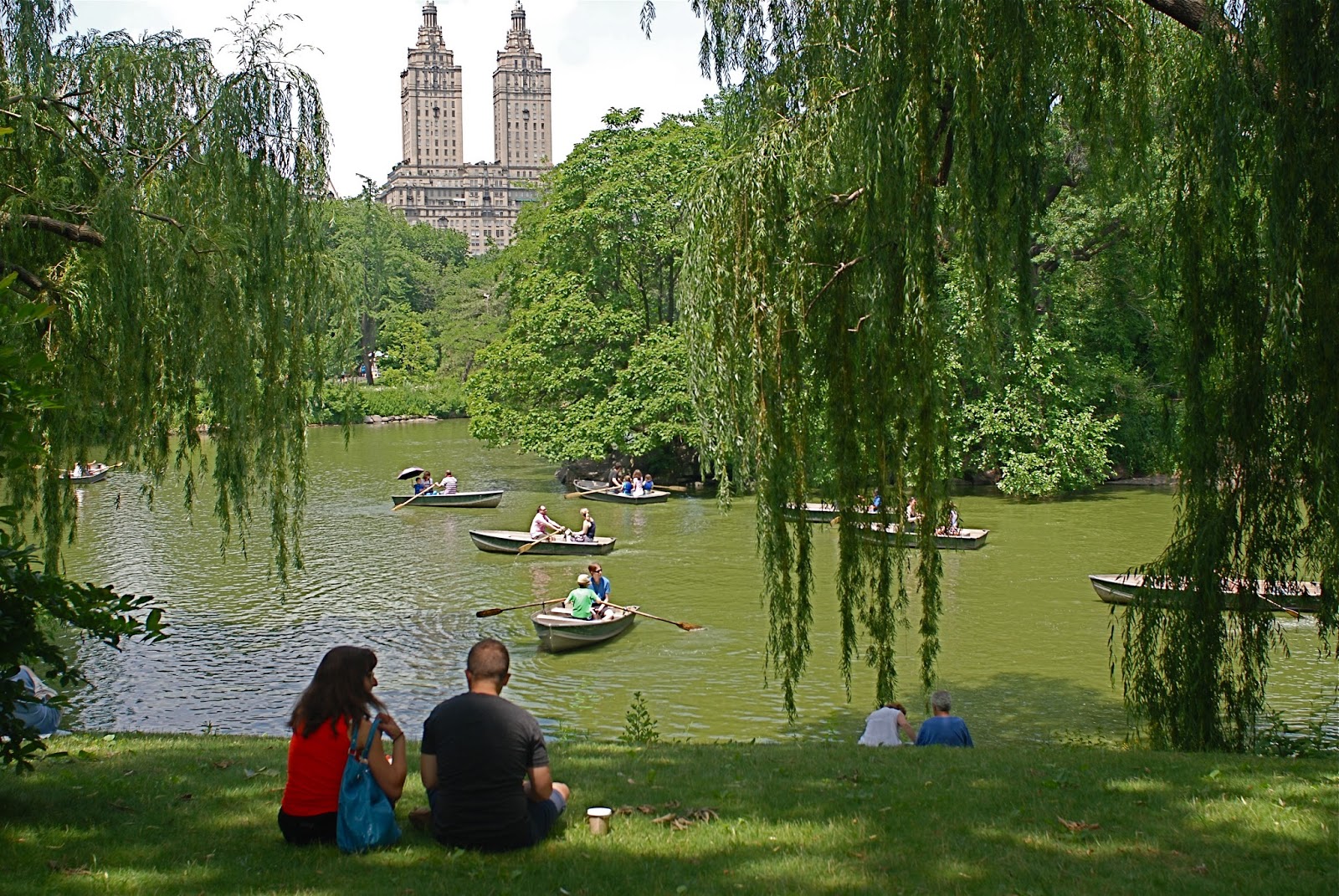
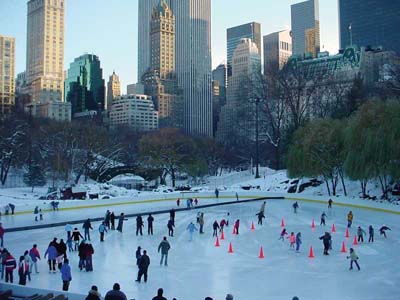
Public space is a defining characteristic of a city. Whether it is in the form of a stationary location, such as a park or plaza, or a mobile space, such as the subway or a sidewalk, public space is a social area that is open to the general public. As Low described in After the World Trade Center, useful public spaces are areas that utilize the five characteristics of public space: accessibility, action, claim, change, and ownership. (1) This means that the spaces are accessible to the general public, they are good spaces to do a variation of activities, they provide areas that individuals can claim, they are malleable, and they are dependent on ownership. A good example of public space is Central Park in New York City. It is large enough for individuals to have their own niche and to host a wide variety of events, yet it still remains completely accessible to all kinds of people. During the summer, the park is bustling with festivals and rentable paddleboats, while in the winter the park hosts ice skating rinks and winter festivals, along with several visitors’ centers scattered throughout. All these events hosted at Central Park help contribute to a safe feeling environment, friendly to a wide variety of ages.

DSC_0293
Central Park in Summer (2)

family-vacations-central-park
Central Park in Winter (3)

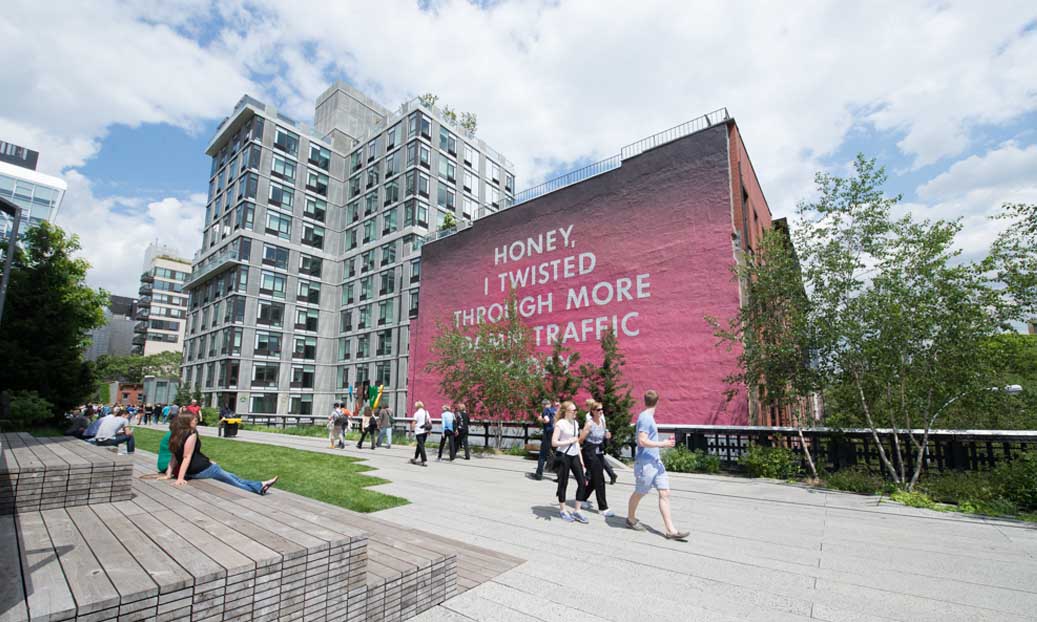
Smart public spaces would only vary in that they are “smart.” A smart city should be very accessible to various forms of transportation (such as walking, biking, buses). It should have seating! (Benches, chairs, places to eat, grass to lie down on, etc.). People should want to go there: whether this means a destination or a necessary path taken as travel. Features that would attract people would be the accessibility of Wi-Fi, seating, and other enticing activities. If a public space were geared towards promoting the common good, it would display aspects that correspond with those of the common good. There are several sub-categories of “common good” that could be appealing in form of public space. There are environmental concerns: the availability of recycling and composting bins, a community garden, solar powered lighting, and a variety of flora and fauna. Then there are qualities that provide people with necessities: the availability of free water, provision of shelters for rain coverage, seats and tables, lighting for night. Lastly, there are areas of comfort: space for activities (fields, bike paths, playgrounds, etc.), proximity of food (food stands, food trucks, cafes), display of art (sculptures, demos, displays).

RuschaSum-2
The High Line in New York City does a good job incorporating artwork into the public space. (4) (http://art.thehighline.org)

To truly be accessible and public, as Mitchell stressed, the area would need to feel safe: this includes being functional in both day and night, which would be possible through lighting and a strong sense of community. (5) If parks in Portland supported the qualities listed above, they would be a step closer to further developing their public spaces. The key aspects to making a successful public space are comfort, safety, and community.

Sources:
1. Low, Setha M. 2002. “Spaces of Reflection, Recovery, and Resistance: Reimagining the Postindustrial Plaza.” In After the World Trade Center: Rethinking New York City, edited by Michael Sorkin and Sharon Zukin, 163–72. New York: Routledge.

2.  http://2.bp.blogspot.com/-fXbN0JdE4gA/UdtmPUGNxWI/AAAAAAAAb5w/LoeyR-cZnlc/s1600/DSC_0293.JPG

3. http://s.hswstatic.com/gif/family-vacations-central-park.jpg
4. http://art.thehighline.org/project/honey-i-twisted-through-more-damn-traffic-today/

5. Mitchell, Don. 2014 [2003]. “To Go Again to Hyde Park: Public Space, Rights, and Social Justice.” In The People, Place and Space Reader, edited by Jen Jack Gieseking, et al, 192-196. New York: Routledge, 2014.