
[gview file=”https://courses.bowdoin.edu/digital-computational-studies-2430-fall-2014/wp-content/uploads/sites/52/2014/10/Café-Ethnography.xlsx”]
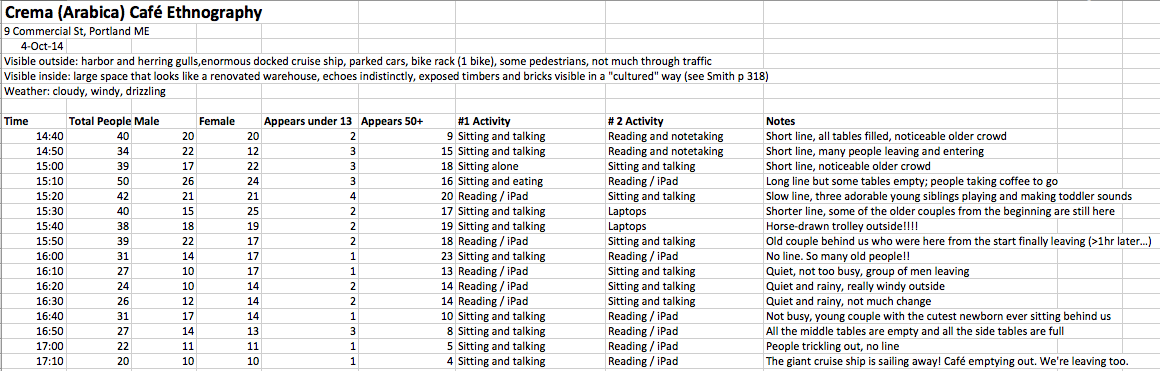
The café ethnography was skewed towards those who appeared to be middle- and upper-class white Portland residents. Males and females seemed to be relatively equally present. There was a noticeable tendency towards older customers, who seemed to be more likely to sit and talk for several hours at a time, while younger customers tended to come in and out more regularly. There were some students studying at tables near the walls, but scarcity of outlets may have discouraged them from coming and/or staying long.
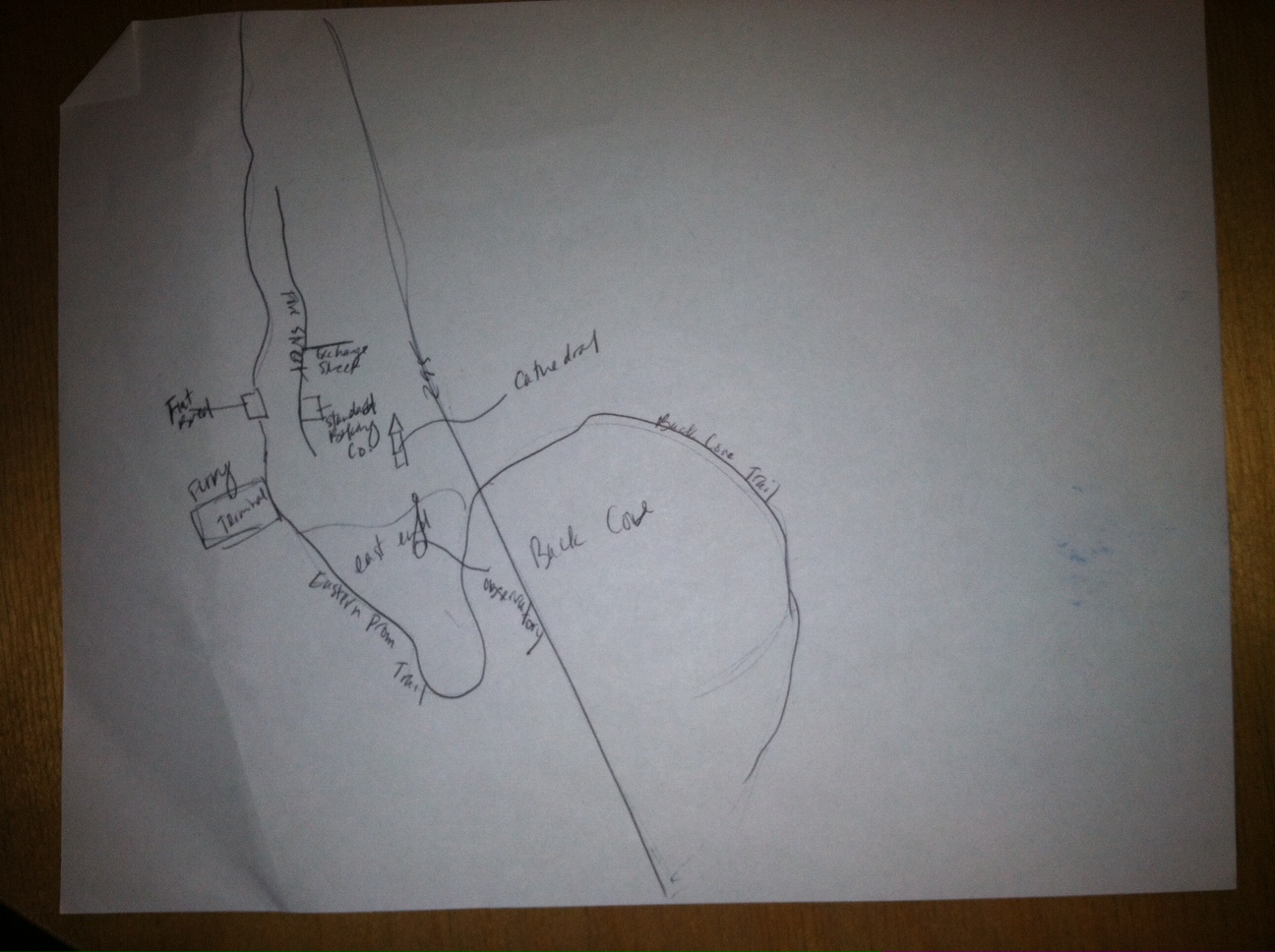
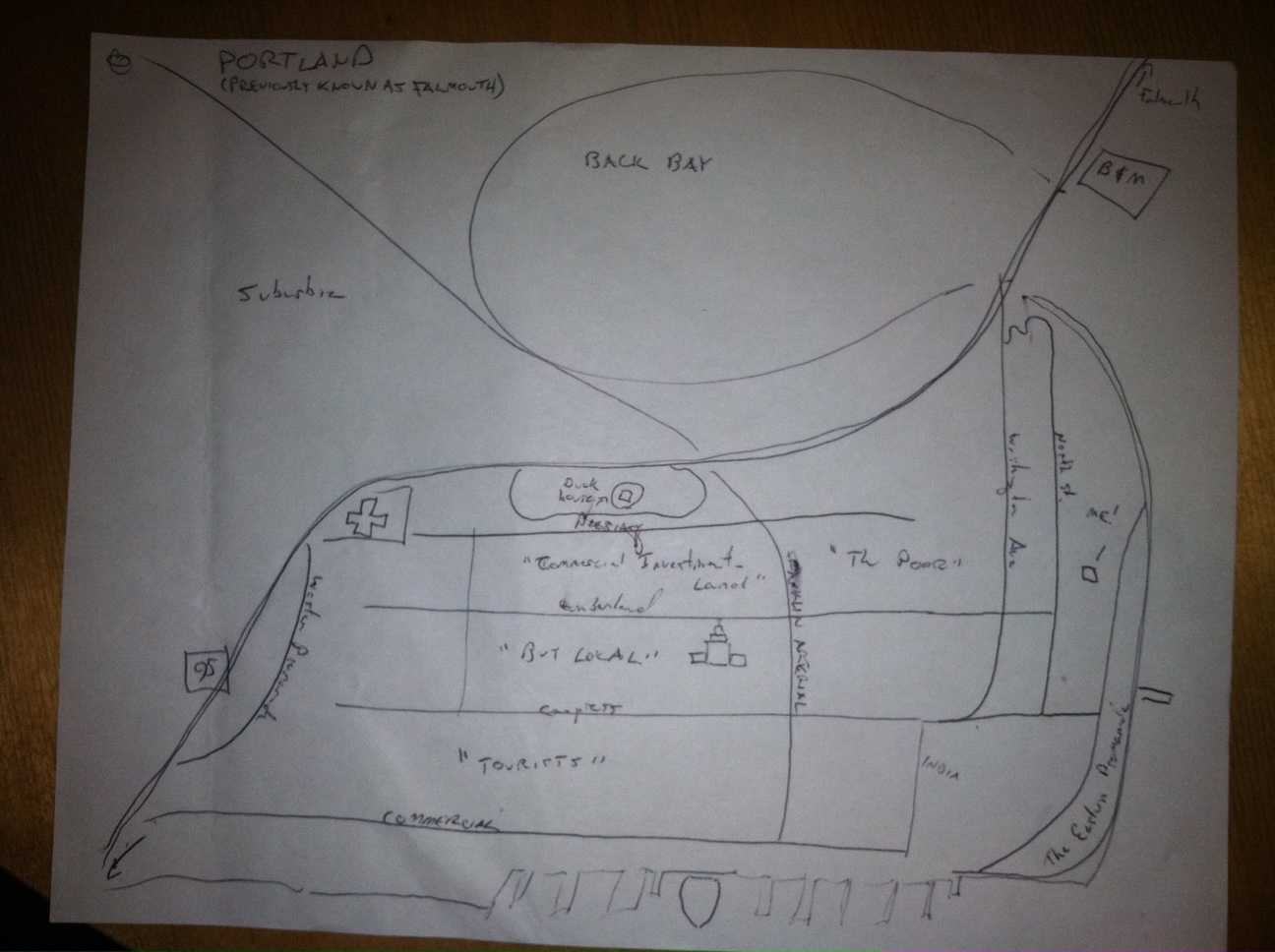
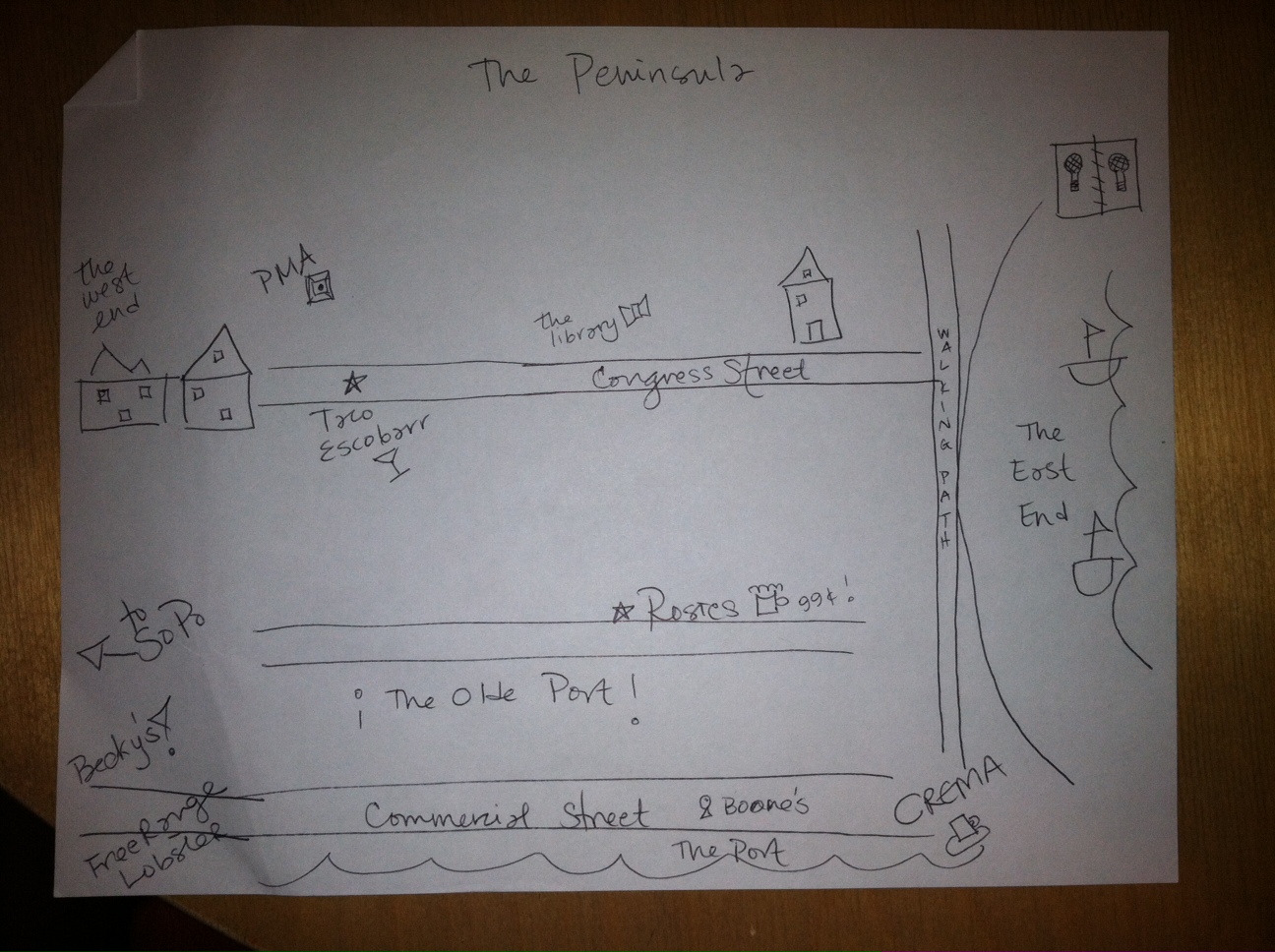
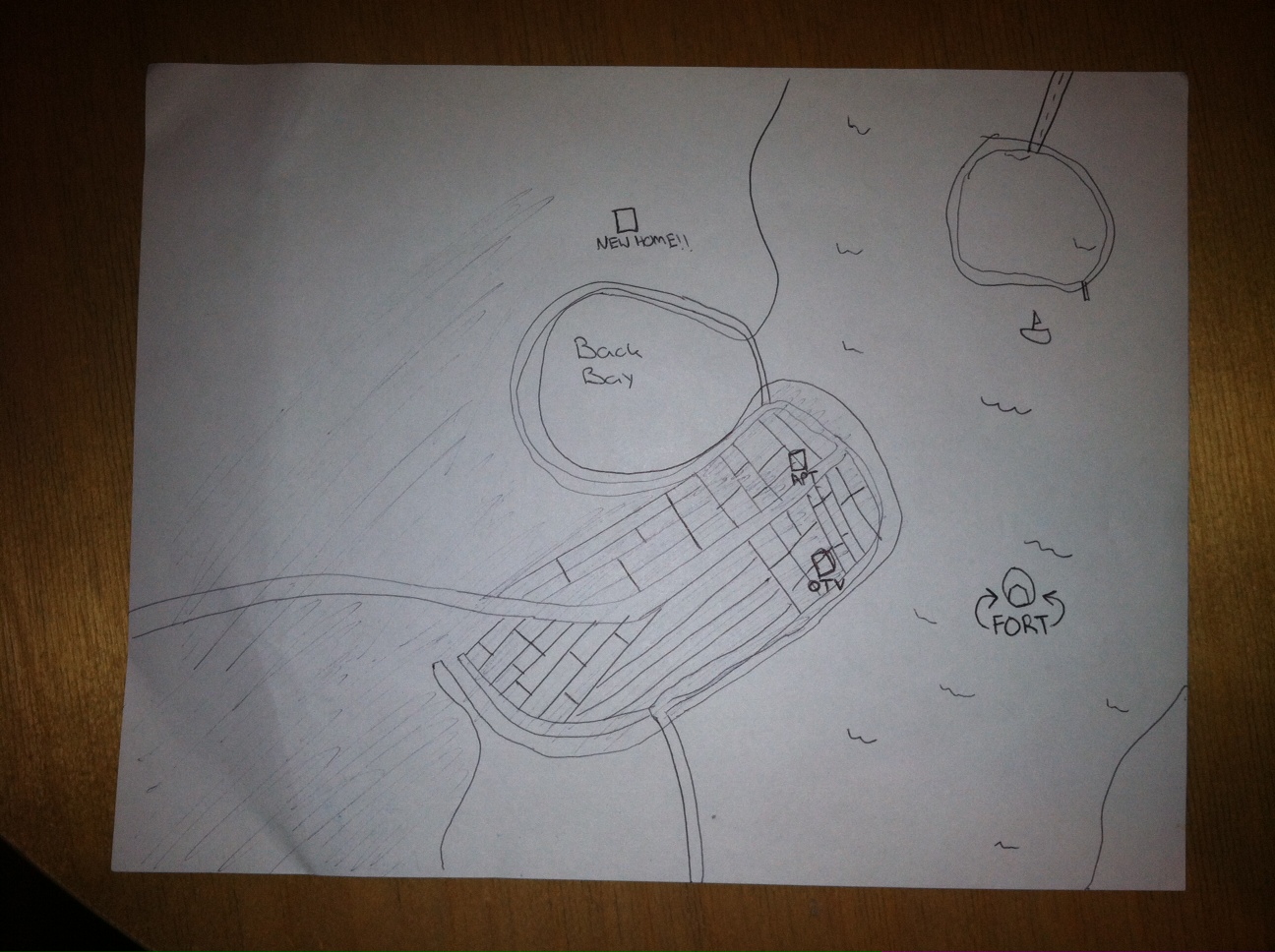
My mental map participants were similarly skewed towards white participants who appeared relatively privileged. It was difficult to find a diverse group of participants who were willing to participate; I got turned down by people I asked who appeared to be working-class, either because they seemed busy, mistrusting, or did not speak English. I was able to get mental maps from only two people outside; the other two I had to get from a café where (as noted in the ethnography) my selection of people was more limited. Still, the four maps differ in interesting ways: each of the four mental maps strongly reflected individual preferences through their inclusion of particular bars, restaurants, running trails and hang-out spots. The two younger participants both drew outlines of Portland very much in accordance with Google Maps, suggesting their geographical image may have been shaped by their relationship with their smart phone.
The four recommendations given by participants suggest Portland needs better public transportation, more effective ways of integrating tourism into its economic plan without upsetting or alienating long-time residents, and cheaper ways to access internet and TV broadband. Both the implementation of better mass transit and the creation of a public, non-marked up option for broadband seem like great, straightforward ideas for a smarter, more inclusive city. Juggling the interests of long-time residents on one hand, and the economic needs of a growing, tourism-dependent city on the other, appears to be a more complex task with less clear solutions. Still, this tension is important to keep in mind while making decisions about Portland’s development.
I would be interested to hear more about the woman who drew your second map. I wonder why her immersion of the world of architecture leads her to suggest fewer hotels – is it about their aesthetic quality, functionality, or impact on low-income residents? I imagine the real-estate designer would have a strong opinion as well.
I’ve sensed a pattern throughout multiple posts that working-class residents have proven to be more difficult to engage. I’m interested in the idea of mistrust that you bring up. As soon as we begin speaking to people about performing a research project for a college course, we project an image of privilege and invite assumptions about class. By the nature of our introduction, we have the potential to alienate or intimidate people of more diverse perspectives.
I think your assessment of the maps’ similarity to Google Maps is quite pertinent and reflective of how reliant we’ve become on technology to define our space.
I also noticed that three of your maps were well-defined representations of Greater Portland while the fourth was a simplified representation of the real estate areas in Portland–great job drawing the correlation between map makers and Google Earth users. I had a similar interaction when I received a mental map from a working-class man; he was more reluctant than the presumably higher class mappers I found in the cafe. Hannah, I believe, also had a similar experience.
If we were to conduct this research again, conducting our ethnography in a public space might provide us with more diverse data (although it definitely would not be as comfortable as conducting it in a cafe). I am interested to see how many of the maps from our class came from cafes–this definitely reveals one of the struggles of conducting social science research, especially in such environments.
The integration of tourism is an interesting recommendation. Of course, all locals hate tourists by definition. Yet tourism is obviously crucial to Portland, especially in the summer. I’d love to hear more about what this person suggested in regards to integration.
Thank you for noting the issue we have all shared in collecting our mental maps. The sample we collect from is necessarily limited by those who are present, available, and willing to give their time to this research. In many cases, it is undeniable that this sample is comprised of subjects who white and relatively well-off. Nevertheless, I respect your attempts to resist this trend in your mental map collection. Cafes and their surrounding areas are likely not the ideal locations for our field study of housing, so I wonder how we could have tailored this assignment to fit our housing research goals. Would knocking on doors have worked for our purpose, or should we have taken the Fed Up Honeys testimonial approach?