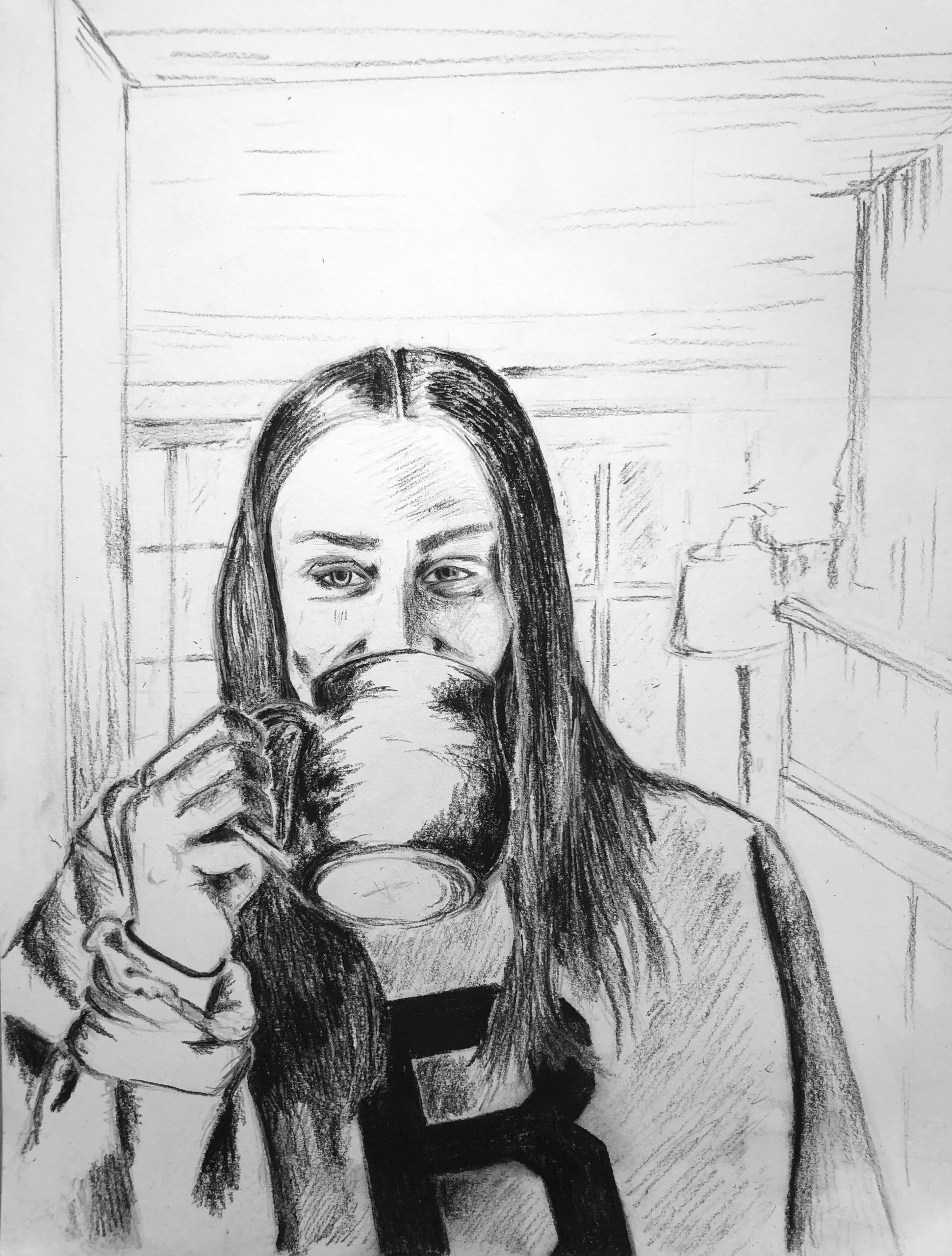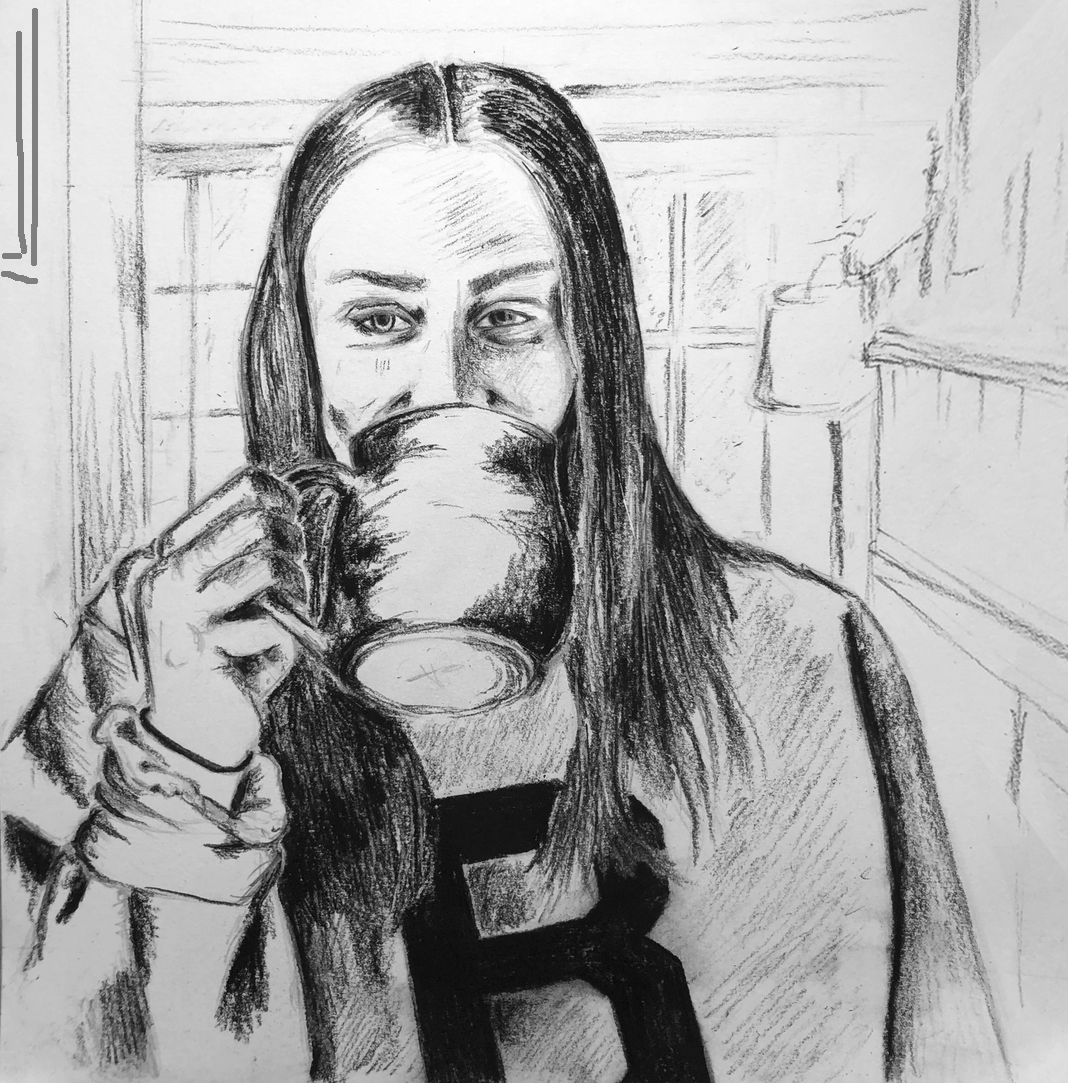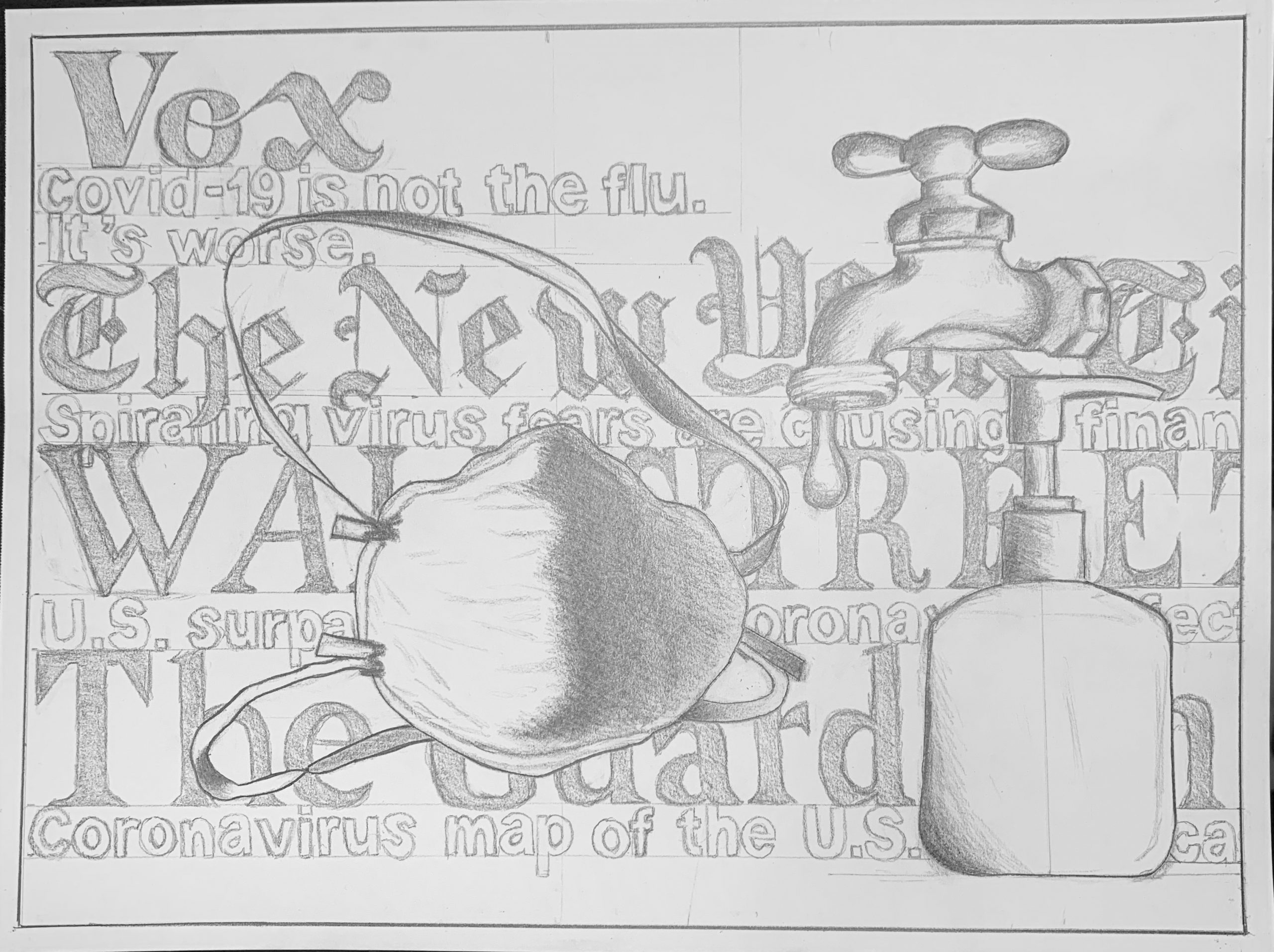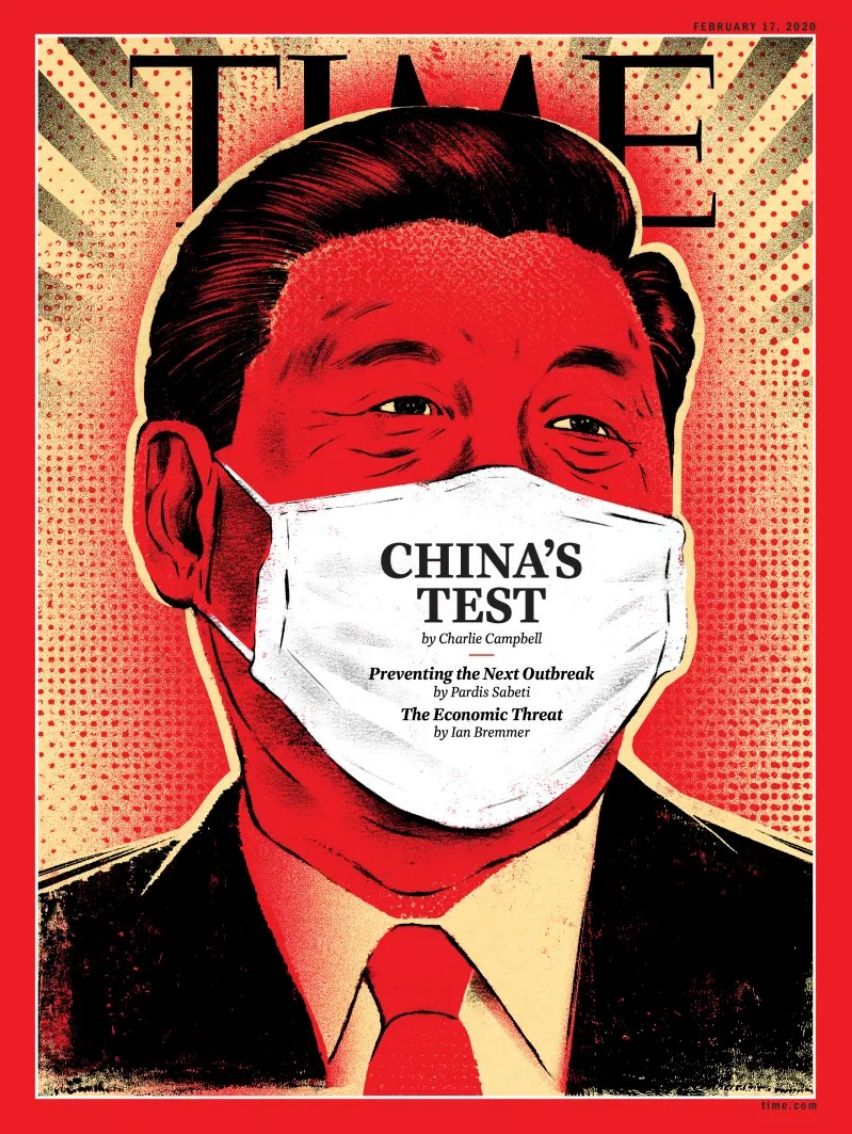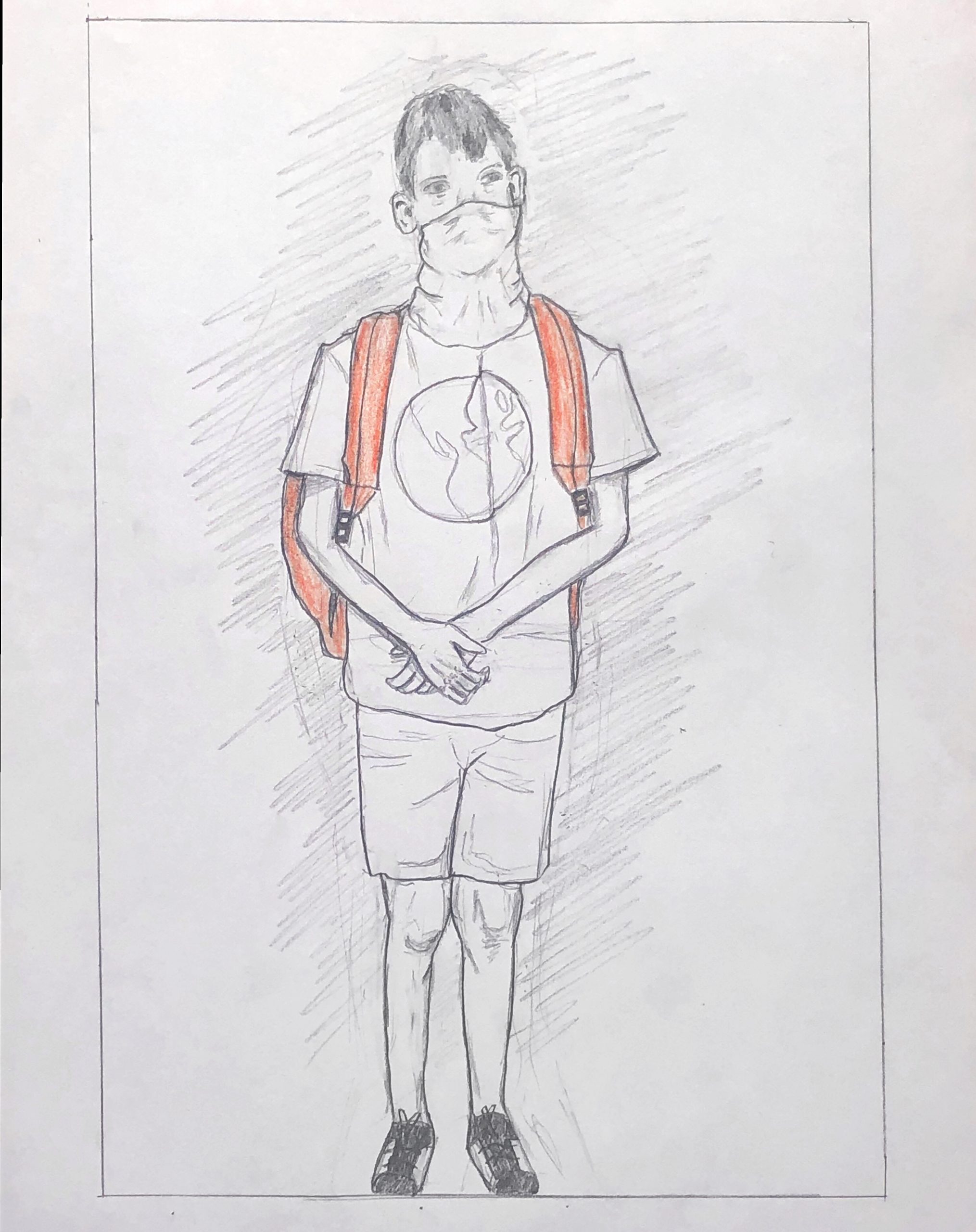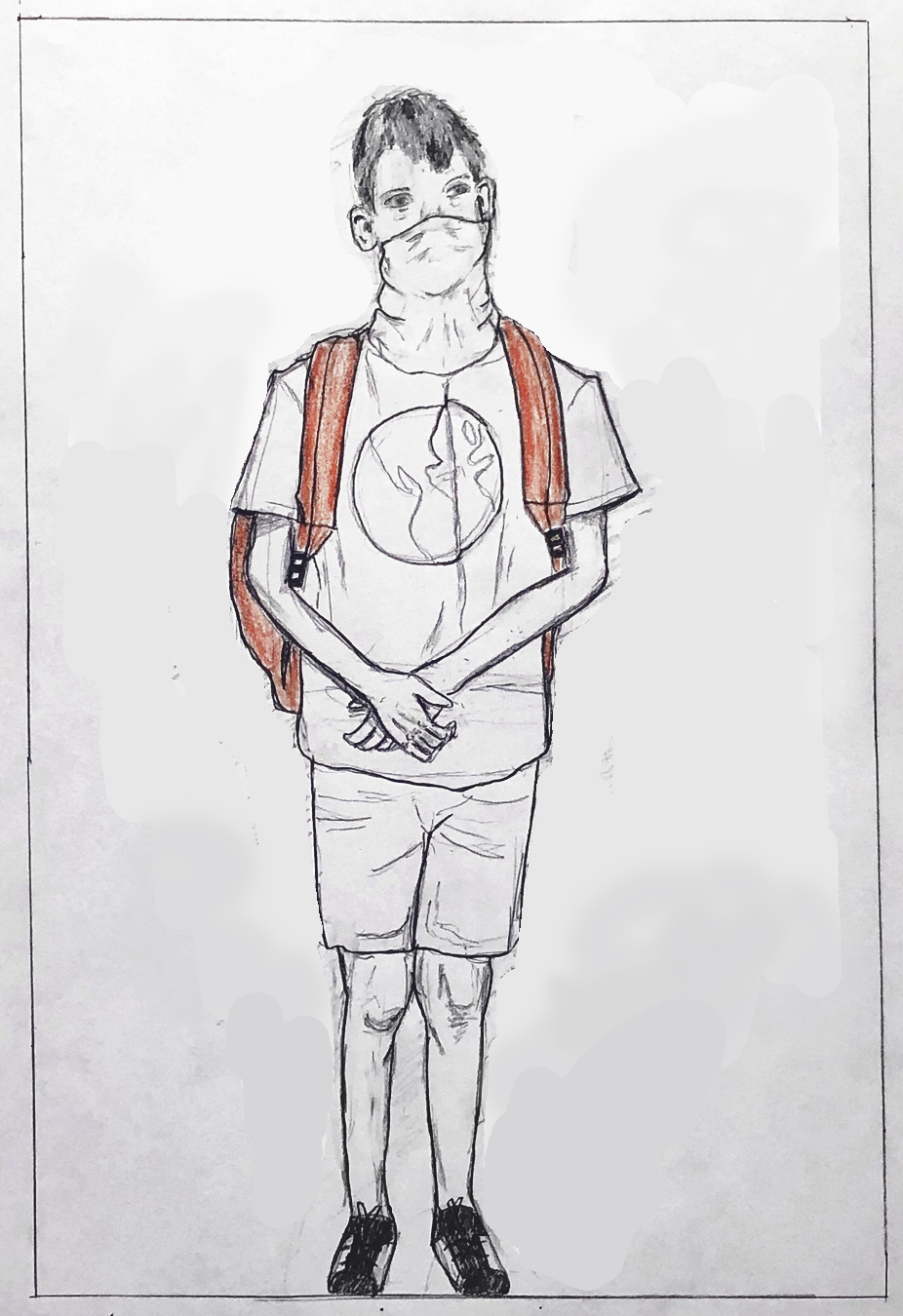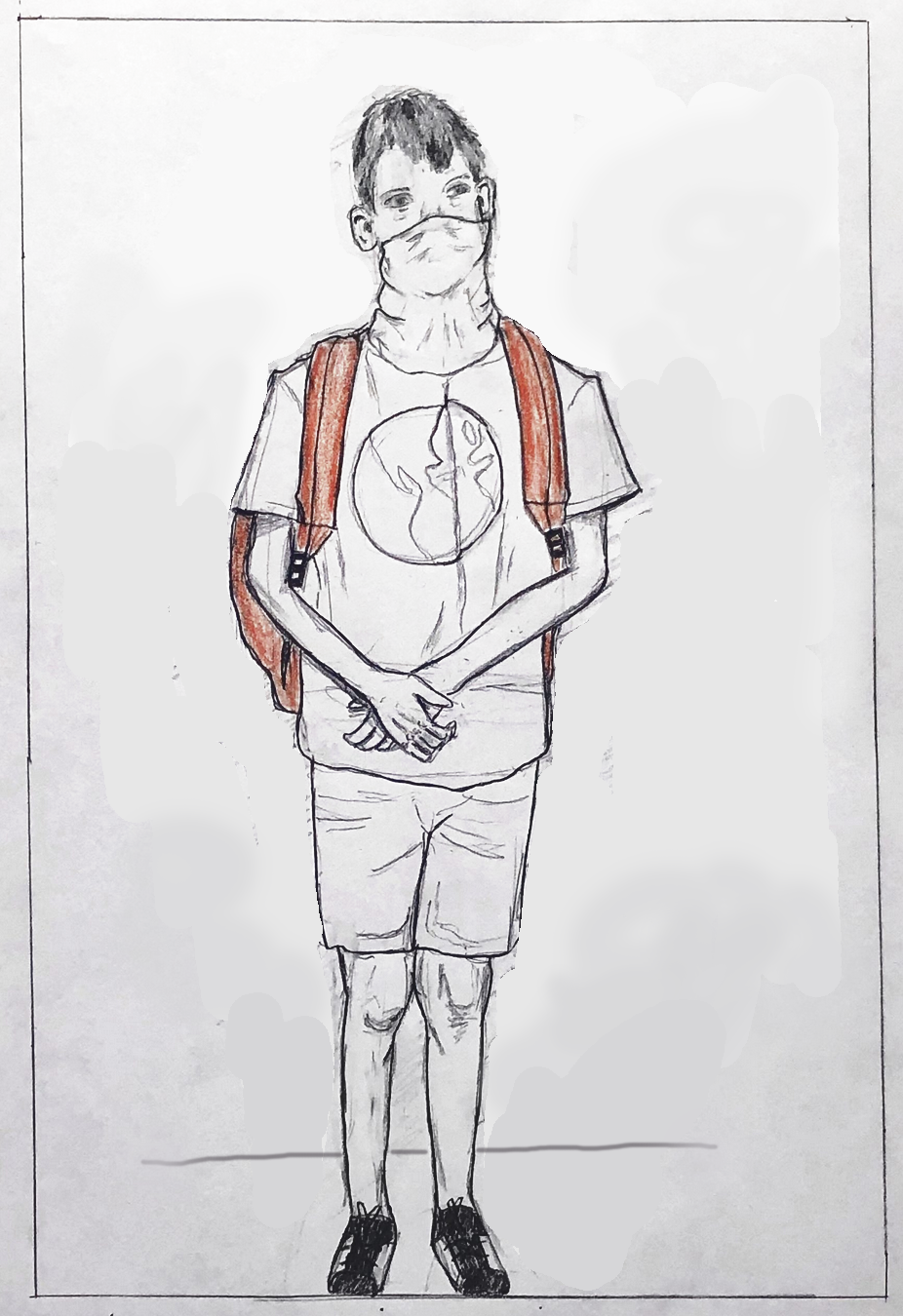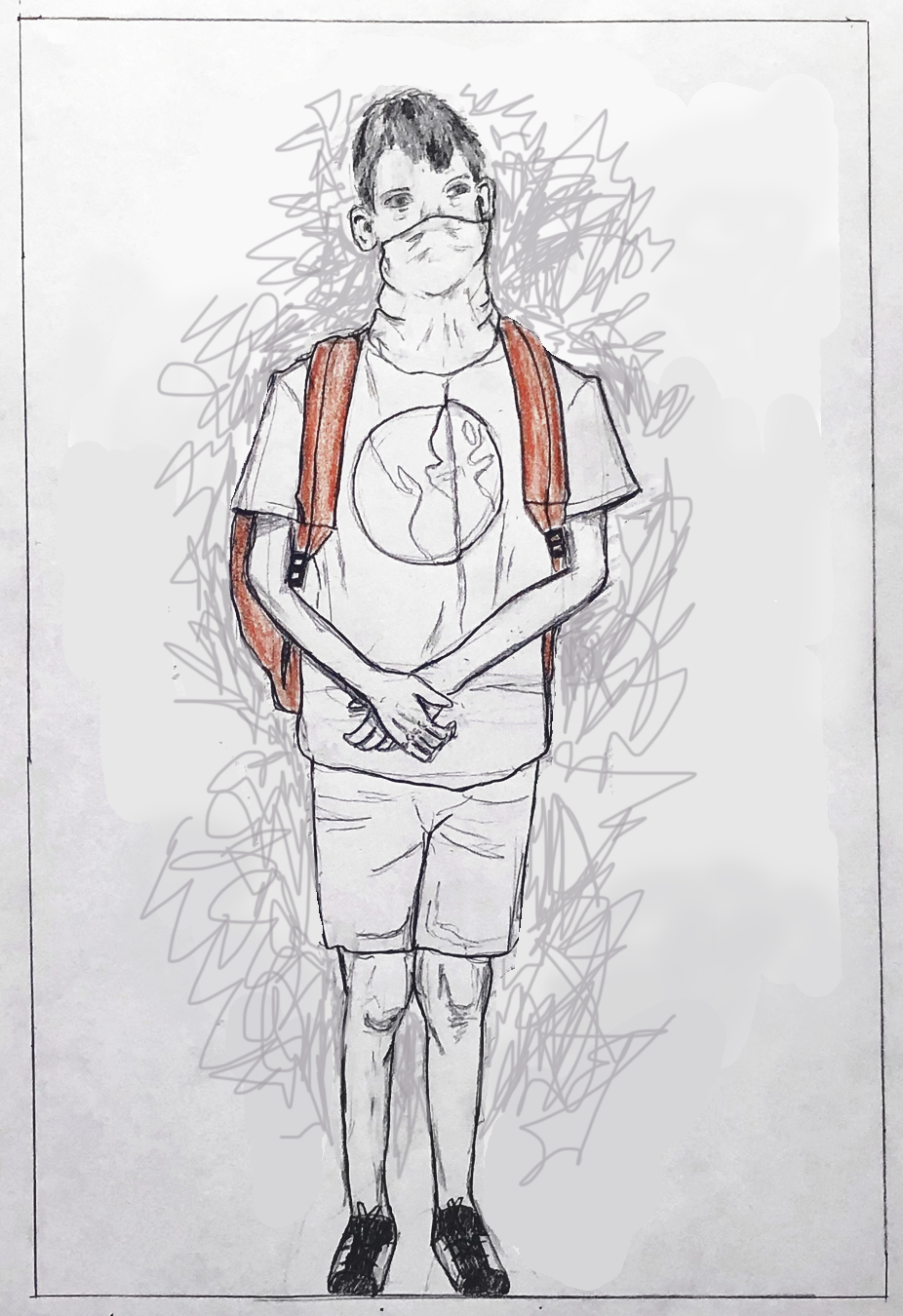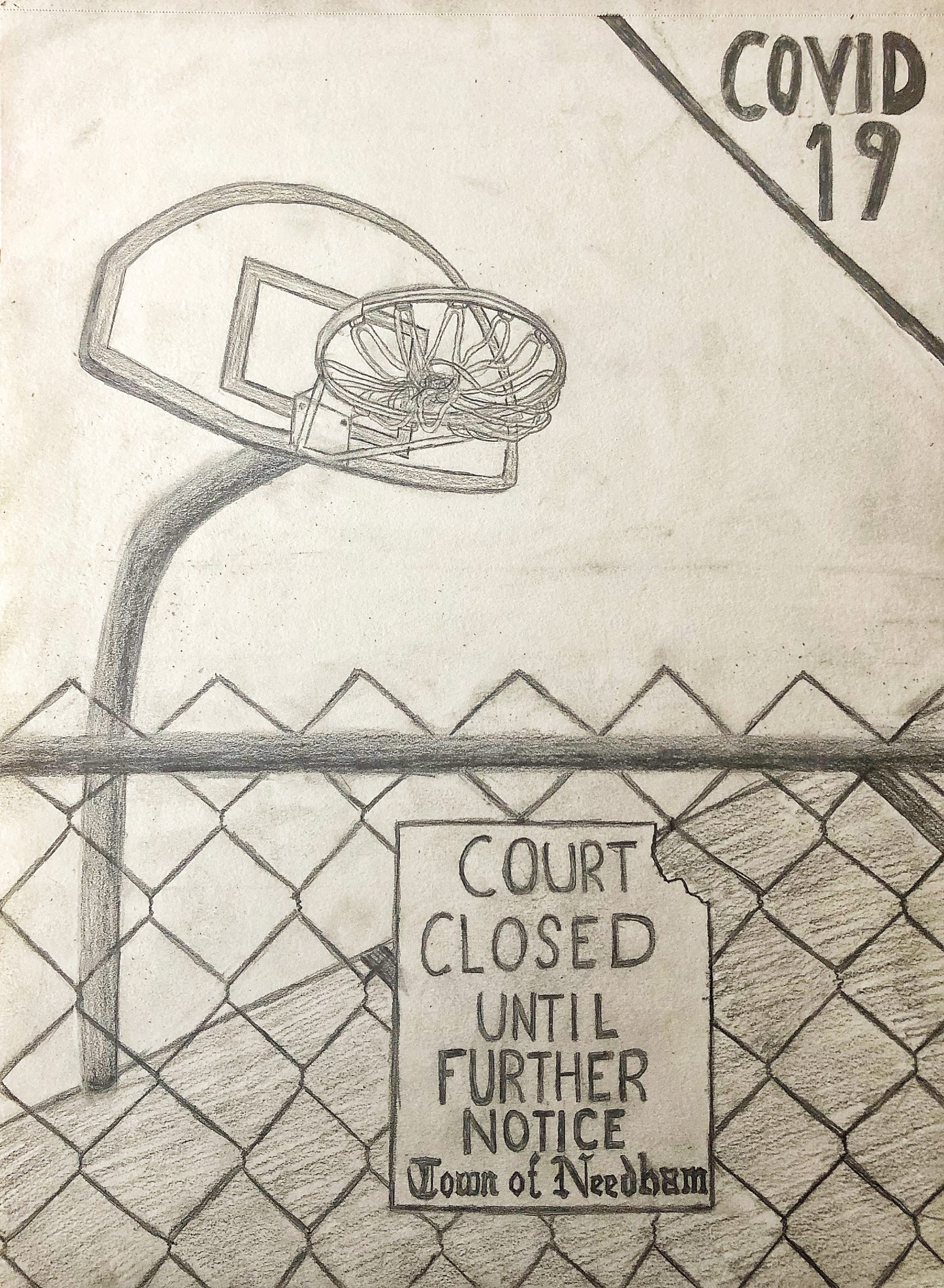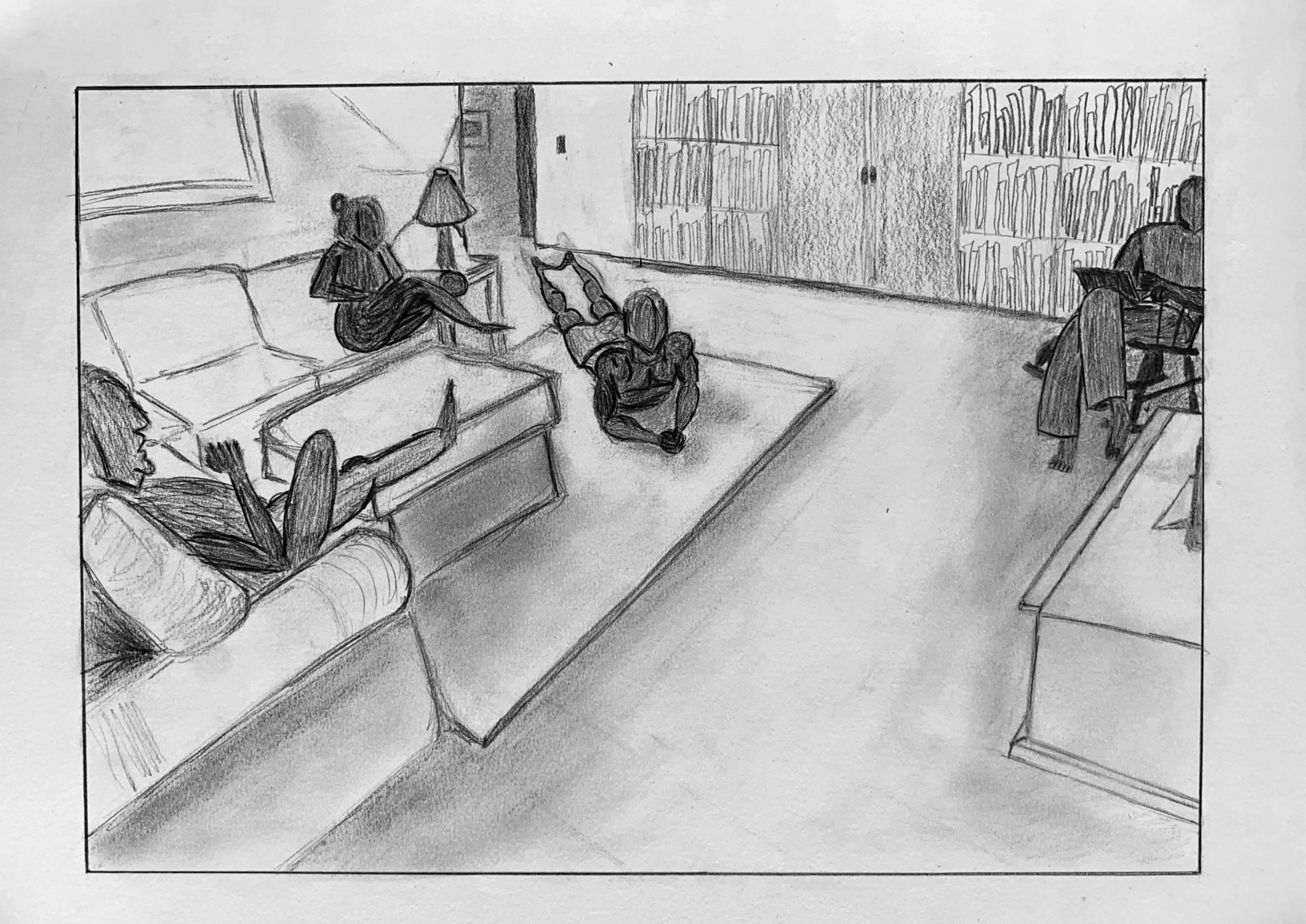
Here’s one way (below) to depict faces if you don’t want to deal with them–at the very least show us the planes of the head. To exclude them entirely in a drawing in which all other planes are at least minimally indicated actually draws more attention to them; conspicuous in their absence. A face (at this distance) can be broken into 4 main shadow planes–the two eye sockets, under the nose and the shadow on the upper lip, as I’ve done here:
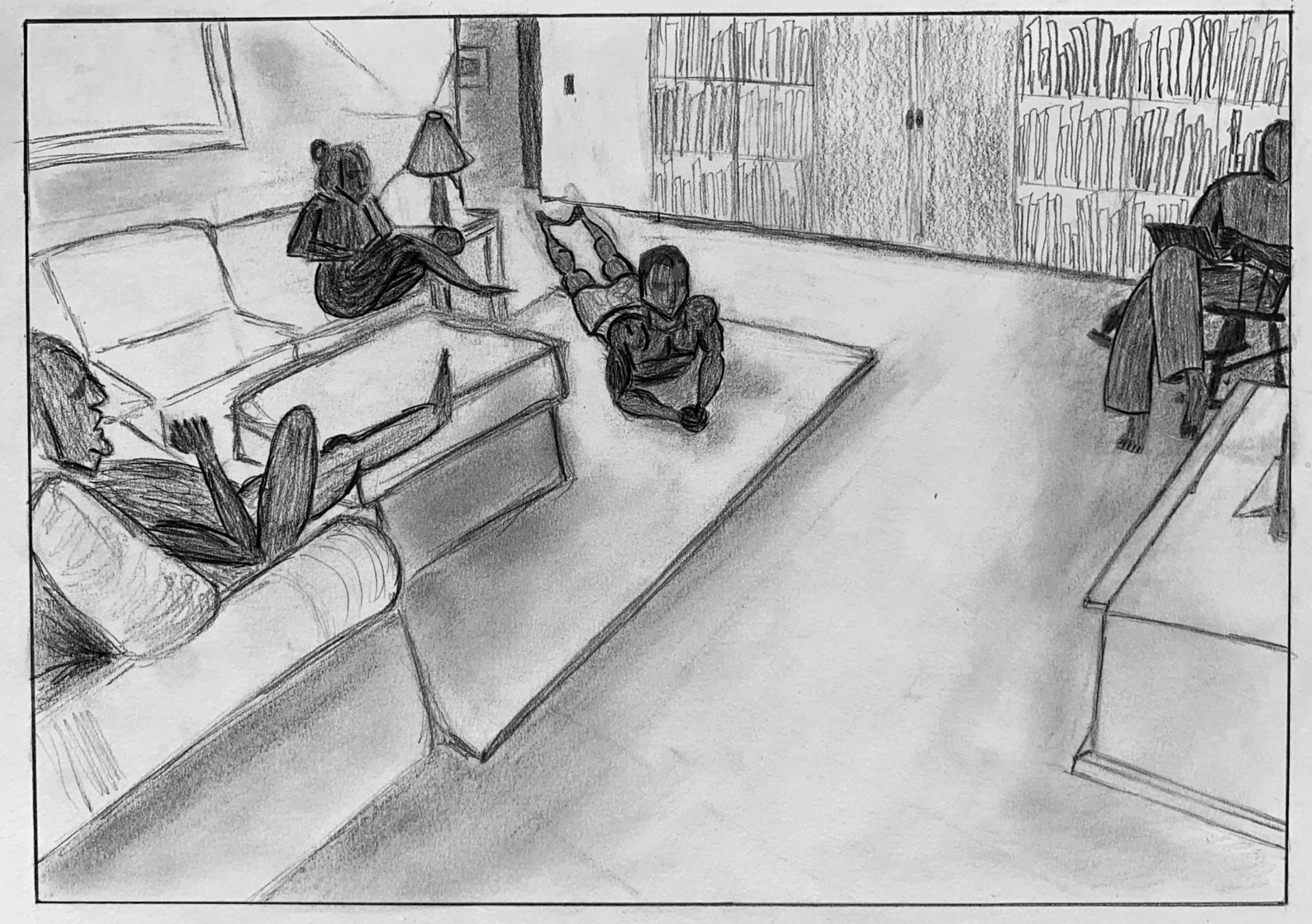 You’ll notice the one I didn’t add to is your brother, who’s actually your best figure in my estimation. The way he’s cropped and the half light he seems to be in is all you need.
A painting that came to mind, oddly enough, is Matisse‘s The Dance. Here the figures aren’t distant from one another at all, but Matisse goes out of his way to hide their faces. He wouldn’t have been daunted about painting them, so he had another reason–my guess is to make them more universal, and focus attention on their bodies and movement over their identity. But you’ll notice, when he’s forced to deal with that one toward the upper right, that he hits the planes I just mentioned, quickly and simply–also volumetrically, wrapping the planes around the head rather than painting a 2D mask.
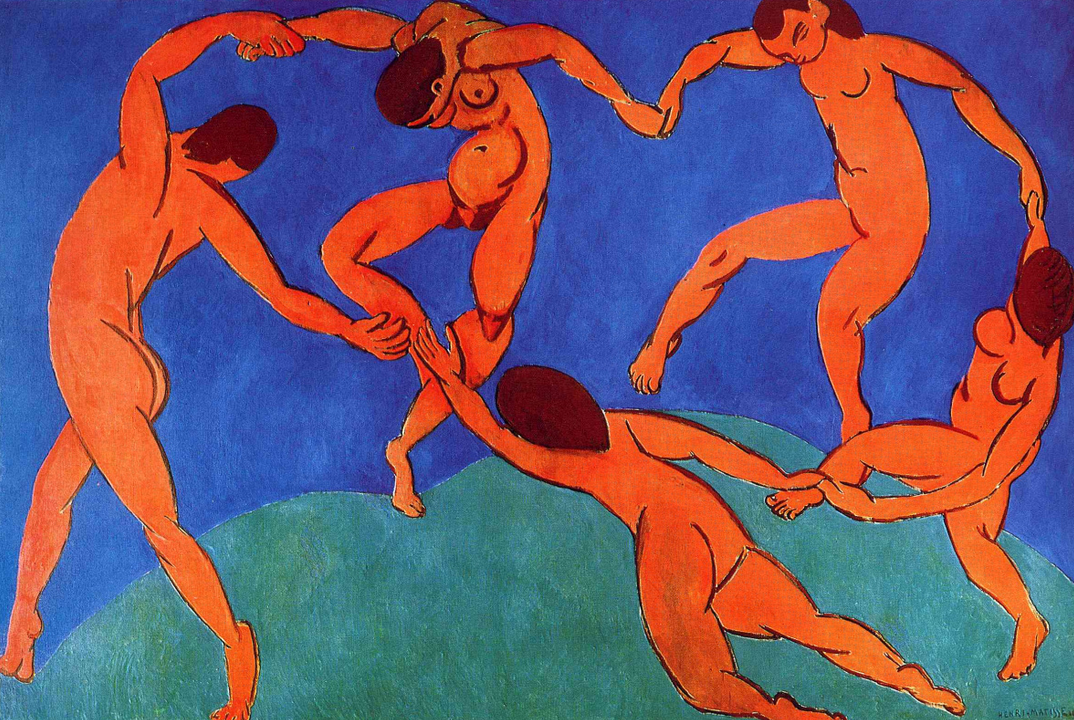
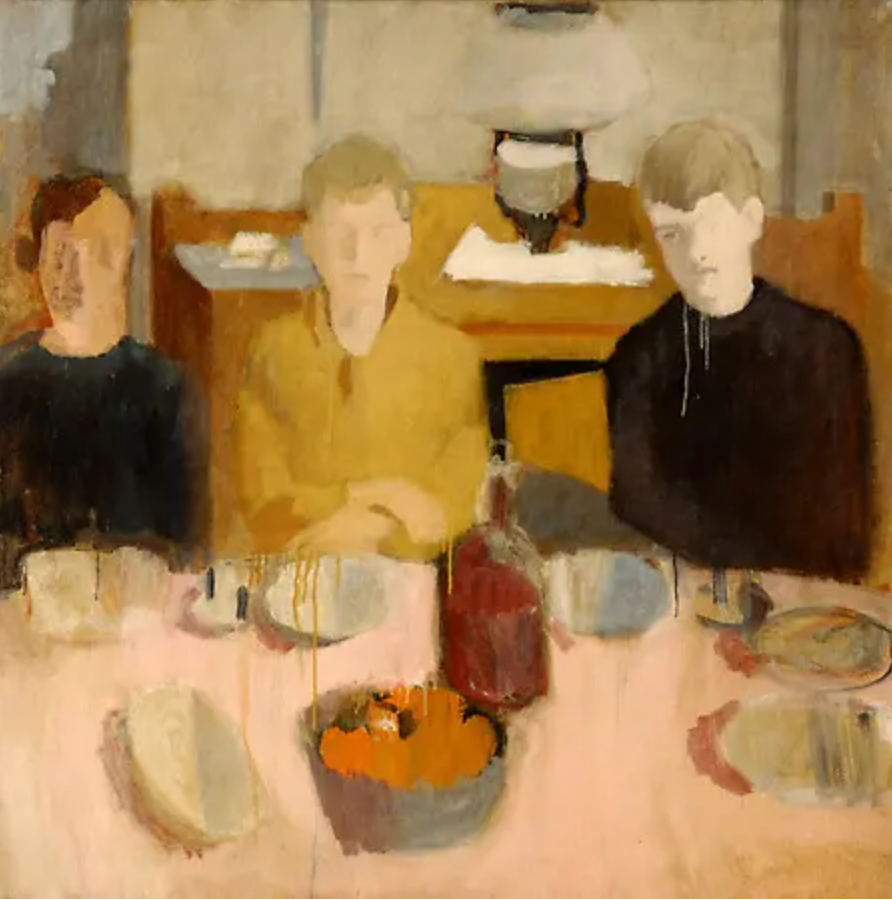
I also thought of Fairfield Porter, who often downplayed the features into shadow planes. Note in his and the Matisse how much description you can get out of the shape of the hair alone–